A Calm, Step-by-Step Plan for a Cat Peeing Outside the Litter Box

Cat peeing outside the box? Feline vets recommend two litter boxes even for a one-cat home. That’s one of four checks worth doing in order.
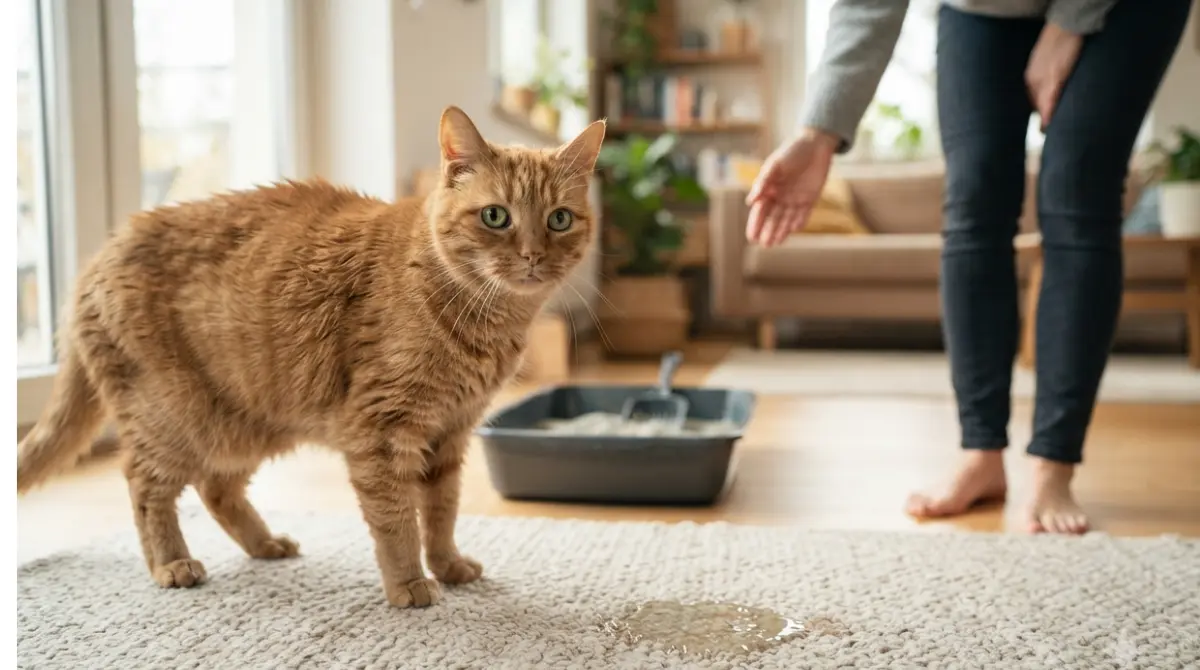
Table of Contents
Your cat is peeing outside the box: start here
Finding another puddle on the bed or rug is maddening. But peeing outside the litter box isn’t revenge. Feline vets say it happens when a cat’s medical, physical, or social needs aren’t being met.
Check this before anything else
🚨 Go to a Vet Now If: your cat is straining in the box, going in and out repeatedly, or crying while passing little or no urine. This can mean a blocked urinary tract, which is an emergency, especially in male cats. Call your vet or the nearest 24-hour emergency clinic now.
The four checks, in order
Once you’ve ruled out an emergency, work through these checks in order. Each one rules out a bigger problem before you spend time on a smaller fix.
| Check | What you’re looking for | Key detail |
|---|---|---|
| 1. Health | Pain, blood in urine, frequent trips | Vet visit comes first |
| 2. Pee or spray | Puddle on the floor vs. small amount on a wall | Different problems, different fixes |
| 3. The box | Number, size, litter, cleanliness | Most common fixable cause |
| 4. Stress | Other cats, moves, new people | Often overlooked |
Changes in litter habits are among the clearest signs worth acting on. Our guide to which cat behaviors are normal and which need a vet covers the wider picture.
ℹ️ Vet Note: This article explains why cats pee outside the litter box and what to check first. It isn’t a diagnosis. A sudden change in litter habits can signal illness, so contact your veterinarian, and go immediately if your cat strains to pee or produces little or no urine.
When peeing outside the box is an emergency
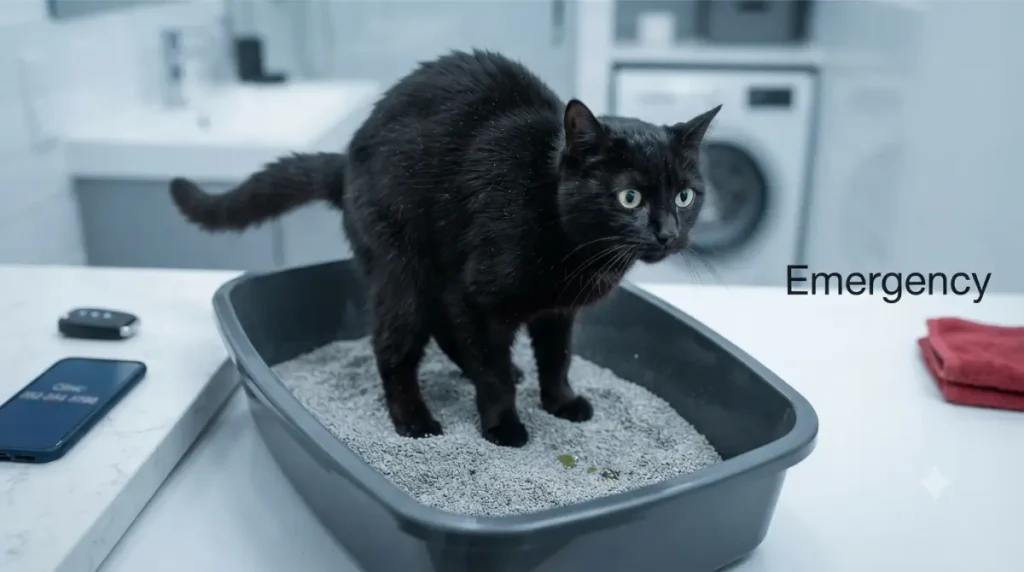
A urinary blockage happens when the urethra, the narrow tube that carries urine out of the body, gets plugged.
Straining with little or no urine
A blocked cat may strain, make frequent trips to the box, and pass little or no urine, growing more distressed over time. Cornell calls this an absolute emergency. After a complete blockage, toxins and electrolyte imbalances build quickly, and death can follow in less than 24 to 48 hours.
🔍 Why Cats Do This: Male cats block more often because their urethra is longer and narrower. Plugs of mucus, minerals, and cells, or small stones, can lodge there.
Why it can look like constipation
A cat hunched and pushing in the box is easy to read as constipated. Veterinary references warn that owners often make this mistake, so treat any straining with little or no urine as a possible blockage.
Other signs that mean call today
- Crying out while trying to pee
- Blood in the urine
- Frequent licking of the genital area
Call your vet the same day for these. Treat it as an emergency if urine output drops.
🐾 Life-Stage Note: Blockages are more common in younger, overweight, and male cats, and neutering doesn’t change that risk. Any cat can block, though.
✅ Do This: When you call the clinic, tell them when you last saw your cat pass urine and whether your cat is male. Cornell’s guide to lower urinary tract disease in cats explains what happens next.
Check for pain or illness before blaming the box
A vet visit comes before any litter box fix, because pain is a common reason cats stop using the box.
Why pain makes cats avoid the box
Bladder inflammation can make peeing painful and more urgent. A cat that links the box with that pain may start going elsewhere.
What your vet may check
Most vets start with a physical exam and a urinalysis (a urine test). They may add bloodwork, X-rays, ultrasound, or a urine culture. Possible causes include:
- Feline idiopathic cystitis: bladder inflammation with no single identifiable cause, and the most common diagnosis in cats with urinary signs
- Bladder stones
- Kidney disease
- Diabetes
- An overactive thyroid
- Infection
- Arthritis
A bladder infection is only one possibility; in many studies, stones are found more often.
Senior cats: more urine, harder entry
Kidney disease and diabetes can mean more trips and a box that fills faster. Arthritis can make high sides hard to climb.
🐾 Life-Stage Note: For older cats, feline vets suggest a low-entry box, extra boxes near sleeping areas, and night lights. If you’re unsure what you’re seeing, these subtle signs your cat is in pain help you describe it to your vet.
Peeing or spraying? The puddle tells you
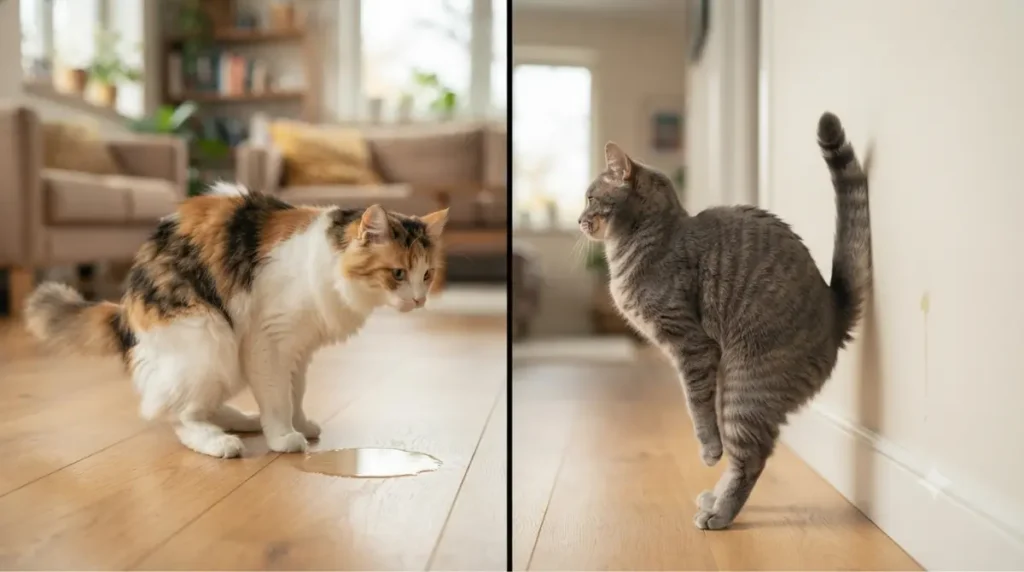
Spraying and peeing outside the box are different problems, so identify which one you have first.
Puddles on flat surfaces vs. streaks on walls
| Sign | Peeing (toileting) | Spraying (marking) |
|---|---|---|
| Posture | Squats | Stands, tail up and twitching |
| Where | Floors, beds, rugs | Usually walls, furniture |
| Amount | Normal-size puddle | Usually small |
| Box use | May stop | Often continues normally |
Sourced: AAFP/ISFM house-soiling guidelines.
Some cats squat to mark flat surfaces, so amount and box use matter as much as location.
Why the difference changes the fix
Urine marking is normal cat communication. A change in the home’s scent, such as a new pet, person, or piece of furniture, can trigger it. Marking near windows and doors often points to a threat outside; marking in hallways points to stress inside.
🐾 Life-Stage Note: Neutering sharply reduces hormone-driven marking, but about 10% of neutered males keep marking.
Audit the litter box: five things cats object to
Once illness is ruled out, check the box’s number, location, size, litter, and cleanliness.
How many boxes, and where
Feline vets recommend two boxes in two locations for a single cat. For multi-cat homes, the traditional rule is one more box than cats, with at least one per floor. Choose quiet, private spots away from food, and don’t line boxes up side by side, because cats treat adjacent boxes as one.
Size, sides, and covers
Aim for a box about 1.5 times your cat’s length, nose to base of tail. Many store-bought boxes are too small; large storage containers work well. Open boxes are easier to monitor and keep clean.
Litter type and cleaning
Most cats prefer fine, unscented clumping litter at least 1.25 inches (3 cm) deep. Skip liners and deodorizing powders. Scoop daily, and wash the box every one to four weeks with soap and hot water, never ammonia.
✅ Do This: Change one thing at a time so you know what worked. The AAFP and ISFM house-soiling guidelines cover setup in detail.
Stress, other cats, and changes at home
If the box is right and your vet has cleared your cat, look at what’s changed around it.
Box guarding in multi-cat homes
A dominant cat may block the litter boxes, pushing a timid cat elsewhere. An insecure cat may choose your bed because it feels safest there. Reading your cats’ ears, tail, and body language helps you spot the tension.
Moves, new pets, new people
Moves, new animals, and routine changes raise the risk of both urinary problems and marking. If outdoor cats seen through a window seem to be the trigger, blocking the view can help.
Why it’s never spite
Punishment raises stress and pushes house-soiling into hidden spots. If it continues after your vet rules out illness, ask about a veterinary behaviorist. Cornell’s house-soiling guide explains the common causes.
Clean the spot and keep a litter log
Clean every accident thoroughly, because lingering scent draws cats back.
Why enzymatic cleaners matter
Enzyme-based cleaners break down urine proteins. Avoid ammonia products, which smell like urine to cats. Clean up to three times the size of the visible stain, and use a black light to find missed spots.
What to write down for your vet
| Date | Where | Amount | Straining or crying? | Blood? |
|---|---|---|---|---|
| Puddle / drops | Y / N | Y / N |
Also note appetite, drinking, and any recent changes at home. These mirror the questions on the owner questionnaire in the AAFP/ISFM guidelines.
⚠️ Watch Out: If your log shows straining with little or no urine, don’t finish the week. Go to a vet now.
Cat peeing outside the litter box: quick answers
1. Is my male cat blocked if he’s peeing outside the box?
Not necessarily. But if he strains, cries, or passes little or no urine, treat it as a blockage and see a vet immediately.
2. Can a UTI make a cat pee outside the litter box?
Yes, but infection is one possibility among several, including bladder inflammation and stones. A urinalysis at your vet helps sort them out.
3. Why is my senior cat peeing outside the litter box?
Arthritis can make high-sided boxes hard to climb, and illnesses like kidney disease increase urine. See your vet, and try a low-entry box.
4. Do cats pee outside the litter box out of spite?
No. Feline vets say house-soiling means a cat’s medical, physical, or social needs aren’t being met.
5. Should I punish my cat for peeing outside the box?
No. Punishment raises stress, damages your bond, and tends to push house-soiling into hidden spots.
6. How many litter boxes do I need?
Two for a single cat. With several cats, traditionally one more box than cats, in separate locations.
7. Why is my cat peeing on my bed?
A stressed or insecure cat may feel safest there, or may be avoiding a guarded box. Rule out illness with your vet first.
8. What removes cat pee smell from carpet?
Enzyme-based cleaners work well. Avoid ammonia-based products, and clean up to three times the size of the visible stain.
Your next step
Work through the checks in order: emergency signs, a vet visit, peeing versus spraying, the box, then stress. Feline vets say most house-soiling can be managed or fully resolved once the cause is found. Start your litter log today, and book a vet appointment for any sudden change in your cat’s litter habits.