The Overlooked Signs Your Cat Is in Pain and How to Check

Cat in pain? In a large survey, owners’ grimace scale scores closely matched vets’. Here’s how to read your cat’s face at home.

Table of Contents
Signs your cat is in pain, and why they’re easy to miss
Spotting the signs your cat is in pain is hard because cats rarely announce it. Studies estimate about 60% of cats aged six and older have degenerative joint disease, yet it’s not common for them to limp or cry out.
🚨 Go to a Vet Now If: your cat is straining to pee with little or nothing coming out, struggling to breathe, collapsing, or may have swallowed a human pain reliever. The full list is in the next section.
Not an emergency? Start here:
- Your cat looks “off”: use the five-point face check below.
- Your cat just had surgery: read the life-stage notes first.
- You have a senior cat: behavior clues often matter more than the face.
This guide goes deeper on one warning sign from our guide to cat behaviors that mean it’s time to call the vet.
ℹ️ Vet Note: This article explains how to spot pain from facial and behavior changes. A pain score isn’t a diagnosis, and a low score doesn’t rule pain out. Never give your cat human pain medication, and contact your veterinarian whenever you’re unsure.
When cat pain means go to the vet now
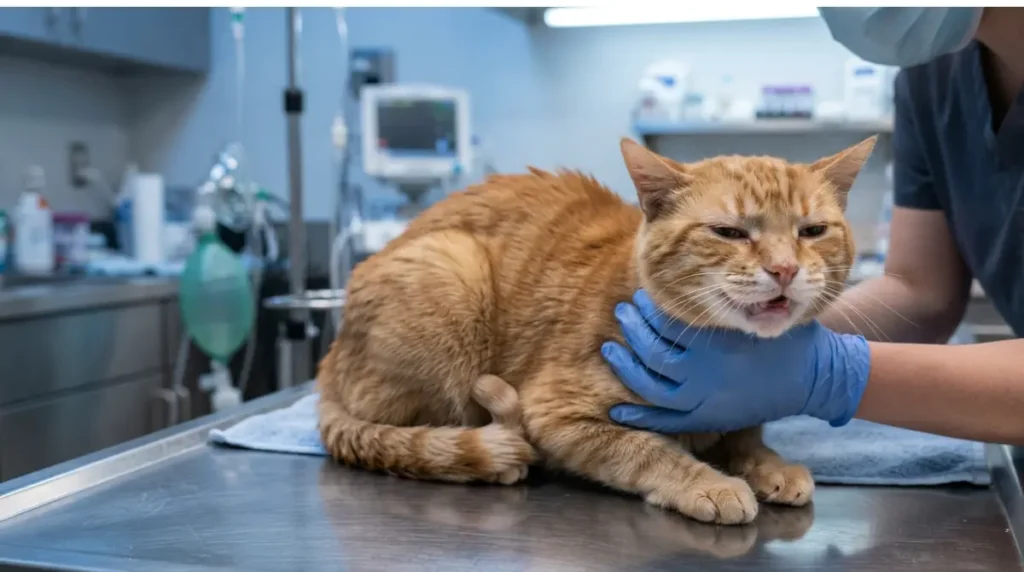
Some signs can’t wait for a scoring session.
Go now: these can’t wait
🚨 Go to a Vet Now If:
- Your cat is straining in the litter box with little or no urine. This is more often a blocked urethra than constipation, and it’s most often seen in male cats one to 10 years old — see the AVMA’s guide to urinary blockage in cats.
- Your cat has trouble breathing, is having seizures, or is losing consciousness.
- Your cat has pale gums or collapses, which can signal internal bleeding.
- Your cat’s gums turn blue, grey, white or purple.
- Your cat may have gotten into a human painkiller or another toxin.
Never give your own pain medication
Acetaminophen should never be given to a cat under any circumstances. ASPCA Poison Control’s medical director warns that a single extra-strength tablet can kill a cat if treatment doesn’t start soon. If you suspect exposure, call your vet, an emergency clinic, or ASPCA Animal Poison Control at (888) 426-4435, which runs 24/7; a consultation fee may apply. Bring the packaging.
What the feline grimace scale is and why vets trust it
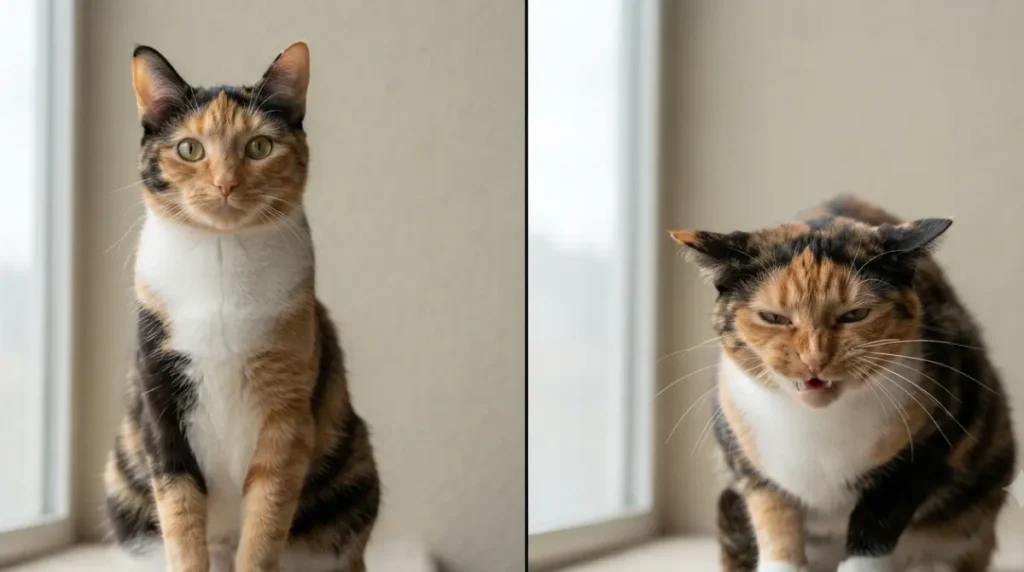
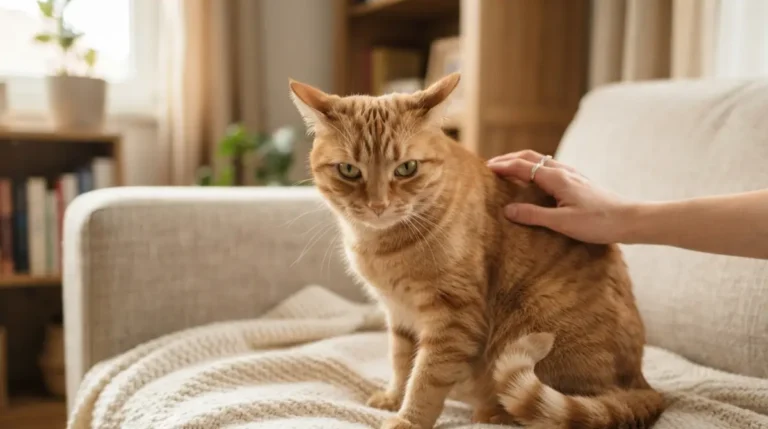
The Feline Grimace Scale is a pain-scoring tool from the Université de Montréal. It rates five facial changes (ears, eyes, muzzle, whiskers and head position) from 0 to 2 each, and it was built to detect acute pain, the sudden kind from injury, illness or surgery. It was published in 2019.
Why cats mask pain
🔍 Why Cats Do This: In the wild, cats are mid-level predators who become prey if they look injured. House cats still carry that instinct, which is why AAHA’s guide to feline pain urges owners to watch for small changes.
Can regular owners use it?
Yes. In a large survey, cat caregivers’ scores weren’t significantly different from veterinarians’, except for muzzle tension. If feline face language is new to you, warm up with our guide to your cat’s ears, tail and whiskers.
How to score your cat’s face at home
Scoring is quick once you know your cat’s relaxed face.
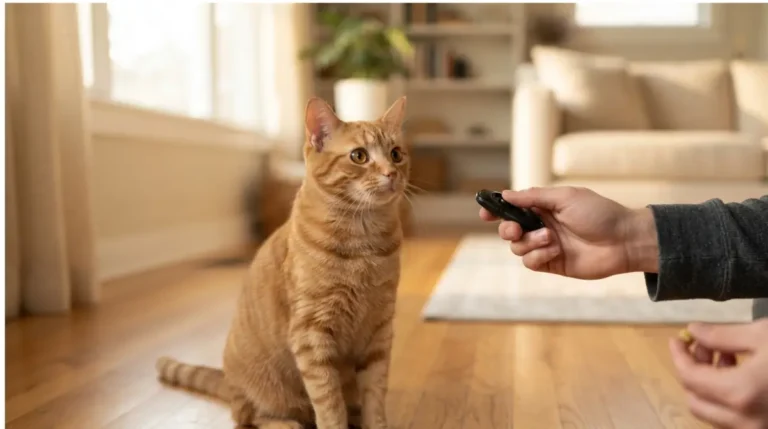
- Learn the baseline. Study your cat’s face when calm and awake; a photo helps.
- Watch without touching. The original study filmed cats while they were left undisturbed, so observe from a distance.
- Score each sign 0, 1 or 2 using the table.
- Add the five scores for a total out of 10.
- Log it with the time and what your cat was doing.
The five things to look at
| Sign | 0: Not present | 1: Slight or unsure | 2: Clearly present |
|---|---|---|---|
| Ears | Facing forward | Slightly apart | Flat, turned outward |
| Eyes | Open | Partly open | Squinting |
| Muzzle | Relaxed, round | Mildly tense | Tense, oval |
| Whiskers | Loose, curved | Slightly curved or straight | Straight, pushed forward |
| Head | Above shoulders | Level with shoulders | Below shoulders or tilted down |
Sourced: paraphrased from the Université de Montréal’s Feline Grimace Scale scoring descriptions.
Adding up the score
📊 Sourced: A total of 4 or more out of 10 means the cat is in pain and needs pain relief, per the AVMA’s report on the Feline Grimace Scale.
Can’t judge one sign? Leave it out and compare your total with the points still possible. The research cut-off is just under 4 in every 10 available points. At that level, call your vet the same day.
When not to score
Muzzle and whiskers are the hardest signs to read, and lighting, coat color and camera angle can throw off scoring from photos. A low number never overrides the emergency list, or your instinct.
Kittens, seniors and post-surgery cats: what changes
The scale is built for sudden pain, so how you use it shifts with age and situation.
After spay, neuter or other surgery
Recovery pain is the scale’s core use. Researchers have studied it in cats after spay surgery. Ask your vet when to start scoring after anesthesia.
Kittens
🐾 Life-Stage Note: The scale is validated in kittens, but scorers agreed less consistently than with adult cats. Compare against your kitten’s own baseline.
Senior cats and long-term pain
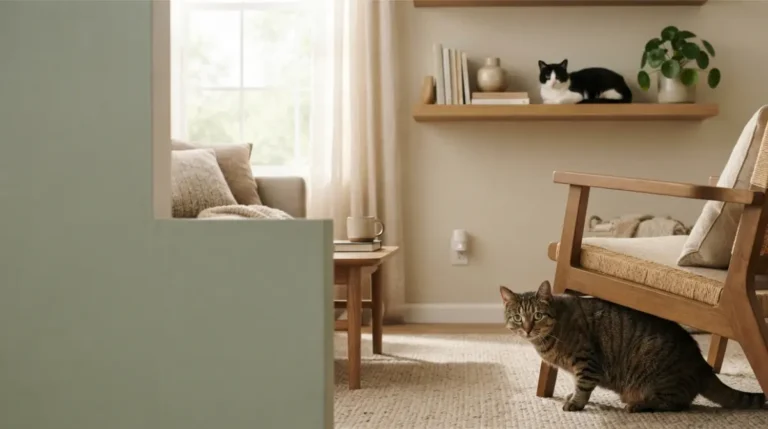
Arthritis pain builds slowly and may not show on the face. NC State researchers developed the Feline Musculoskeletal Pain Index, validated for chronic pain from degenerative joint disease. You’ll find it on NC State’s pain assessment tools page. In multi-cat homes, score each cat against its own baseline.
Body and behavior clues that back up the score
Behavior changes catch what the face can miss, especially chronic pain.
Movement and posture
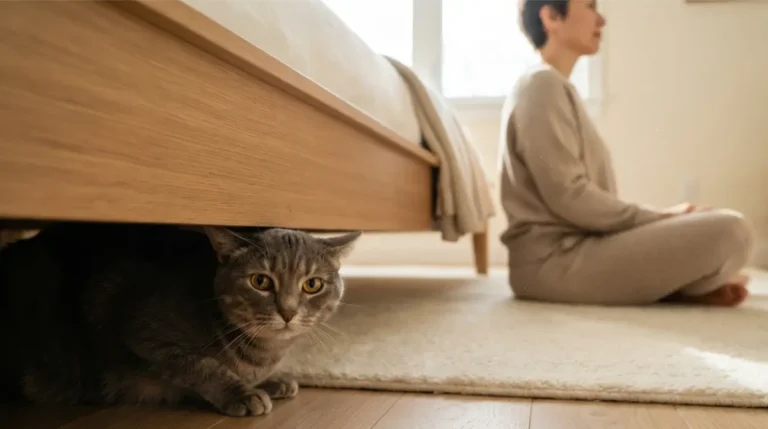
Watch for reluctance to jump, new sleeping spots or positions, and trouble getting comfortable when lying down.
Litter box, grooming and appetite
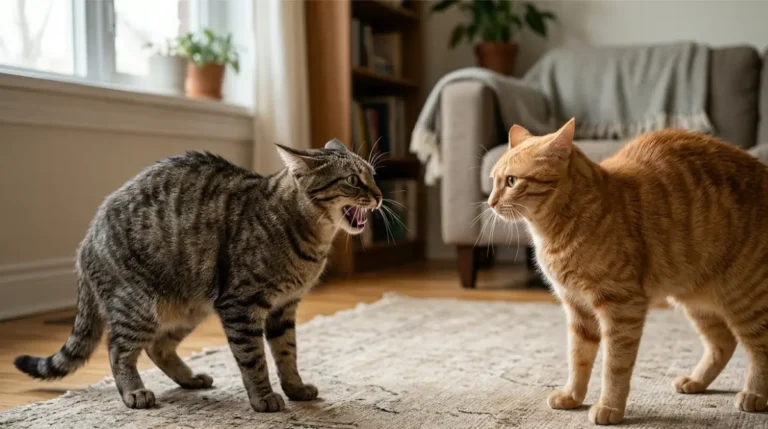
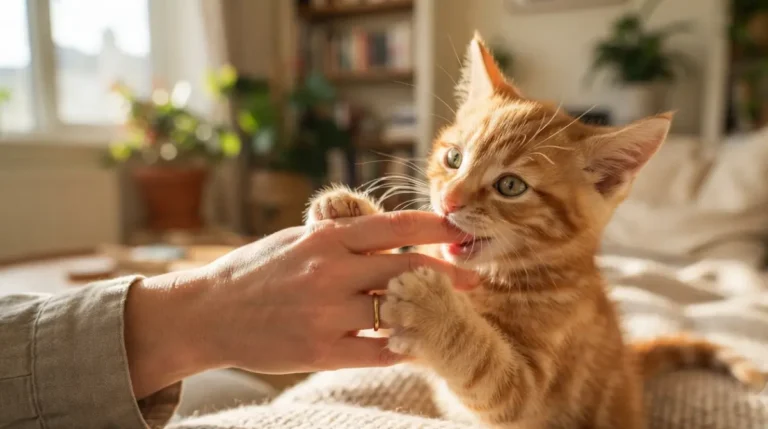
Pain can change appetite or thirst and cut litter box use, especially with a high-sided box. Grooming may become excessive in one spot or stop altogether. A cat who suddenly resents touch may be hurting, which is one reason some cats start biting during petting.
Purring isn’t proof of comfort either. The director of the Cornell Feline Health Center says cats in discomfort sometimes purr. Learn more in why cats purr when they’re not happy.
What to tell your vet and what they’ll check
A clear record helps your vet find the cause faster.
Bring your scores and video
✅ Do This: Bring your score log, a short phone video of your cat at home, the date changes started, any recent surgery, and any possible medicine or toxin exposure.
What the exam usually involves
Expect questions about your cat’s history and a hands-on physical exam. Your vet may suggest further tests to find the source, and only your vet should prescribe pain relief.
Frequently asked questions
1. How can I tell if my cat is in pain?
Look for signs of pain in your cat’s face: flattened ears, squinting, a tense muzzle, forward whiskers or a lowered head. Also watch for changes in jumping, grooming or litter box use.
2. What grimace scale score means I should call the vet?
A grimace scale total of 4 or more out of 10 signals pain that needs treatment. Call your vet the same day, or go now for any emergency sign.
3. Can I give my cat human pain medicine?
No. Human pain medicine such as acetaminophen should never be given to cats, and one extra-strength tablet can be fatal. Call your vet or ASPCA Poison Control immediately after any exposure.
4. Can cat owners use the grimace scale accurately?
Yes. Owners’ grimace scale scores closely match veterinarians’, except for muzzle tension, the hardest sign for anyone to judge.
5. Does the grimace scale work for kittens?
The grimace scale is validated for kittens, but scorers agree less often than with adult cats. Compare against your kitten’s own baseline, and call your vet if unsure.
6. Is my senior cat in pain or just getting old?
Joint disease is common in cats six and older and often shows as slower jumping, grooming changes or litter box changes. Ask your vet about a pain check.
7. Do cats purr when they’re in pain?
Sometimes. Cats in discomfort may purr, so purring alone doesn’t prove your cat is comfortable.
8. Does a low grimace score mean my cat is fine?
Not always. The grimace scale measures sudden pain only, so slow-building pain, behavior changes or any emergency sign still warrant a call to your vet.
Know your cat’s normal face
The best pain detector is an owner who knows what “fine” looks like. Learn your cat’s relaxed face, score calmly when something seems off, and write it down. Call your vet at 4 or more, or go right away for any emergency sign. Your notes turn a vague worry into information your vet can use.