Kitten biting hands: a four-week redirect plan

Play biting in kittens usually fades by the first birthday. Rule out teething pain or fear first, then schedule wand-toy play before the ambush hours.
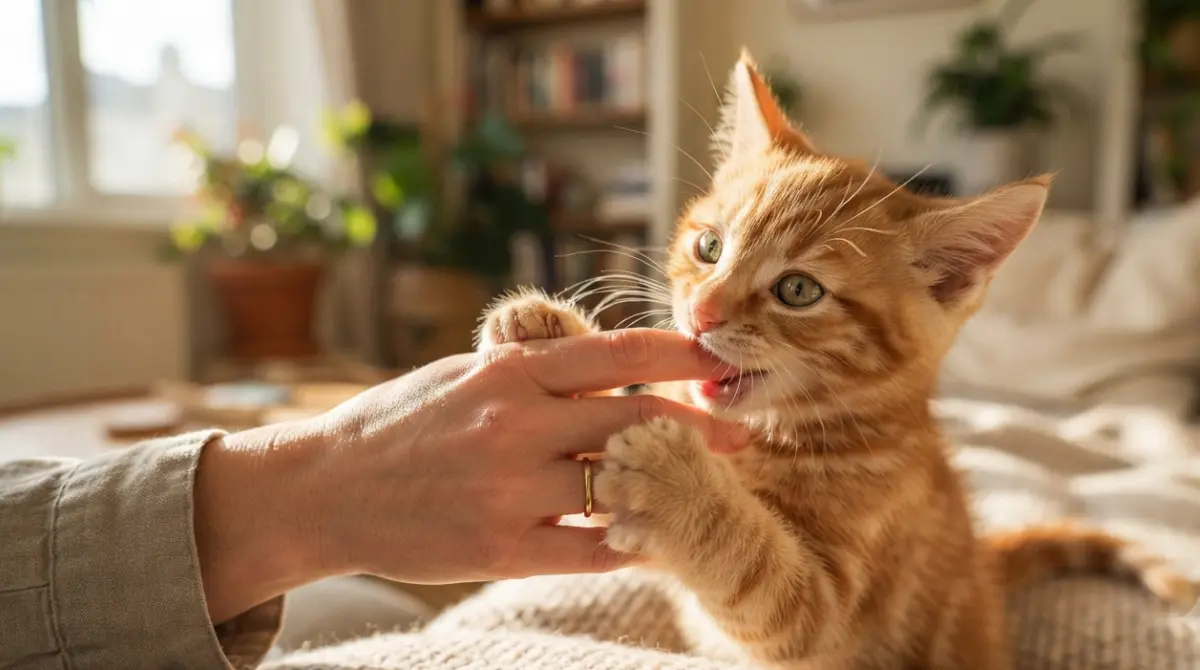
Table of Contents
A kitten biting hands is running its hunting sequence on whatever moves like prey, and the fix is to move that game onto a toy held well clear of your skin (Cornell Feline Health Center). Punishment backfires, so the work is a routine: play on your schedule, toys instead of fingers, and a quiet exit when teeth meet skin.
This owner-directed play aggression often begins at about 4 months and usually fades by the first birthday (Tufts Catnip). Kittens raised as orphans, kept as the only cat or left alone most of the day are more likely to have missed the lesson in bite control that littermates teach by stopping the game when a bite goes too hard (UC Davis). For where this fits among everyday cat habits, see which cat behaviors are normal and which need a vet.
Teething, pain or fear can look like play biting
Rule out the medical side first. Dental disease and other painful conditions can cause aggression in cats, and a vet visit comes before any behavior work (Cornell).
Play biting has a recognizable look. The kitten stays silent, its body loose and neutral, and the target is moving, usually a hand or a foot (UC Davis). A kitten pressed low to the floor that hisses or spits is frightened, and fear needs a different approach. Pain shows up another way: a kitten that reacts when one particular spot is touched should see the vet.
Teething overlaps the busiest biting months. Adult incisors come in at about 3.5 to 4.5 months, molars at 4 to 5 months, canines at about 5 months and premolars between 4.5 and 6 months (Merck Veterinary Manual). More chewing in this stretch is expected. A kitten that stops eating needs a call to the vet the same day.
When you call, describe when the bites happen, which part of you the kitten goes for, and what its tail and pupils were doing just before. Biting that comes only during stroking is its own pattern, covered in why a cat bites while being petted.
Why does the biting get worse around 4 months?
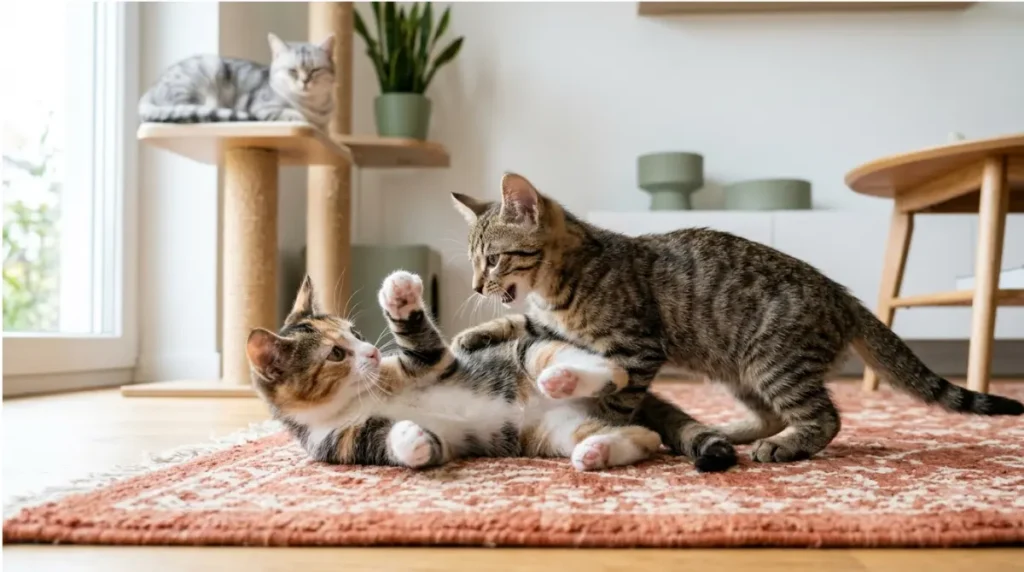
At about 18 weeks, roughly 4.1 months, object play reaches its peak (MSD Veterinary Manual). Object play copies a hunt: stalking, chasing, pawing, pouncing and biting. It peaks after play-fighting with littermates has started to fade and while adult teeth are coming in. A kitten with no other cat in the home often turns the whole sequence on the moving hands nearest it.
| Kitten’s age | What is changing | Source |
|---|---|---|
| 2 to 7 weeks | Socialization period, when bite limits are learned from the mother and littermates (UC Davis gives 3 to 7 weeks) | MSD, UC Davis |
| About 4 weeks | Social play, including biting, chasing and play fighting, begins | MSD |
| 6 to 8 weeks | Object play begins | MSD |
| 12 to 14 weeks | Social play with other cats starts to decline | MSD |
| About 18 weeks | Object play peaks | MSD |
| 3.5 to 6 months | Adult teeth come in | Merck |
| About 4 months to 1 year | Play aggression toward owners usually appears, then fades | Tufts |
Sources: MSD Veterinary Manual, UC Davis, Merck Veterinary Manual, Tufts Catnip.
Bottle-raised kittens can play harder still. Hand-reared kittens may lack feline social skills and be hyperactive in play, and regular sessions with wand-type toys help head that off (MSD Veterinary Manual). The changes from week to week in early kittenhood are set out in kitten behavior stages from 8 to 16 weeks.
A plan for the next four weeks
No veterinary source sets a deadline for redirecting play biting, so read these weeks as an order of practice. Stay on a week until it holds, and go back a step if the kitten slides.
Week 1 is about taking hands out of the game
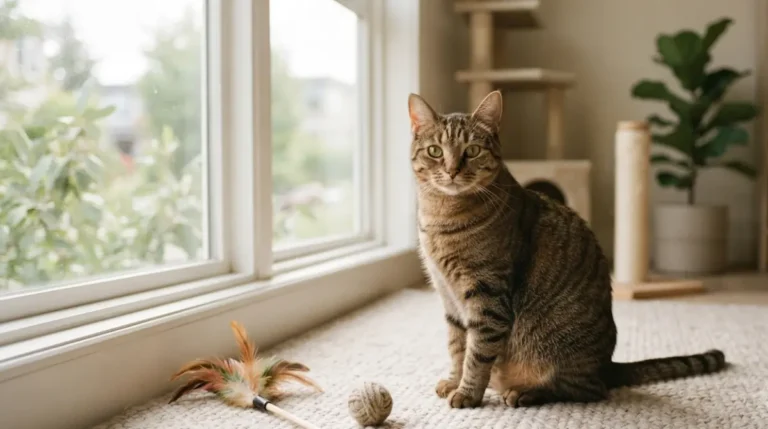
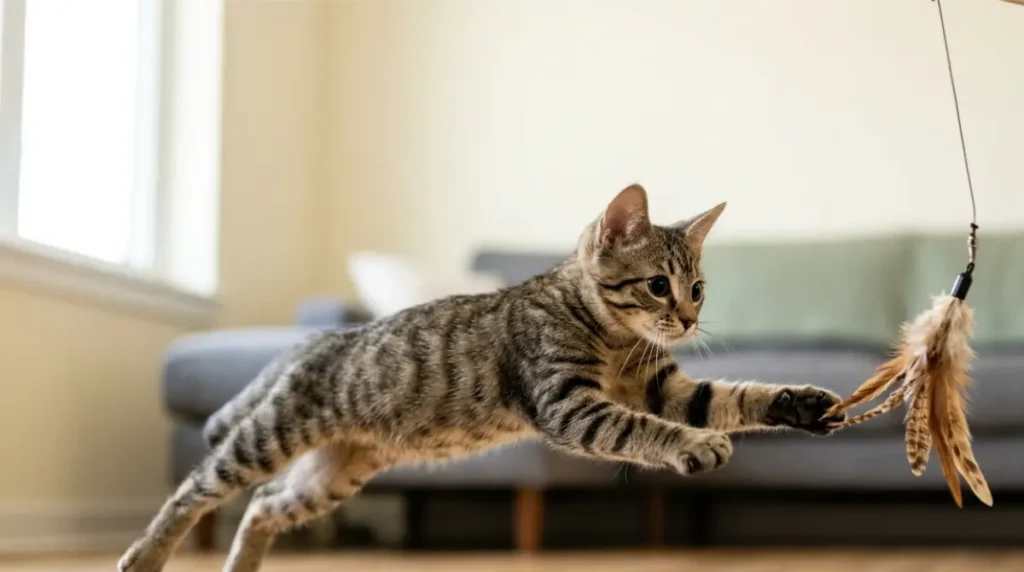
Stop finger games, toe games and wrestling, including the quick tickle when the kitten is already wound up (UC Davis). Every game now runs through a toy: feathers on a string, toy mice, a ball rolled across the floor or a wad of paper.
Keep the toy at the far end of its wand or string so teeth land well away from your hand (Cornell). Swap between several toys, since a cat tires of one quickly but often keeps playing with something new (MSD).
What changes in week 2?
Many kittens attack at predictable times and places: the evening sprint around the sofa, or the dash at your ankles as you leave the kitchen. Note when and where it happens for a few days, then start a play session just before that time (Cornell). Shape each session the same way:
- Dangle or pull the toy so the kitten can chase, pounce on and bite it (MSD).
- Let it catch the toy often enough to stay keen.
- Slow the toy down for the last few minutes so the kitten winds down (Tufts).
- End with the next meal or a few treats, a reward for play that stayed on the toy (Cornell).
A kitten that leaves the session tired, with nothing left to chase, is the point of that slow finish.
Week 3, the ambush hours
Ankle attacks usually launch from cover, from under the bed or behind a door as you walk past (Cornell). Block the favorite hiding place. A bell on a breakaway collar also tells you where the kitten is waiting.
Moving feet are the usual trigger. When you spot the crouch and the treading back feet, toss a toy or a paper ball ahead of you before the kitten launches (Tufts).
When a bite lands anyway, go quiet and walk away. Leaving teaches the kitten that rough play ends play, and touching it in that moment can read as part of the game (Cornell). Offer the toy again once the kitten has settled.
By week 4, everyone plays by the same rules
One person who still tickles with fingers can undo the other three weeks. Every person in the house, visitors included, plays through a toy, and younger children do best with an adult beside them while the wand is out.
This is also a good week to start clicker training, which marks and rewards the moment the kitten chooses the toy over a hand (MSD).
What makes play biting worse
Yelping like a littermate is common advice, and it tends to backfire. UC Davis discourages yelling because the kitten may come to link you with something frightening (UC Davis). A big reaction can also raise a kitten’s arousal and set off the next attack (Tufts). Smacking the kitten or using a squirt bottle damages the bond between you and can trigger aggression (MSD).
The sources part ways on one point. Cornell suggests a hiss, or a blast of compressed air within a few seconds of the attack, to interrupt the kitten and redirect it without frightening it (Cornell). This routine sticks to walking away, which all four sources support in some form and which carries no risk of teaching the kitten to be wary of people.
Would a second kitten help?
Only if you can take on a second cat for its whole life. A companion of similar size and temperament gives a kitten someone to play rough with, though the two may not get along at first (UC Davis). Raising a kitten alongside other cats is also part of preventing overly rough play in hand-reared kittens (MSD). Introductions take time, and the steps are in how to introduce two cats.
In a multi-cat home: a resident adult or senior cat is not a stand-in playmate. Rough kitten play becomes a problem when it lands on an older or ill cat (UC Davis).
Call your vet if the biting isn’t easing
Bites that still break skin after a few weeks of steady play point to the vet. So does biting that starts suddenly or comes with hissing and growling.
Excessive rough play can be a sign of fear or a medical problem, so the first visit is with your own vet (UC Davis). Aggression that doesn’t respond to these steps may need a veterinary behaviorist working alongside your vet (Cornell).
Bring your notes on when and where the bites happen, and a short phone video if you can film one safely. Typical fees for that next step are in what a cat behaviorist costs. If your kitten has grown up and still bites hard, why an adult cat bites hard picks up from here. A bite that broke your skin and has turned red or swollen is a question for your own doctor.