Cat overgrooming bald patch: what its location tells your vet

Overgrooming bald patches on a cat feel spiky at the edge, and the spot matters: tail base suggests fleas, the lower belly can mean bladder pain.
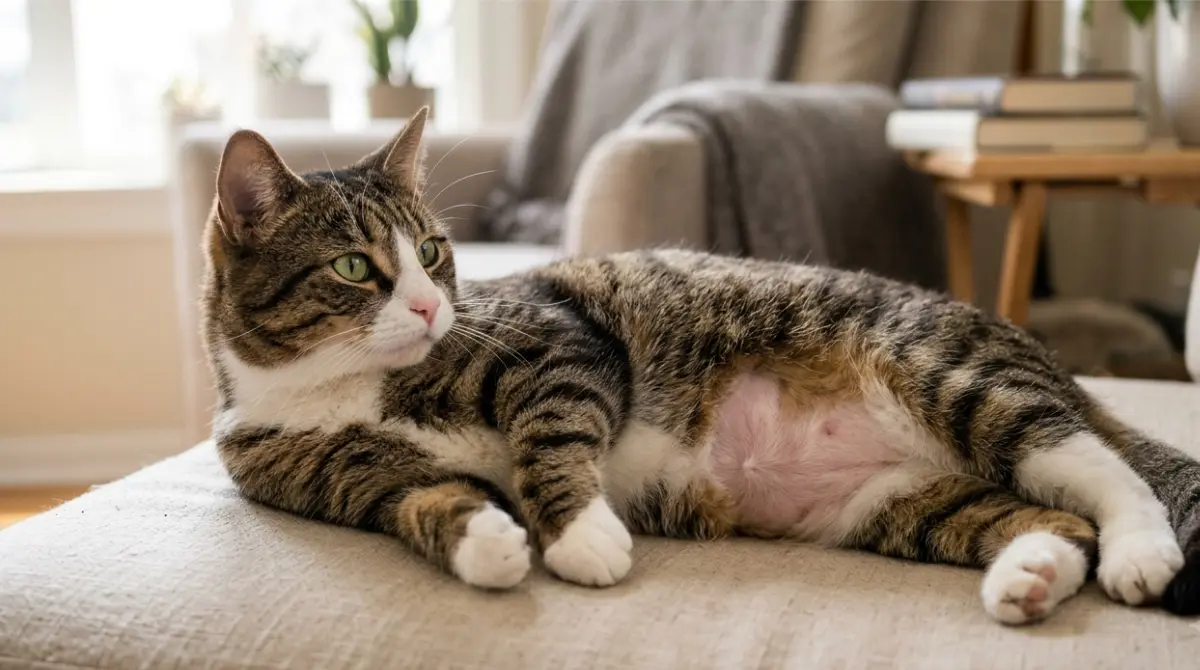
Table of Contents
A bald patch from overgrooming usually means the cat is itchy or sore, and only occasionally that it is stressed. Book a vet visit this week, and go now if the bare skin is broken or a male cat is straining in the litter box with little or nothing coming out.
Owners rarely see the licking that causes it. A healthy cat already spends 30 to 50 percent of its day grooming (Cornell Feline Health Center), so the extra grooming blends in until the fur is gone. The patch is often on the belly, where you only see it when the cat rolls over.
How the patch feels and where it sits tell the vet more than any guess about mood. For the wider question of which cat behaviors are normal and which need a vet, start with the overview. This page covers the bald patch itself.
Spiky stubble or smooth skin?
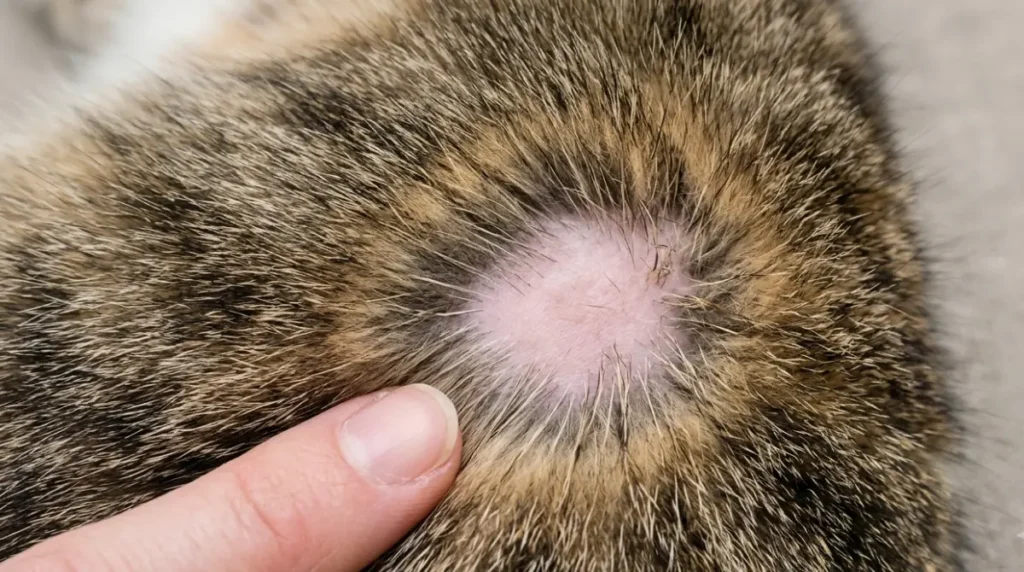
Run a fingertip against the grain along the edge of the patch. Hair a cat has licked or chewed off stays firmly rooted but has lost its tips, so it feels spiky and sharp (WikiVet). Soft, normal-feeling fur at the edge suggests the hair fell out on its own instead, which sends the vet down a different list of causes.
Position is the second check. A cat can only barber what its tongue reaches, so bare skin on the top of the head or between the ears points away from grooming.
More hairballs than usual, or tufts of fur on a favorite blanket, fit the overgrooming picture too.
Bald patch locations and what each one suggests
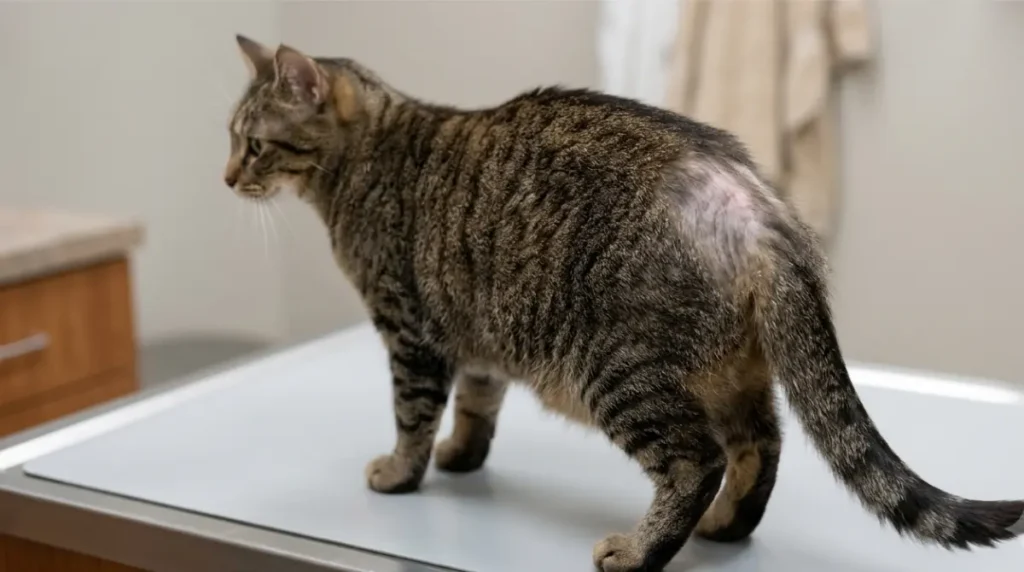
Veterinary dermatologists at Cornell call these cats “fur mowers,” and the mowed area offers a clue to the cause. Itch tends to spread the licking over wide areas, while pain keeps it on one spot. The causes overlap, so treat the table as a starting point for the conversation with your vet.
| Where the fur is gone | What a vet usually looks into first | Also worth mentioning |
|---|---|---|
| Base of the tail and lower back | Fleas | Licking aimed at the tail head |
| Back, belly or patches in several places | Allergy to pollen or food | Licking spread over more than one area |
| Lower belly, inner thighs, around the genitals | Bladder pain from lower urinary tract disease, or allergy | More litter-box trips, straining, peeing outside the box |
| One spot licked again and again | Pain, such as a disc problem or impacted anal glands | Licking that keeps returning to the same place |
| Round patches with scaly or crusty skin and broken stubble | Ringworm, a fungal infection that can also spread to people | Dandruff or crusting at the edges |
| Flanks and belly, skin otherwise normal | Stress grooming, once the rows above are ruled out | A recent change at home |
Sources: Cornell Feline Health Center on cats that lick too much and ringworm; WikiVet on feline grooming disorders.
If the licking stays fixed on one spot, read up on how cats show pain before the appointment so you can describe anything else you have noticed.
Go to a vet now if: the licked skin is raw or oozing, or a male cat is licking his belly or genitals while straining in the litter box and passing little or no urine. Call your cat’s vet, or the nearest emergency vet after hours. Broken skin can become infected, and infection drives even more licking. A urinary blockage in a male cat is a life-threatening emergency.
Stress gets blamed too early
In a 2006 study, 21 adult cats were referred to specialists because their vets suspected stress-related hair loss (study abstract on PubMed). Full testing found a medical cause of itching in 16 of them and a mix of medical and stress-related causes in 3 more. Only 2 of the 21 had stress-related grooming with nothing medical underneath. The most common finding was a reaction to food, diagnosed in 12 cats.
It is a small study of referral cases, so the split in an ordinary clinic will differ. The authors’ conclusion still works as a rule of thumb: stress gets diagnosed too often in cats with hair loss, and testing should come first.
That matters because the usual first move is a pheromone diffuser or a new cat tree. Both can help a stressed cat, and whether diffusers work for anxious cats has its own answer. Neither will clear up fleas or a food allergy.
What will the vet check?
Take dated photos of the patch and a short written history. The vet will want to know:
- when you first noticed the patch, and whether it has grown since
- the name of the flea product you use and when it was last applied
- everything the cat eats, treats included
- any change at home in recent months, such as a move, a new or lost pet, or a new work schedule
- litter-box changes: more trips, straining, or peeing outside the box
Expect the exam to start with the coat. The vet may comb for fleas, look at plucked hairs under a microscope to see whether the tips were broken off, test for mites, and check for ringworm with an ultraviolet Wood’s lamp or a fungal culture. A belly-and-thighs pattern usually brings questions about the bladder.
If a food allergy looks likely, the vet may set up an elimination diet: one prescribed food and nothing else, not even treats. In a review of elimination-diet trials, about 80% of food-allergic cats had improved by week 6 and more than 90% by week 8. That is why most trials run at least 8 weeks.
Until the appointment, put nothing on the skin. Leave human creams and dog flea products out of it, and ask the vet for a product made for cats. Hair loss is one of several behavior changes that warrant a vet visit, and this one is easier to judge with photos.
A cat who grooms to cope needs fewer surprises
Once the vet finds no itch or pain behind the patch, the grooming is treated as a response to stress. A cat that licks to settle itself is usually reacting to change: a move, a pet joining or leaving the household, a shift in your schedule.
The fix is predictability. Make changes in small steps, and carry familiar bedding into any new space. High shelves or perches give the cat somewhere to watch the room from above, and 10 to 15 minutes of play each day is enough to help.
Skip the spray bottle and the scolding. The guidance for stress grooming is the low-stress changes above. For a seriously stressed cat, the vet may prescribe short-term anti-anxiety medication; the choice of drug and the dose stay with the vet.
Licking can outlast its cause, because the act itself soothes. Cornell’s dermatologist expects the habit to fade within about a month. In Cornell’s own example, a seven-year-old cat’s bald belly took a few months to grow back after her routine was restored.
In a multi-cat home: a new or departed pet is one of the recognized triggers. Give each cat its own food, water, litter box and resting spot, spaced apart so one cat cannot guard them all. If the licking started around the time a new cat arrived, a slower introduction may be needed.
Book the visit and bring dated photos
This week, photograph the patch in daylight from the same angle with a coin beside it for scale. Repeat once a week until the appointment, so the vet can see whether it is spreading.
If tests rule out medical causes and the patch keeps growing after the changes at home, ask your vet for a referral to a veterinary behaviorist. Check what a behavior consult costs before you book.