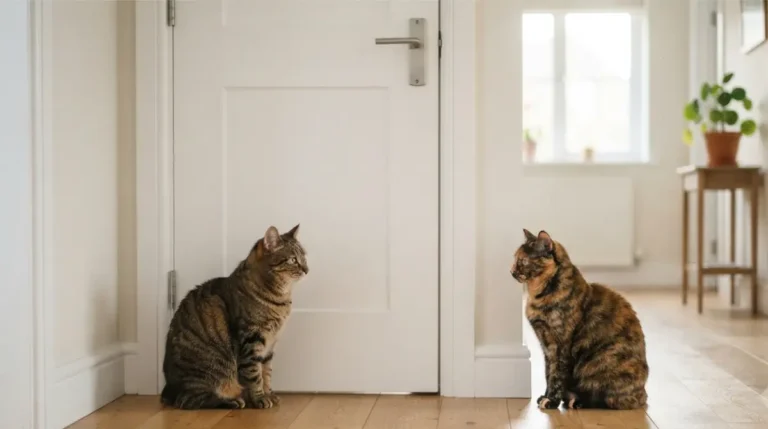
When Cat Hiding Means a Vet Visit and When It’s Just Stress

Cat hiding isn’t always a problem. What matters is change: a new hiding spot, skipped meals, or fewer litter box trips. Here’s how to tell.

Table of Contents
Your cat is hiding more than usual: start here
Cat hiding is only a concern when it’s new or unusual for your cat, and a few signs mean you shouldn’t wait at all.
🚨 Go to a Vet Now If: your hiding cat is straining in the litter box with little or no urine, breathing with an open mouth or visible effort, has collapsed, or may have eaten something toxic. Call an emergency vet now. For a possible poisoning, you can also call ASPCA Animal Poison Control at (888) 426-4435 (a consultation fee may apply).
Quick check: is this urgent right now?
If none of those apply, find your situation:
- Hiding and not eating: the time limits are in the next section.
- New home, new cat, or new pet: see the life-stage breakdown.
- Senior cat, or hiding out of nowhere: read the life-stage and health sections.
Hiding vs. hiding more
Many cats hide out of habit. What matters is change: a new spot, longer stretches, or skipped meals. For the wider view, see our guide to what’s normal in cat behavior and what needs a vet.
ℹ️ Vet Note: This article explains common reasons a cat hides more than usual. It can’t diagnose your cat. If hiding comes with not eating, breathing changes, or litter box changes, contact your veterinarian, and use the emergency signs above for anything urgent.
When a hiding cat needs a vet today
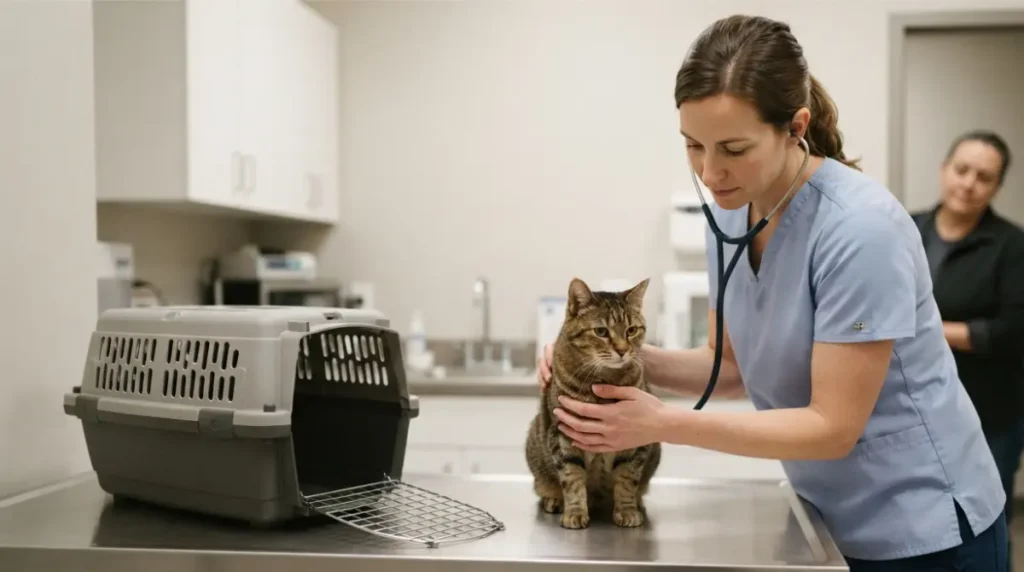
Use this three-step ladder to decide how fast to act.
Go now (emergency)
- Straining to pee with little or nothing coming out, especially in male cats, whose urinary tract blocks more easily. A blocked cat is a true emergency, and death can follow within 24–48 hours without treatment. Cornell’s urinary warning signs explain what to look for.
- Open-mouth or labored breathing, or collapse.
- Suspected poisoning: call your vet or ASPCA Animal Poison Control.
Call your vet today
- Hiding and not eating for about 24 hours in an adult cat. Cornell’s guidance on appetite loss warns it can seriously harm a mature cat in that time.
- Hiding with vomiting, crying in the litter box, or peeing outside the litter box.
Watch and log for 24 hours
- Your cat is still eating, drinking, and using the litter box normally, and there’s an obvious trigger such as visitors, noise, or a move.
🐾 Life-Stage Note: Kittens have far less margin. Cornell notes that for kittens under six weeks old, just 12 hours without food can be life-threatening, so call your vet sooner.
Is it normal for cats to hide? Know your cat’s baseline
Yes, hiding is normal cat behavior. Cats retreat to rest, to feel secure, or to cope with stress. What matters is whether the pattern has changed.
Why cats hide at all
🔍 Why Cats Do This: Cats are predators, but they’re also prey for larger animals. Over time they evolved to conceal weakness, so an unwell cat often goes quiet and withdraws rather than looking sick.
Signs the hiding is a change, not a habit
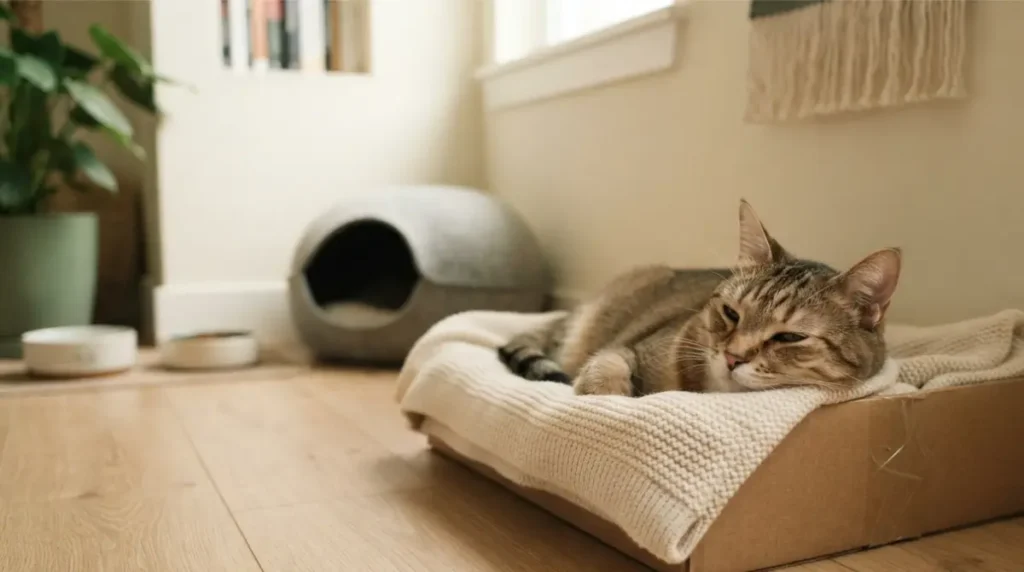
- A new or unusual hiding spot
- Hiding at times your cat is normally social
- Skipped meals or fewer litter box visits
- Avoiding touch, or a tense, tucked posture instead of a relaxed sprawl
Kittens, seniors, new cats: how the answer changes
The same behavior means different things depending on your cat’s age and household.
New cat or new home
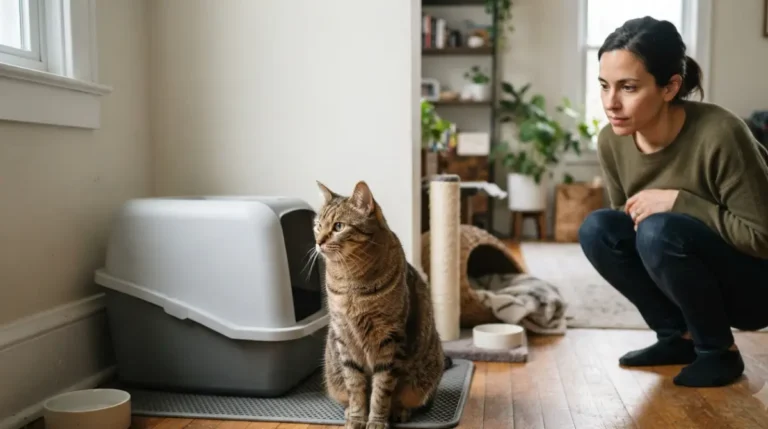
A newly adopted cat usually hides for a few days. Keep food, water, and a litter box close to the hiding spot.
Senior cats
Sudden hiding in an older cat can signal new or worsening discomfort, so book a vet check. Our guide to behavior changes in senior cats covers what else to watch.
Kittens
Kittens have little reserve, so use the tighter kitten timeline in the previous section.
Pregnant cats
An unspayed female close to giving birth often seeks a quiet, secluded spot. If pregnancy is possible, tell your vet.
Multi-cat and new-pet homes
A new pet or tension between cats can drive hiding. Give each cat its own food, water, litter, and resting spots. If your cats have started fighting, see how to reintroduce cats after sudden fighting.
Do cats hide when they’re sick or in pain?
Yes. Hiding is often one of the first visible signs of pain or illness in cats.
Why illness shows up as hiding
In early illness, withdrawal may be the only change you notice. Cornell lists hiding more among the behavior changes worth checking. Possible causes include pain, urinary problems, and many other illnesses, and only a vet can tell which. To spot pain directly, see our guide to signs your cat is in pain.
What the vet will check
Expect a full physical exam. Depending on the findings, the vet may also run bloodwork or a urine test.
⚠️ Watch Out: Never give your cat human pain relievers. Over-the-counter medications consistently top ASPCA Poison Control’s list of pet poisoning calls.
How to help your cat feel safe enough to come out
Once urgent causes are ruled out, patience is the most effective tool you have.
Don’t pull them out
Dragging a cat out of hiding can increase stress and keep them hidden longer. Let your cat come out on their own terms.
Set up food, water, and litter nearby
Many cats come out at night, when the house is quiet. Place essentials within easy reach of the hiding spot.
Reduce the trigger
Keep routines steady, lower noise, and offer safe retreats such as a box with a blanket. A study of shelter cats found that cats given a place to hide showed less stress. International Cat Care’s advice on feline stress explains common stressors.
✅ Do This: Sit quietly in the same room and speak softly, without reaching in. Let your cat choose when to approach.
Track these 5 things while your cat is hiding
A simple observation log makes your vet visit faster and more useful.
The 24-hour log
- Whether your cat is eating, and roughly how much
- Whether your cat is drinking
- Litter box visits: any urine, how much, and stool
- Vomiting, breathing changes, or other new signs
- Where your cat is hiding, for how long, and when it started
What to bring to the vet
Bring the log, short videos of anything unusual, and a list of recent household changes.
FAQ
1. Is it normal for cats to hide?
Yes, cat hiding is normal behavior for rest and security. Worry when the hiding is new, longer than usual, or comes with other changes.
2. Why is my cat hiding and not eating?
A cat hiding and not eating may be ill. Call your vet if an adult cat hasn’t eaten for about 24 hours, or sooner for kittens.
3. Do cats hide when they’re in pain?
Yes. Cats hide pain and illness by instinct, so hiding is often an early sign. If hiding is new or comes with other symptoms, contact your veterinarian.
4. Should I force my cat out of hiding?
No. Forcing a hiding cat out can increase stress and prolong hiding. Keep food, water, and litter nearby instead.
5. How long do cats hide in a new home?
A new cat usually hides for a few days. Keep essentials close, and call your vet if eating or litter habits change.
6. Why is my senior cat hiding?
Sudden hiding in a senior cat can signal new or worsening discomfort or illness. Book a veterinary check rather than waiting it out.
7. Is a male cat hiding and straining to pee an emergency?
Yes. A male cat straining with little or no urine may be blocked, which can be fatal within 24–48 hours. Go to an emergency vet now.
8. What will the vet check for a hiding cat?
Expect a physical exam, and possibly bloodwork or a urine test. Bring your log of eating, drinking, litter box use, and hiding times.
The bottom line on a hiding cat
Hiding alone is often just your cat coping. Hiding plus straining, breathing trouble, collapse, possible poisoning, or a day without food means calling a vet now. For everything in between, keep essentials close, stay patient, and keep a log.