How Many Litter Boxes Per Cat, and the Easy Way to Place Them

Litter boxes per cat follow the n+1 rule, but two boxes side by side can count as one. Here’s the setup that actually gives every cat a choice.
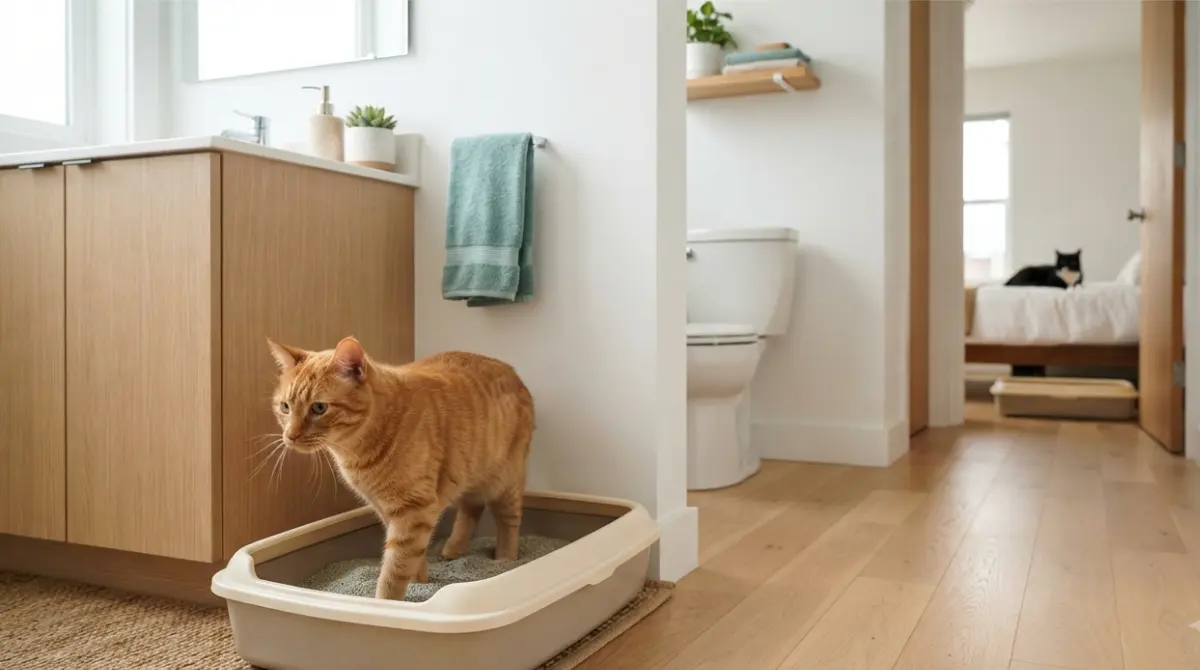
Table of Contents
How many litter boxes you need: the n+1 answer
You need one litter box per cat, plus one extra. That’s the n+1 rule, and Cornell’s Feline Health Center recommends it for every home, including single-cat homes.
The quick math for 1, 2, 3 and 4 cats
| Cats | Minimum boxes | Key Detail |
|---|---|---|
| 1 | 2 | The spare covers a dirty box |
| 2 | 3 | Put them in different rooms |
| 3 | 4 | Spread them across the home |
| 4 | 5 | Check the social-group version below |
Sourced: Cornell Feline Health Center; 2021 AAHA/AAFP Feline Life Stage Guidelines.
Which part of this guide you need
- Adding a second cat? Start with the life-stage table.
- Short on space? Jump to the small-apartment workarounds.
- Finding accidents, or seeing your cat strain in the box? Go to the last section first. Straining with little or no urine is an emergency.
Why cats need that extra box
A litter box is a resource cats care about, not just a toilet.
Boxes are territory, not just toilets
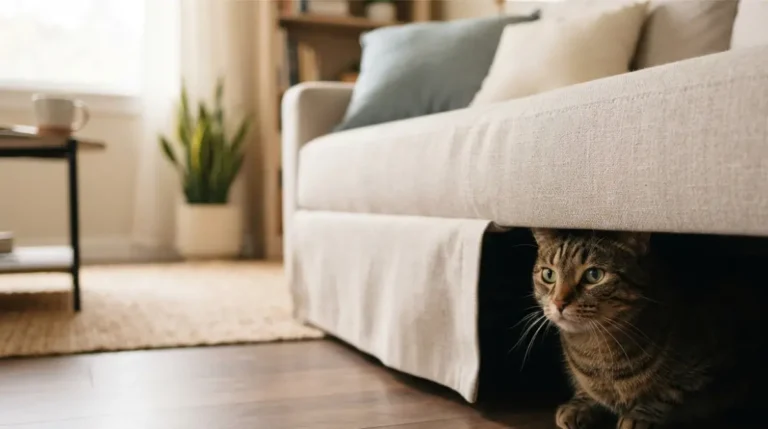
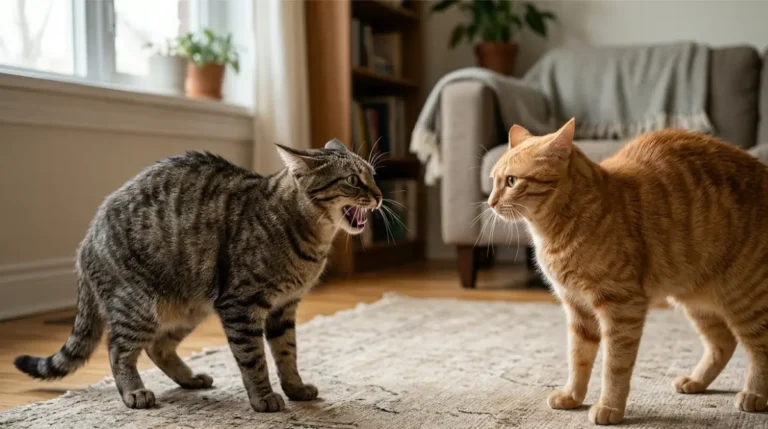
🔍 Why Cats Do This: In a multi-cat household, one cat can block another’s route to a box, and a timid cat may then hold it or go elsewhere. A spare box in a different spot gives every cat a second way in.
The social-group version of the rule
The AAHA/AAFP feline life stage guidelines offer a second version: one box per social group, plus one. A social group is cats that sleep together and groom each other. Cats that avoid each other count as separate groups.
Is n+1 proven? What the research actually shows
Honestly, n+1 is an expert rule of thumb, not a tested formula. A 2017 multi-cat study found cats strongly preferred a clean box over a used one, while a familiar cat’s scent alone didn’t change their choice. The takeaway is that extra boxes only help if you keep them scooped.
Does the n+1 rule change for your cats?
The base count stays the same, but where you put boxes and which boxes you buy change with your cats.
One cat: why two boxes still helps
Cornell’s rule covers single-cat homes too, so one cat gets two boxes. The spare is a clean fallback when the main box needs scooping.
Kittens and senior cats
🐾 Life-Stage Note: AAHA advises box edges low enough for a kitten or senior cat to step in and out easily. If an older cat starts missing the box, read our guide to behavior changes in senior cats.
Multi-floor homes and big multi-cat groups
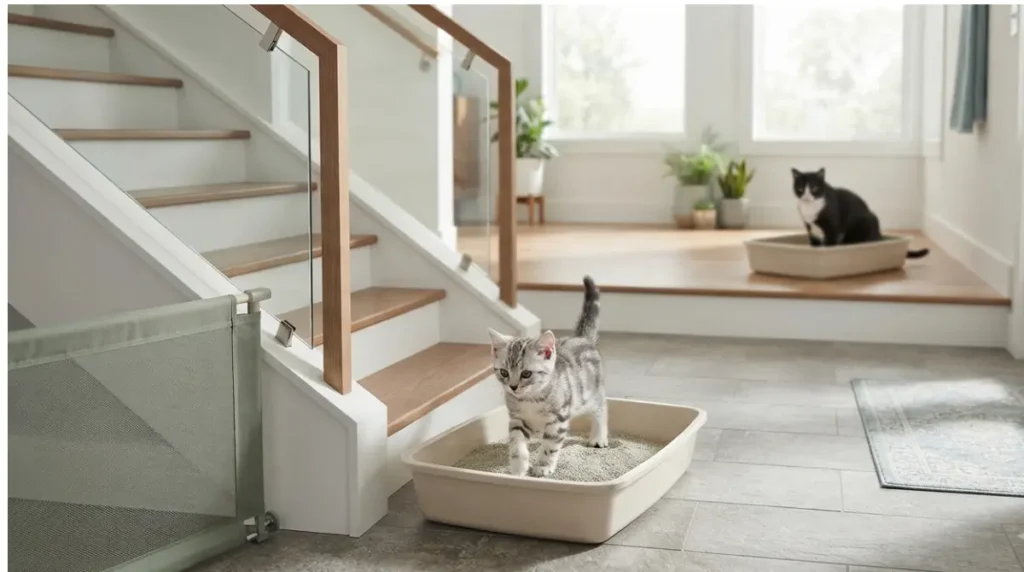
AAHA recommends boxes in different, easily reached spots throughout the house. If your cats use more than one floor, put a box on each floor they use.
| Situation | Adjust the count | Key Detail |
|---|---|---|
| Cats use 2+ floors | Add boxes so each floor has one | Keeps stairs from blocking access |
| Kitten or senior | Swap in low-entry boxes | AAHA: edges easy to step over |
| Known social groups | One per group, plus one | AAHA alternative rule |
| New cat arriving | Set up its box first | See how to introduce two cats |
Where to put the extra boxes (not side by side)
Spread boxes across different rooms, because two boxes pushed together work like one.
Why two boxes together count as one
Feline guidelines call for boxes in separate locations. Two boxes placed side by side share one spot. If a cat feels blocked or startled there, both boxes are out of reach at once.
Quiet spots with an escape route
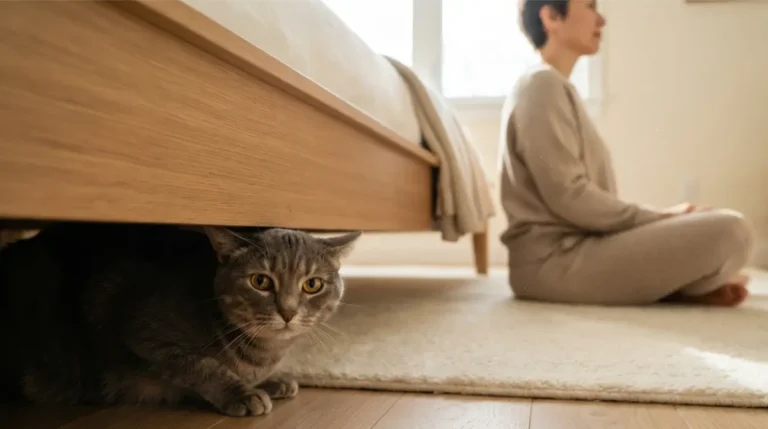
AAHA recommends quiet locations that are convenient for the cat and give it an escape route. A box at the back of a closet can leave a cat cornered.
Keep boxes away from food, noise and other pets
Cornell advises keeping food and water dishes far from the litter box. Also avoid spots next to loud appliances or where dogs and small children pass through.
⚠️ Watch Out: Lining up every box in the laundry room meets the count on paper but fails the rule in practice. A noisy dryer can put a cat off all of them at once.
Box size matters as much as box count
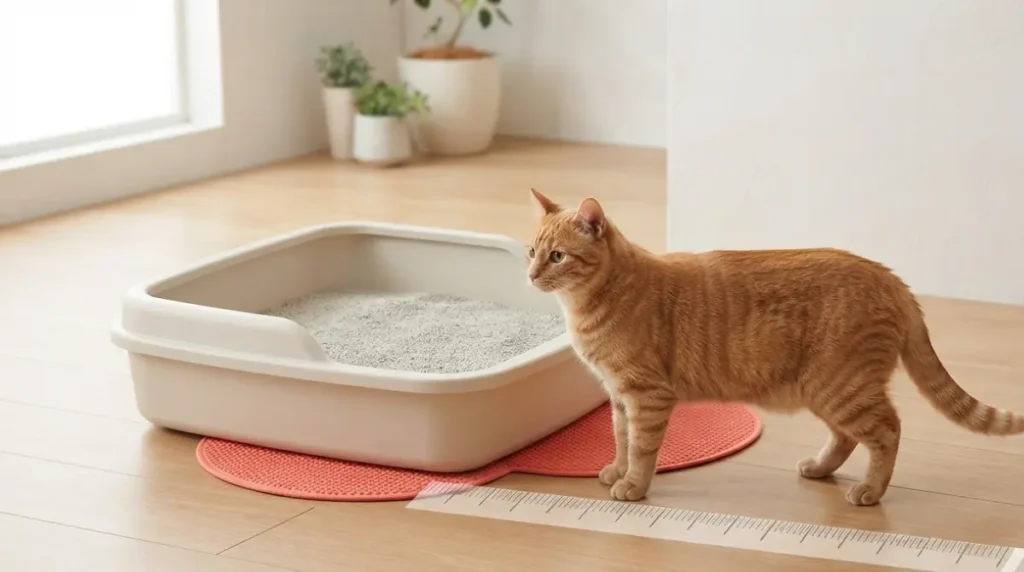
A litter box should be at least 1.5 times your cat’s length, measured from nose to tip of tail, per AAHA.
How to measure your cat for a box
Measure your cat from nose to tail tip, then multiply by 1.5. For example, a cat measuring 30 inches needs a 45-inch box. That’s why AAHA notes most manufactured boxes aren’t large enough, and suggests larger storage containers instead.
Covered vs uncovered, and which litter
Cornell reports that most cats prefer simple boxes without hoods. Most, but not all, prefer unscented, fine-textured litter. AAHA adds that cats with a history of urinary problems may prefer unscented clumping litter.
Scooping and what it costs
AAHA recommends scooping daily and cleaning boxes regularly with hot water rather than soap or strong chemicals.
Small apartment, several cats: realistic workarounds
Space is a real limit, but fixing the box setup comes first. The FelineVMA/ISFM house-soiling guidelines name litter box optimization as a universal first step.
Signs you don’t have enough boxes
- Accidents appear near a box or elsewhere. First, rule out other reasons your cat pees outside the box.
- A cat waits, paces, or gets chased away from a box.
- Boxes are heavily soiled well before your daily scoop.
Making n+1 fit a small space
Use separate rooms, such as a bathroom plus a bedroom corner, instead of one crowded closet.
✅ Do This: If you can’t fit n+1 boxes, scoop more often and watch closely for the signs above.
When accidents aren’t about the number of boxes
Sometimes litter trouble is a health problem, not a setup problem.
Signs to call your vet
Cornell’s overview of urinary tract signs in cats lists these signs:
- difficult or painful urination
- frequent trips to the box
- crying out while urinating
- blood in the urine
- peeing outside the box
- frequent licking of the genital area
If you see any of them, call your vet promptly.
The emergency sign: straining with little or no urine
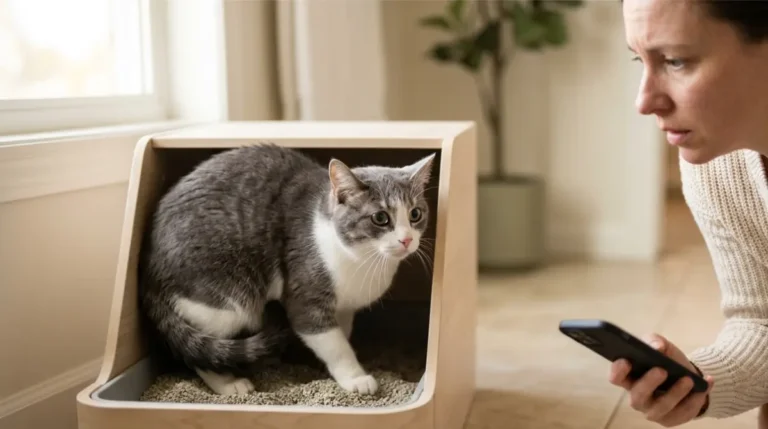
🚨 Go to a Vet Now If: your cat strains in the box but passes little or no urine, or seems increasingly distressed. Cornell calls urethral obstruction an absolute emergency. Go to your vet or an emergency clinic right away, and don’t wait to see if it passes.
Male cats face higher risk because their urethra is longer and narrower. For the bigger picture, see which litter-box changes are normal and which need a vet.
Frequently asked questions
1. How many litter boxes do I need for 2 cats?
Two cats need three litter boxes under the n+1 rule: one per cat, plus one extra, placed in different rooms.
2. Does one cat really need two litter boxes?
Yes. Cornell’s n+1 rule includes single-cat homes, so one cat gets two boxes and a clean fallback.
3. Can two cats share one litter box?
Some do. Research suggests cleanliness matters more than sharing, but n+1 still guards against blocked access.
4. Can I put two litter boxes side by side?
Avoid it. Two boxes in one spot work like one box, so spread them across separate rooms.
5. How big should a litter box be?
At least 1.5 times your cat’s length from nose to tail tip, per AAHA. Most store-bought boxes fall short.
6. Do kittens need a different litter box?
Kittens need boxes with low edges they can step over easily. AAHA recommends the same for senior cats.
7. How many litter boxes fit a small apartment?
Aim for n+1 in separate rooms. If you can’t manage that, scoop more often and watch for accidents or blocked access.
8. How often should I scoop multiple litter boxes?
Scoop every box daily, as AAHA recommends, and clean boxes regularly with hot water.
9. Are covered or uncovered litter boxes better?
Cornell reports most cats prefer simple boxes without hoods, so start with uncovered boxes.
10. Why does my cat pee outside the box when there are enough boxes?
It may be medical. Call your vet promptly, and go immediately if your cat strains and passes little or no urine.
Getting your litter box count right
Count one box per cat, plus one. Spread them across rooms and floors, size each box to your cat’s length, and scoop daily. If accidents continue, stop adding boxes and call your vet.