Why Do Cats Knead, and What Turns Purring Into Biting?

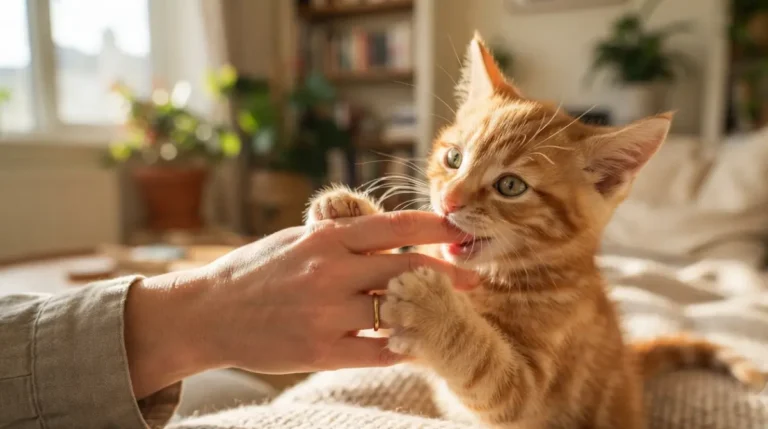
Cats knead because nursing kittens press on their mother to keep milk flowing. So why do the teeth come out mid-knead? Here’s how to read it.
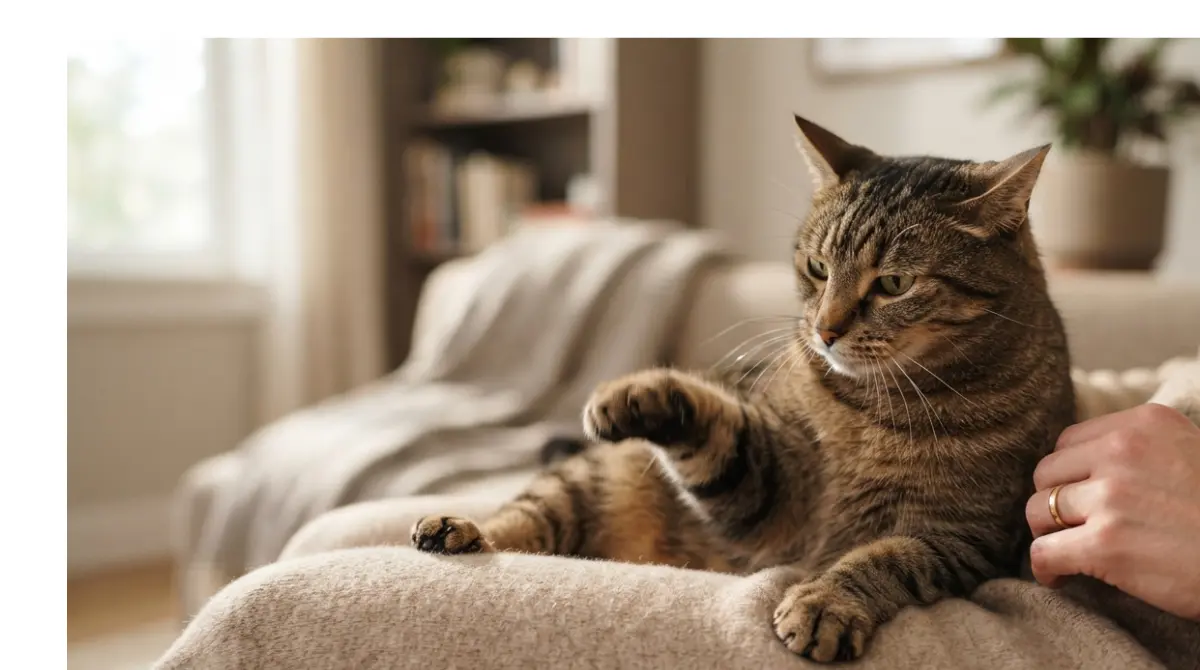
Table of Contents
Why your cat kneads you, then suddenly bites
That rhythmic push of paws into your lap, often with a purr, is kneading, and it’s normal cat behavior. The nip that sometimes follows usually isn’t your cat turning on you.
Start with your situation:
- Curious: the four reasons cats knead come next.
- Getting nipped: skip to the warning signs and fixes.
- Worried: read the check below first.
🚨 Check This First: Biting that’s new for your cat is a reason to call your veterinarian, because pain can cause it. If a bite broke your skin, wash it now with warm soapy water and read the doctor-or-vet section below.
For the bigger picture, see our guide to which cat behaviors are normal and which need a vet.
ℹ️ Vet Note: This article explains kneading and the bites that can come with it. It isn’t a diagnosis. If biting is new or getting worse, or your cat seems sore when touched, contact your veterinarian. Bites that break the skin need washing right away and may need medical care.
Why cats knead: the four reasons behind “making biscuits”
Cats knead because the habit starts at birth, when nursing kittens tread on their mother’s belly to keep milk flowing. Adult cats keep it up for four common reasons:
- Comfort: kneading stays linked with the safety of nursing.
- Scent: glands in the paw pads leave pheromones behind.
- Bed-making: a widely described instinct to press down a resting spot.
- Stretching: a theory some experts suggest, with less support.
It starts with nursing
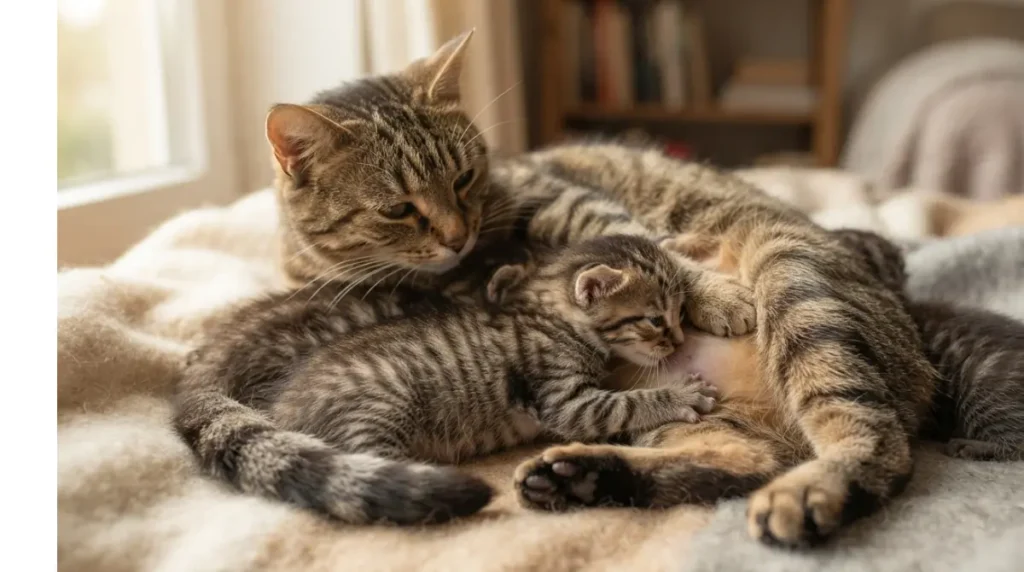
🔍 Why Cats Do This: Kittens press alternating front paws against their mother to stimulate milk. International Cat Care’s guide to why cats do what they do explains how that nursing motion carries into adulthood.
Making a bed and marking it as theirs
The largest pad on each paw produces pheromones, so kneading leaves a scent only other cats can read. That goes for your lap as well as their blankets.
Does kneading mean your cat loves you?
It’s a sign of trust. A cat kneading your lap links you with the comfort it once had with its mother.
Why some cats drool while they knead
Drooling during kneading is commonly tied to that nursing link, though it isn’t firmly proven.
Why your cat bites you in the middle of kneading
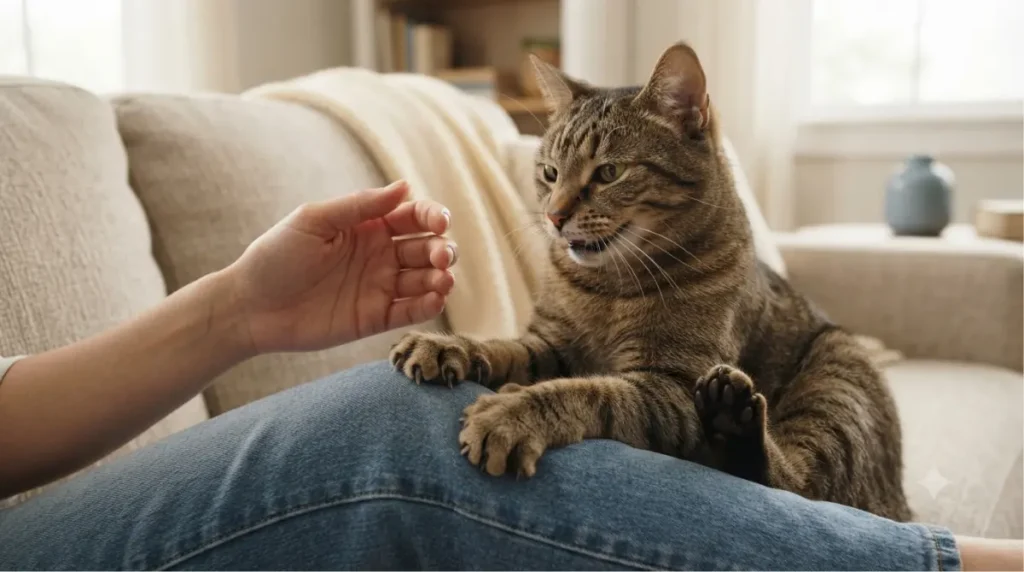
A cat that bites mid-knead is usually doing one of three things: suckling out of old habit, reacting to too much touch, or playing.
Suckling that carries over from kittenhood
Kneading began alongside nursing, so some cats mouth or gently suckle while they knead. A gentle, mouthing nip may simply be that old habit.
Too much of a good thing: overstimulation
The Cornell Feline Health Center says no one knows exactly why some cats suddenly bite the hand petting them. The leading explanations are overstimulation and the cat wanting to decide when petting ends. That means stroking a kneading cat can push it past its limit.
Play bites from young, wound-up cats
Kittens and young cats may treat your lap as a playground, especially if they grew up without littermates to play with.
Kittens, adults, and seniors knead and nip differently
The same nip can mean different things depending on your cat’s age.
Kittens: suckling and play biting
Nips in kittens are most often play or suckling. Kittens learn how hard is too hard from littermates, so one raised alone may bite harder.
Adult cats: kneading as comfort
In adults, kneading is mostly a comfort ritual. A bite most often points to overstimulation.
Senior cats: when a new bite may mean pain
🐾 Life-Stage Note: Cornell notes that cats with painful joints, as in osteoarthritis, may bite when those areas are touched. An older cat that starts nipping during lap time needs a vet check, not just a behavior fix.
Why some cats never knead
Not every cat kneads. Cats show comfort in different ways, so a cat that doesn’t knead isn’t missing anything.
The signs your kneading cat is about to bite
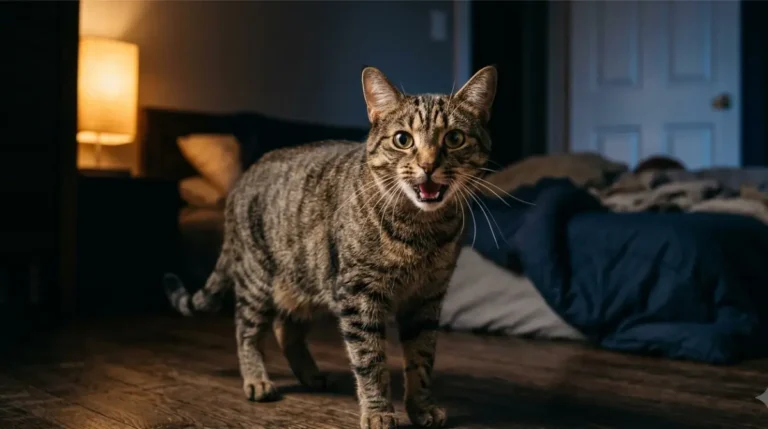
Most bites come with warning signs. Cornell lists the classic ones as dilated pupils, a lashing tail, and ears turning back.
The Knead-to-Nip escalation ladder
Our ladder groups those cues into steps. Your cat may skip rungs or show them in a different order.
- Relaxed: slow kneading, soft body, often purring.
- Changing: the relaxed rhythm stops.
- Tail: the tail starts lashing.
- Ears: the ears rotate or flatten backward.
- Eyes: the pupils widen.
✅ Do This: Lift your hand away at the first sign of change or tail lashing, and let your cat settle on its own terms.
Where cats usually do and don’t like being touched
Many cats enjoy gentle strokes on the head, chin, and cheeks. Handling such as grooming or nail trims can set off the same biting reaction. Supervise young children, who often miss these cues.
How to stop the biting without stopping the kneading
You don’t need to end the kneading, only the moments that tip into biting.
Put a thick blanket between you
A folded blanket over your lap protects you from claws and gives your cat a soft surface to knead.
Stop petting while your cat kneads
Let the kneading be the whole interaction. Reward brief, light strokes with a treat and build up slowly. At any sign of aggression, stop and give your cat a no-touch cool-down.
Keep claws trimmed
Trimming your cat’s nails regularly reduces scratches. Ask your vet’s team for help if needed.
⚠️ Watch Out: Nail trims can trigger bites in touch-sensitive cats. Keep sessions short, or let your vet’s team handle them.
Why scolding makes it worse
Physical punishment can make a cat more fearful and its biting worse. For kittens, redirect the bite to a toy held well away from your hands.
When a kneading bite needs a doctor or a vet
Most kneading nips are minor, but a cat bite that breaks skin deserves prompt care.
If the bite broke your skin
Wash it with warm soapy water right away. The CDC estimates that 20–80% of reported cat bites and scratches become infected. It advises getting medical attention if:
- you don’t know whether the cat is vaccinated against rabies
- the cat appears sick
- the wound is serious
- the wound becomes red, painful, warm, or swollen
- your last tetanus shot was more than 5 years ago
The CDC’s guidance on cat bites and scratches has the full details.
If your cat’s biting is new, worse, or obsessive
Rule out medical causes first. Conditions such as hyperthyroidism, osteoarthritis, and dental disease can cause aggression, as Cornell’s guide to aggression in cats explains.
✅ Do This: Book a vet visit if biting is new or escalating, or if kneading seems constant or damages your cat’s paws or skin. Before the visit, note when the biting started, what sets it off, and where your cat reacts to touch. If biting continues after health problems are ruled out, ask about a veterinary behaviorist.
Frequently asked questions
1. Why do cats knead you?
Cats knead you because the habit starts with nursing. Adults knead for comfort, to leave scent from paw-pad glands, and when settling to rest.
2. Why does my cat bite me while kneading?
A cat biting while kneading is usually suckling out of habit, overstimulated by touch, or, in young cats, playing.
3. Does kneading mean my cat loves me?
Kneading on your lap is a sign of trust. It links you with the comfort a kitten felt with its mother.
4. Should I stop my cat from kneading me?
There’s no need to stop kneading. Use a thick blanket, keep nails trimmed, avoid petting mid-knead, and never punish your cat.
5. Why does my cat drool when kneading?
Drooling while kneading is commonly linked to the nursing habit behind kneading, though that link isn’t firmly proven.
6. Why doesn’t my cat knead?
Not every cat kneads. Cats show comfort in different ways, so a cat that doesn’t knead isn’t missing anything.
7. Is a cat love bite dangerous?
A cat bite that breaks skin can become infected; the CDC estimates 20–80% of reported bites do. Wash it, and see a doctor if it turns red, swollen, warm, or painful.
8. When should I worry about my cat biting while kneading?
Worry if biting while kneading is new, getting worse, or your cat seems sore when touched. Contact your veterinarian, since pain can cause aggression.
Keep the biscuits, skip the bite
Kneading is your cat’s comfort ritual, and the nip that sometimes follows usually has a readable cause. Watch the tail and ears, keep a blanket on your lap, and call your vet if biting is new.