Cat Christmas Tree Safety Starts With Avoiding Tinsel and Lilies

Cat christmas tree safety comes down to a few hazards. See which, from tinsel to lilies, mean a vet visit now and which mean a phone call.
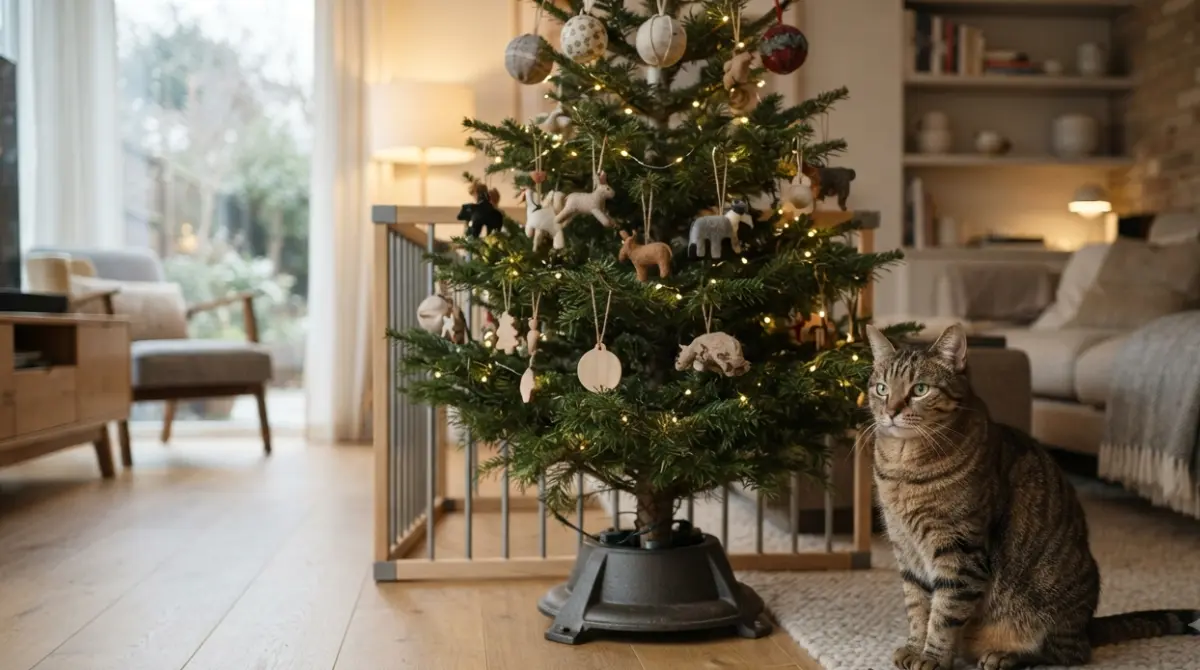
Table of Contents
Which holiday tree hazards are actually dangerous for cats
Most cat christmas tree safety problems come from what’s hanging on the tree and sitting in the vase, not the tree itself.
🚨 Go to a Vet Now If: your cat has swallowed tinsel, ribbon, or string; chewed a cord; or touched, licked pollen from, or drunk water from a lily. Call your veterinarian or an emergency clinic now, or call the ASPCA Animal Poison Control line at (888) 426-4435 (a consultation fee applies). Don’t wait for symptoms.
Already seeing a problem? Go straight to the emergency section below. Setting up for the season? Read on for tinsel, cords, plants, and a tree setup that holds, with notes for kittens and multi-cat homes.
ℹ️ Vet Note: This article is general education about holiday hazards for cats. It isn’t a diagnosis and can’t replace an exam. If your cat may have swallowed, chewed, or been exposed to anything described here, contact your veterinarian or an emergency clinic right away.
When a holiday hazard is an emergency
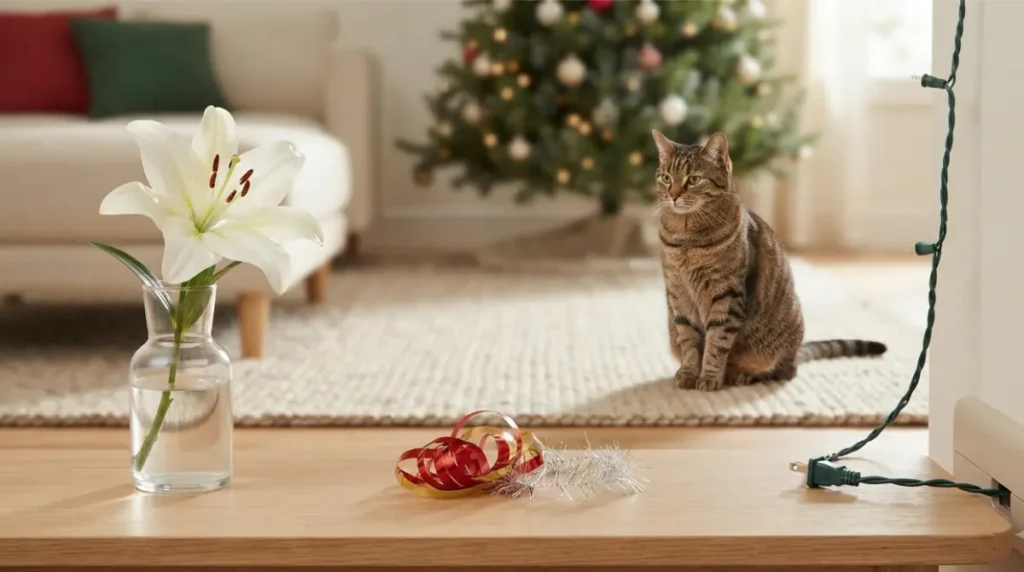
Some holiday hazards need a vet right now; others need a call for advice.
| Hazard | What’s at stake | What to do |
|---|---|---|
| Any lily exposure | Kidney failure | Call now |
| Swallowed tinsel, ribbon, or string | Intestinal blockage | Call now |
| Chewed electrical cord | Mouth burns, lung fluid | Call now |
| Tree water | Stomach upset | Call for guidance |
| Poinsettia, holly, mistletoe | Upset stomach; holly and mistletoe can also affect the heart | Call for guidance |
Sources: ASPCA, FDA Center for Veterinary Medicine, Merck Veterinary Manual.
Call now
🚨 Go to a Vet Now If: your cat chewed a cord, swallowed tinsel, ribbon, or string, or had any lily exposure, even if she seems fine. Electrical injury can cause fluid in the lungs hours later.
Call for guidance
Call your vet or poison control after tree-water drinking or plant chewing. Go in if vomiting, unusual tiredness, or poor appetite follows.
What to have ready
Note what your cat ate or chewed, how much, and when, and keep the packaging. The ASPCA Animal Poison Control line runs around the clock and charges a consultation fee.
Why tinsel and ribbon are the worst offenders
The ASPCA’s advice on tinsel is blunt: leave it off the tree.
Why cats go for shiny, dangling things
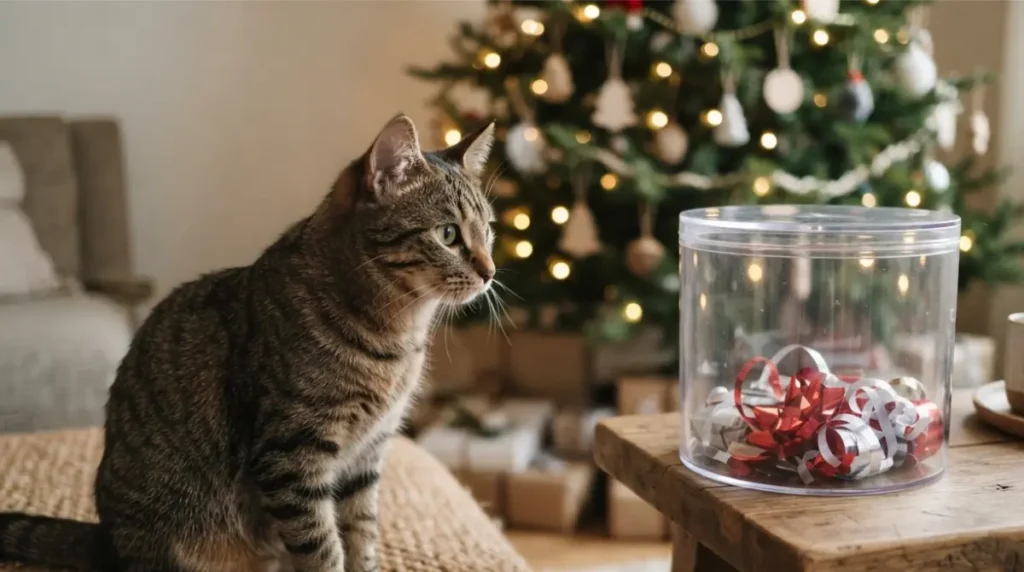
Tinsel catches the light, swings when batted, and is easy to carry in the mouth, so cats treat it like a toy.
What swallowed tinsel can do
A nibble can become a swallow. Swallowed tinsel can block the digestive tract, cause severe vomiting and dehydration, and sometimes require surgery, according to the ASPCA’s holiday safety guidance. Ribbon, garland, and string are the same kind of risk.
Safer ways to make the tree sparkle
Use lights and sturdy ornaments instead. If you see string or tinsel hanging from your cat’s mouth, don’t pull it; go to a vet.
⚠️ Watch Out: Gift ribbon is as tempting as tinsel. Bin it as you unwrap.
Cords, lights, and glass ornaments
Chewing electrical cords is the most common cause of electrical injury in small animals, and the Merck Veterinary Manual calls electrical injury a true emergency.
Protecting the cords
Route cords behind furniture, cover what you can’t hide, and keep wires and batteries out of reach, as the ASPCA advises.
🐾 Life-Stage Note: Cord injuries mostly affect young animals under two, so kittens need cords physically blocked, not just tucked away.
Where ornaments go
Hang breakable ornaments high. Glass shards are sharp, and small ornaments can be swallowed.
Battery-operated lights as an option
Battery-powered lights remove the cord, but the battery pack still needs to sit out of reach.
Lilies and other holiday plants
Lilies are the holiday flower that can cause kidney failure in cats.
Why lilies are different
True lilies, including Easter, tiger, Asiatic, stargazer, and Oriental lilies, and daylilies are toxic. Every part counts: petals, leaves, pollen, even vase water, so grooming pollen off fur is enough. Kidney failure can develop in under three days, and treatment delayed 18 hours or more generally leaves irreversible damage, per the FDA Center for Veterinary Medicine.
Poinsettia, holly, and mistletoe
Poinsettias cause mild to moderate stomach irritation. Holly and mistletoe can cause stomach upset and heart problems.
Pet-safer swaps
Choose faux plants, or keep non-lily plants out of reach. Ask guests not to bring lilies.
Setting up the tree so it can’t tip
A Christmas tree itself isn’t considered particularly toxic to cats; the real hazards are tinsel, tree water, cords, and lilies.
Anchoring and location
Secure the tree tightly so it can’t tip, as the ASPCA advises: heavy base, wall or ceiling anchor, and no nearby furniture to launch from.
Covering the tree water
Tree water can hold fertilizers and bacteria that cause nausea, diarrhea, or stomach upset. Use plain water only, and cover the base.
Real or artificial tree
An artificial tree removes the tree-water problem, not the tinsel, cord, or ornament problems.
Barriers and tabletop options
A gate, pen, or closed door keeps cats out when you’re away, and a tabletop tree suits small spaces. If the tree takes over a corner, leave litter boxes in place; here’s how many litter boxes per cat you need.
🐾 Life-Stage Note: Kittens and young cats climb hardest, so use a barrier, not just a deterrent.
Fixes when your cat won’t leave the tree alone
Climbing and batting at the tree is curiosity, not misbehavior, and scare tactics aren’t an effective fix.
Redirect, don’t punish
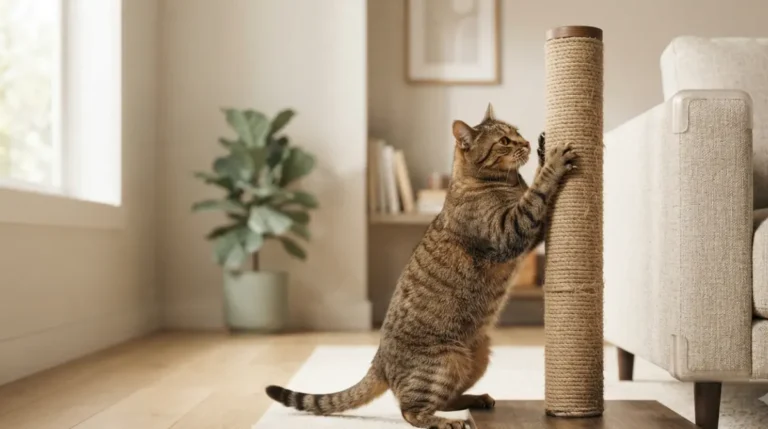
Block access, then give your cat a tall perch in the same room and play daily away from the tree. If the fixation looks like part of a bigger pattern, check the signs of indoor cat boredom.
Give your cat a better “tree”
Place a window perch or cat tree near the real one and rotate toys. For persistent problems, ask your vet about a certified behavior consultant or veterinary behaviorist.
If your cat’s behavior shifts over the holidays, normal cat behavior versus vet warning signs can help you tell stress from illness.
Cat Christmas tree safety FAQs
1. Are Christmas trees toxic to cats?
Not considered particularly toxic, but tree water, tinsel, cords, and lilies are the real hazards. If your cat seems unwell after any of them, call your vet.
2. Is tinsel dangerous for cats?
Yes. Swallowed tinsel can block the intestines, cause severe vomiting and dehydration, and may need surgery. If your cat swallowed any, call a vet now.
3. Can cats drink Christmas tree water?
No. It can carry fertilizers and bacteria that cause stomach upset, so cover it. Call your vet if vomiting, diarrhea, or unusual tiredness follows.
4. Are lilies dangerous for cats?
Yes. Every part, including pollen and vase water, can cause kidney failure. Any exposure is an emergency, so call a vet or poison control immediately.
5. Are poinsettias poisonous to cats?
Poinsettias cause mild to moderate stomach irritation. Holly and mistletoe are more serious, so call your vet or poison control if your cat chews either.
6. How do I keep my cat off the Christmas tree?
Anchor the tree, block access with a gate or closed door, and give your cat a better perch. Skip scare tactics.
7. Are artificial trees safer for cats?
They remove the tree-water problem, but not tinsel, cords, or ornaments. Anchor and decorate an artificial tree with the same precautions.
8. When should I call a vet after my cat chews tinsel or a cord?
Right away, even if your cat seems fine. Electrical injury can cause lung fluid hours later, and tinsel can block the intestines, so don’t wait for symptoms.
Keep the risky decorations out of reach
The tree is rarely the problem. Lilies, swallowed tinsel, and chewed cords are emergencies; tree water and most other plants need a call for advice. If your cat has been near any of them, contact your vet or poison control now rather than waiting. Afterward, if your cat is hiding or off her food, read when cat hiding is a reason to worry.