Your Gentle Day-by-Day Countdown for Cats and Fireworks

Cats and fireworks: noise phobias are less common in cats, but they happen. Here’s a two-week plan, with emergency signs first.
Table of Contents
Quick check: does your cat need a vet right now?
🚨 Go to a Vet Now If: your cat may have swallowed a firework piece, is burned or injured, or is breathing with an open mouth. Call your vet, an emergency clinic, or ASPCA Poison Control at (888) 426-4435.
Which date are you planning for?
Diwali’s main night is November 8, then comes New Year’s Eve and next July 4. Two weeks readies your home and starts gentle practice; it can’t cure a fear.
ℹ️ Vet Note: This is general education, not a diagnosis. If your cat is injured, may have swallowed something, has trouble breathing, or stays frightened after the noise ends, contact your veterinarian. Medication decisions belong to your vet.
When fireworks night becomes an emergency
Most cats cope by hiding, but three situations need a professional right away.
Chewed or swallowed something
Some fireworks contain chlorate salts or barium, and ASPCA’s firework warning signs say symptoms can appear up to 10 hours after ingestion. Don’t wait for symptoms.
Burns, injury, or a bolt into the street
Any burn, wound, or limp after a scare needs a veterinarian.
Trouble breathing or collapse
Open-mouth breathing, rapid or noisy breathing, or collapse means a vet right away. Cornell’s specialists advise against handling breathing problems at home.
🚨 Go to a Vet Now If: any of this applies. Call your vet, an emergency clinic, or ASPCA Poison Control at (888) 426-4435 (24/7; a fee may apply). Say what was eaten, how much, and when.
Why fireworks scare cats (and how fear shows up)
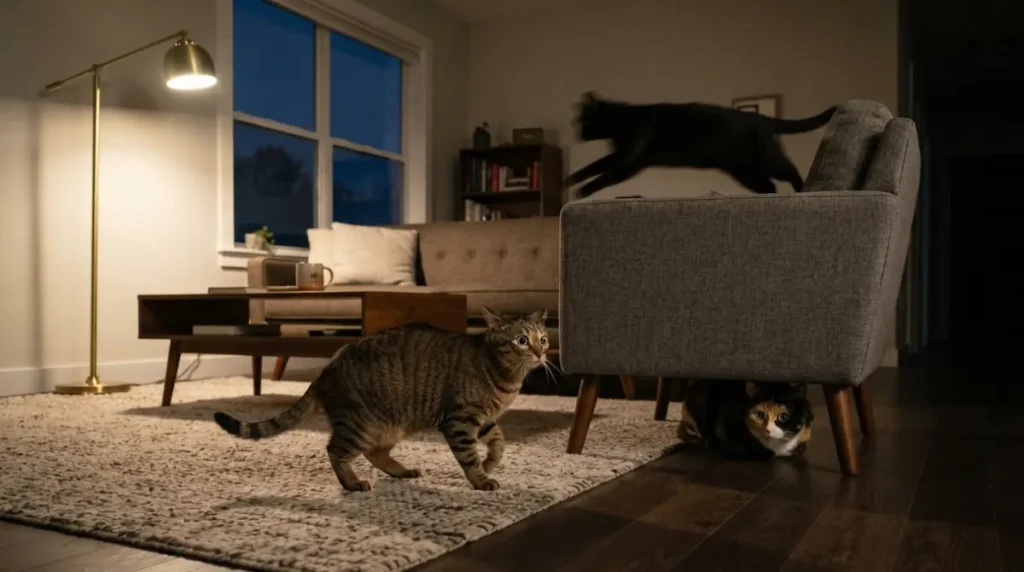
Fireworks set off a fight-or-flight response, an adrenaline surge that raises heart rate and blood pressure.
🔍 Why Cats Do This: Sudden booms read as danger, so frightened pets may panic, run, or react with aggression, ASPCA says.
Freeze, hide, bolt: what fear looks like
Most cats hide. ASPCA notes noise phobias are less common in cats but do happen. If hiding is new or outlasts the noise, see what’s normal cat behavior and what needs a vet, or when cat hiding is a reason to worry.
Who struggles most
🐾 Life-Stage Note: Cats who panicked before are the ones to plan for first; AVMA advises asking your vet or a veterinary behaviorist about desensitization. Kittens, seniors, and cats with health conditions can react differently, so ask your vet.
Your two-week countdown to fireworks night
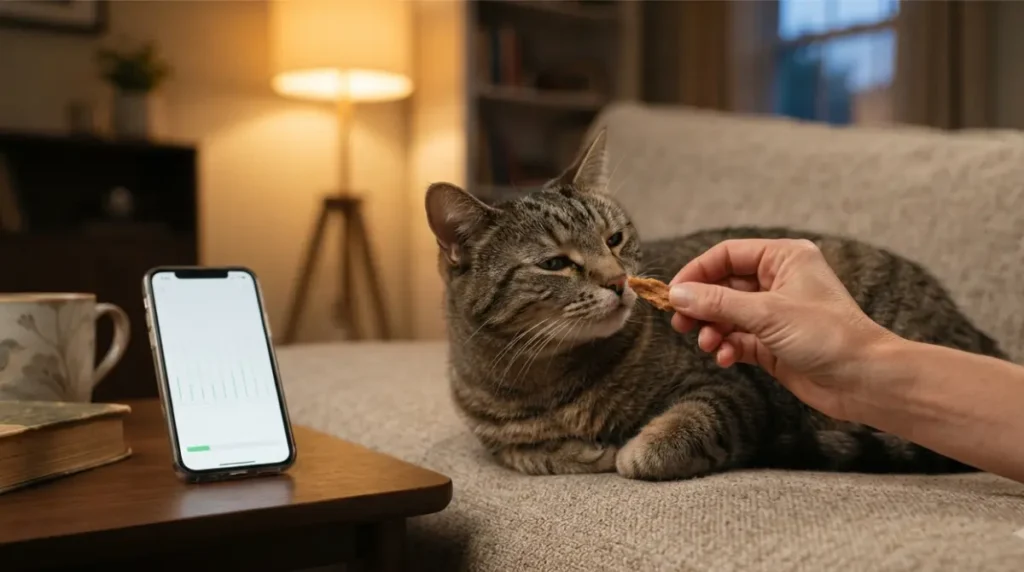
Start 14 days out: build a hiding spot, begin barely audible sound practice with treats, and check your cat’s ID.
Days 14–8: set up and start slow
- Build the hiding spot (see below).
- Play firework sounds so quietly your cat barely notices, with a treat. Stop at any reaction.
⚠️ Watch Out: If your cat already panics at loud noise, skip the recordings and ask your vet how to begin.
Days 7–2: rehearse and check IDs
- Confirm the ID tag and microchip registry details.
- Take a current photo.
- Bring indoor-outdoor cats in earlier each evening.
Day 1 and fireworks day
- Keep routines normal; play earlier in the day.
- Bring every cat in before dusk; close windows and cat doors.
Want this on your fridge? Download the printable.
Build a hiding spot your cat will actually use
Most frightened cats hide anyway, so a good hiding spot is your best preparation.
Pick the spot (and settle the door question)
Give your cat a quiet, familiar spot to choose, and don’t lock them in unless there’s a real escape risk. ASPCA suggests an interior room with no windows and AVMA an escape-proof room, but ASPCA warns panicked pets can injure themselves escaping. So leave the door open if your cat wants out, and close it only while you’re home.
Stock it: litter, water, and a way out of sight
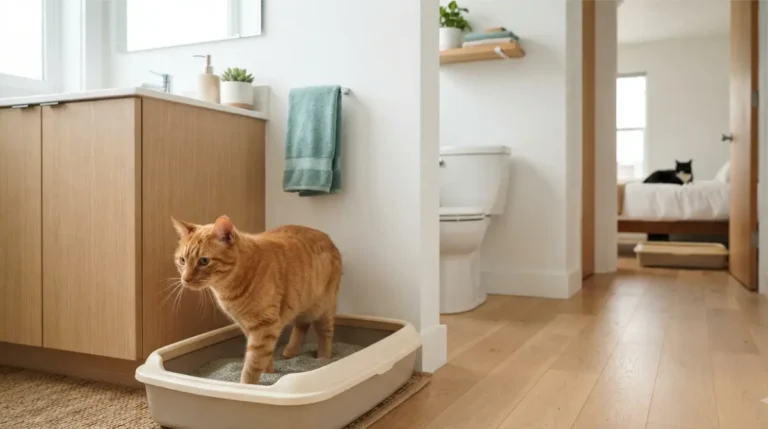
Add water, bedding, and a covered bed; some cats like a high perch, like the best cat trees for shy cats. Put a litter box nearby; how many litter boxes per cat covers the count.
Multi-cat homes
🐾 Life-Stage Note: Give each cat its own hide so none is cornered by a frightened housemate.
Fireworks night: keep them in, keep them findable
Prevention is where you have the most control.
Indoors before dusk
AVMA advises keeping pets inside if you or your neighbors set off fireworks. Bring outdoor cats in before dark and lock the cat door (UK readers: cat flap).
ID, microchip, and a current photo
Check the ID tag and that the microchip registry has your latest contact details. AVMA also suggests keeping a recent photo.
If your cat bolts anyway
AVMA says a registered microchip greatly improves the chance of getting a lost pet back. Afterward, check your yard for firework debris before your cat goes out.
When prep isn’t enough: what a vet can do
Some cats need more than a hiding spot.
Signs to book a visit now
Book before your date if your cat has panicked at fireworks before, or if fear lingers after the noise ends.
What to ask: pheromones, wraps, prescriptions
Ask about desensitization, calming wraps, and pheromone diffusers; results vary, and whether Feliway works for anxious cats is covered in our guide. Only a vet can prescribe medication. Never give human medication or another pet’s.
Cats and fireworks: quick answers
1. Are cats scared of fireworks?
Some are. Noise phobias are less common in cats but do happen, and many hide.
2. How far ahead should I prepare my cat for fireworks?
Start about 14 days out. A cat who has panicked before should see a vet earlier.
3. Should I keep my cat in one room during fireworks?
Offer a quiet interior hide your cat can choose, with a way out. Panicked pets can injure themselves escaping.
4. Should my outdoor cat go outside on fireworks night?
No. Bring outdoor and indoor-outdoor cats in before dusk and lock cat doors, since AVMA advises keeping pets inside.
5. Will my cat run away, and what helps?
Frightened cats can bolt. Current ID, a registered microchip, and a recent photo help reunite you.
6. Do calming treats or pheromones work for cats during fireworks?
Results vary, and they don’t replace veterinary care. Ask your vet whether a diffuser or wrap suits your cat.
7. Can I give my cat medication for fireworks?
Only if your vet prescribes it. Never give human or another pet’s medication, and ask your vet about options well before the date.
8. What if my cat ate part of a firework?
Call your vet or ASPCA Poison Control at (888) 426-4435 now; symptoms can appear up to 10 hours later.
Start with the hiding spot
Build the hide on Day 14 and the rest of the countdown follows. Keep the printable handy, and call your vet early if your cat has panicked before.