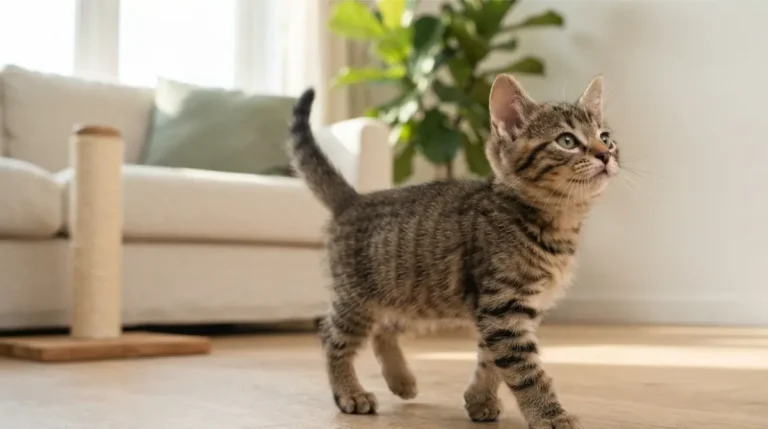
A Gentle Way to Choose the Best Cat Tree for a Shy Cat

The best cat tree for a nervous cat offers a private hideout and a choice of low or high. Here’s how to introduce it without forcing your cat.
Table of Contents
Which cat tree won’t scare a nervous cat?
A cat that bolts at every doorbell doesn’t need the tallest cat tree. It needs one that feels safe: stable, with an enclosed hiding spot, and with low and high places to choose from.
Shopping? Jump to the comparison table. Have a kitten, a senior, or several cats? See the household section. If your cat’s hiding is new or comes with changes in eating or litter box habits, read the last section first.
What a nervous cat needs from a cat tree
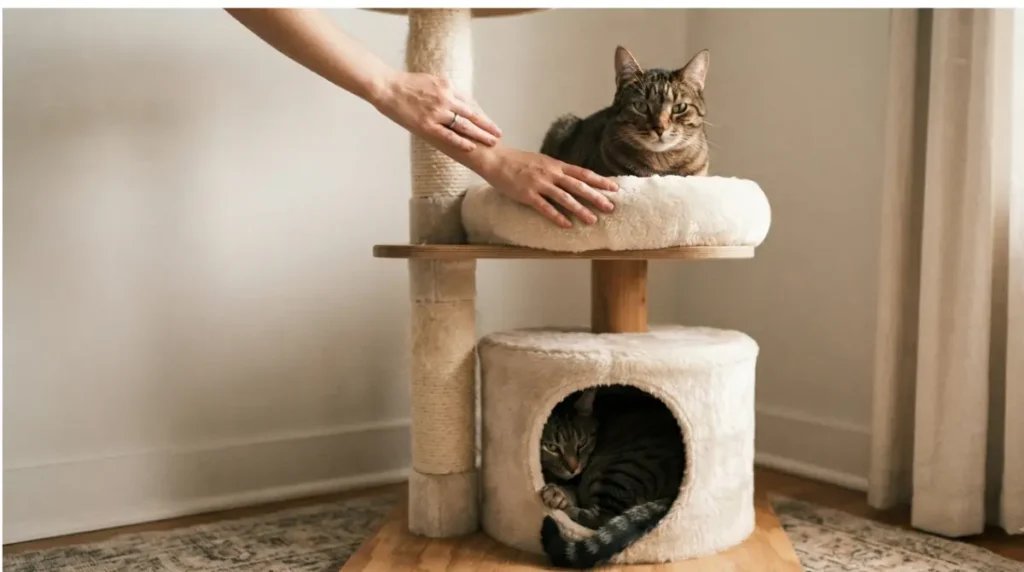
The best cat tree for a nervous cat is stable, has a private enclosed hideaway, and offers both low and high spots so your cat can choose. The AAFP and ISFM environmental needs guidelines describe a safe place as private and secure, often in a raised location.
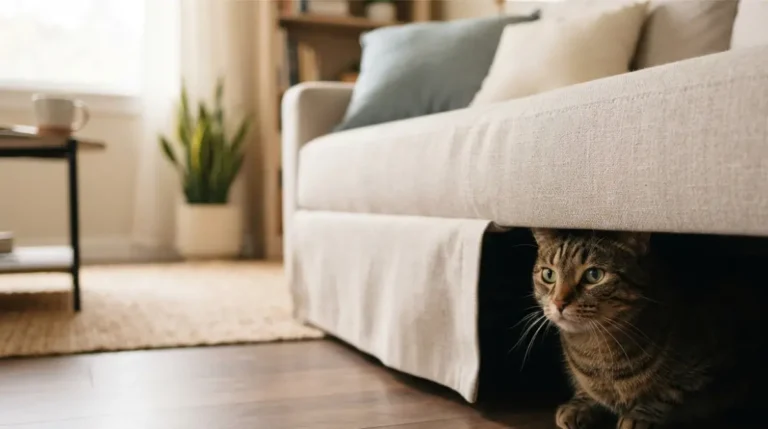
A place to hide
A cat that can’t see a threat feels safer, even if its whole body isn’t concealed. A perch with a hammock-style dip adds to that sense of being hidden.
🔍 Why Cats Do This: Hiding is a coping behavior. Cats tend to avoid and evade rather than confront, so a place to withdraw gives them some control. Hiding is normal, but when cat hiding is a reason to worry is a separate question.
Height is a choice, not a requirement
A raised spot is often what a cat picks as its safe place, but a nervous cat also needs a low, enclosed option and easy access. The guidelines link meeting these needs to less stress and fewer unwanted behaviors.
How we tested with shy cats
Kittens, seniors, multi-cat homes, and renters
Your household changes which tree fits.
Kittens and small cats
Per the AAFP and ISFM guidelines, kittens and cats with limited mobility do better with boxes, perches, and shelves set low or reachable by ramp.
Senior cats
The same low-level, ramp-friendly logic applies. A sudden change in an older cat’s behavior can have a medical cause, so see senior cat behavior changes.
🐾 Life-Stage Note: For kittens and seniors, choose a tree where every level is easy to reach, not just the top.
Multi-cat homes
A safe place should have more than one entry, so another cat can’t easily block it. The guidelines also call for at least as many safe places, each sized for one cat, as there are cats, set in separate areas. The same logic applies to litter: see how many litter boxes per cat. Adding a new cat? Read how to introduce two cats.
Small apartments and renters
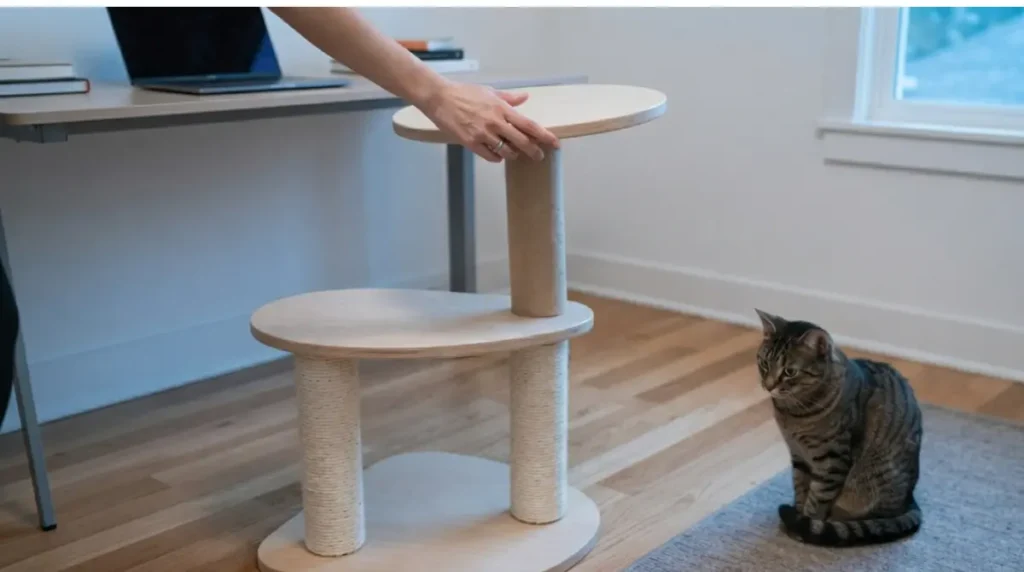
A floor-standing tree needs no drilling, but check your lease before mounting anything to a wall. Compare base footprints in the table above.
How to introduce a cat tree to a shy cat
- Pick a quiet spot away from the busiest doorway, ideally near where your cat already rests.
- Add your cat’s scent. Rub a soft cloth on your cat’s cheeks during a calm moment, then wipe it on the tree. The AAFP and ISFM guidelines suggest this for new items.
- Let your cat approach on its own. Don’t lift your cat onto the tree or block its exit.
- Move it if it’s ignored. Try another quiet spot before giving up.
⚠️ Watch Out: Skip strong-smelling cleaners, and don’t wash off spots your cat has rubbed its cheeks on. Scent is how cats decide a place is theirs.
✅ Do This: Once your cat uses the tree, leave it in place. For more on setting up a cat-friendly home, see International Cat Care’s guide to making your home cat friendly.
What our test cats did, and when to worry
When hiding is more than shyness
Hiding is a normal coping behavior, but changes in a cat’s behavior can sometimes point to an underlying medical problem. If your cat starts hiding more, stops eating, or changes litter box habits, call your veterinarian and note when it started. Our guide to what’s normal cat behavior and what needs a vet has the full picture, and International Cat Care explains stress in cats.
Cat trees for nervous cats: quick answers
1. Do nervous cats like cat trees?
Many do when the tree gives a private, raised safe place. Sensitivity to threats varies by cat, so watch how yours uses it.
2. Where should I put a cat tree for a shy cat?
Somewhere quiet where your cat already rests, away from busy doorways. In multi-cat homes, keep safe places in separate areas.
3. Are enclosed condos better for shy cats?
Enclosed hideaways suit many shy cats because a cat that can’t see a threat feels safer. A hammock-style dip also helps.
4. What if my cat ignores the cat tree?
Don’t force it. Try a different quiet spot and rub the tree with your cat’s scent.
5. Is a taller cat tree better?
Not necessarily. A raised spot is often a cat’s safe place, but a nervous cat also needs a low, enclosed option.
6. Can a cat tree help a shy cat’s confidence?
It gives a shy cat a safe place and more choices, which the guidelines link to less stress. It isn’t a treatment for fear.
7. Do multiple cats need multiple cat trees?
Each cat needs at least one safe place sized for one cat. A safe place should also have more than one entry.
8. Is a cat tree safe for senior cats?
Choose low levels or ramps for cats with limited mobility. A sudden behavior change in an older cat deserves a vet visit.
Final thoughts
Pick the tree that gives your cat a private place to hide and a choice between low and high, then introduce it slowly. If nothing changes after a fair trial, the problem may be the spot, not your cat. If the hiding is new or comes with other changes, call your veterinarian.