The Best Scratching Post Is the Right One for Your Cat

Best scratching posts differ for kittens and seniors, who may prefer softer cardboard scratchers. See what changes for big cats and multi-cat homes.
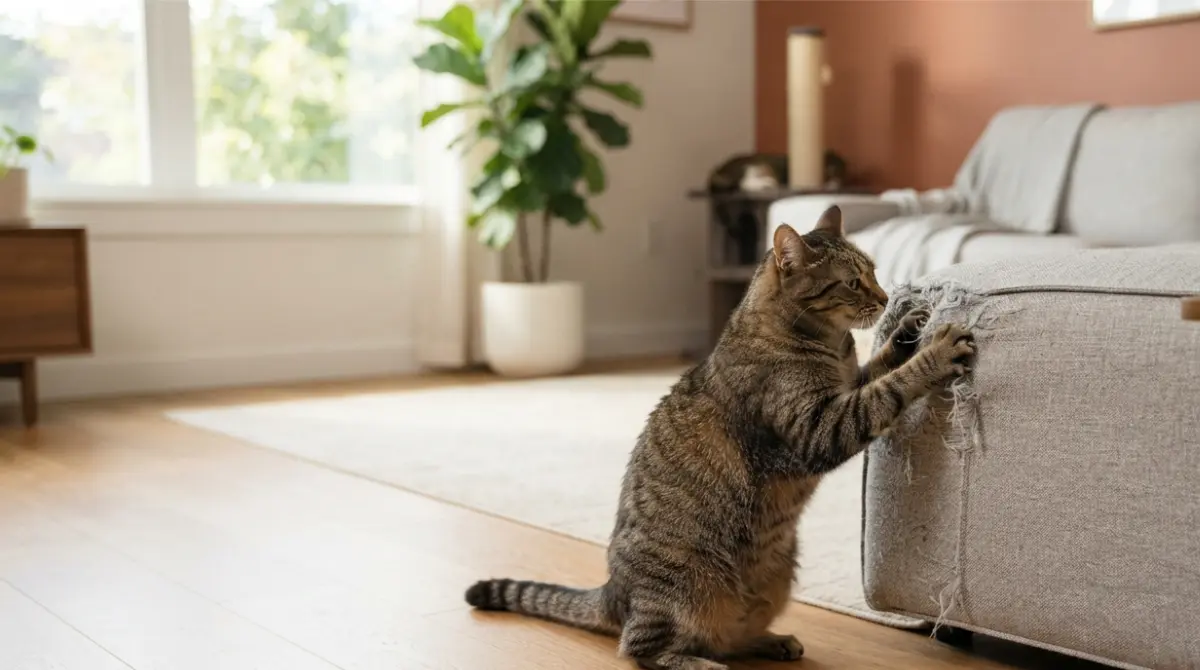
Table of Contents
Why your cat ignores the post and shreds the sofa
Your cat isn’t out for revenge; the post you bought just doesn’t feel right. Our guide to normal cat behavior and when to call a vet covers the wider picture.
🔍 Why Cats Do This: Scratching leaves scent from paw glands, sheds old claw sheaths, and stretches muscles, so cats need somewhere to do it.
The quick answer
The best scratching post is sturdy enough not to tip, at least as tall as your cat’s full stretch, and matched to the surface and direction your cat already scratches. Place it beside the spot they scratch now, and reward use.
What makes a scratching post worth buying
A scratching post earns its place on three things: stability, height, and a surface your cat likes.
Height and stability
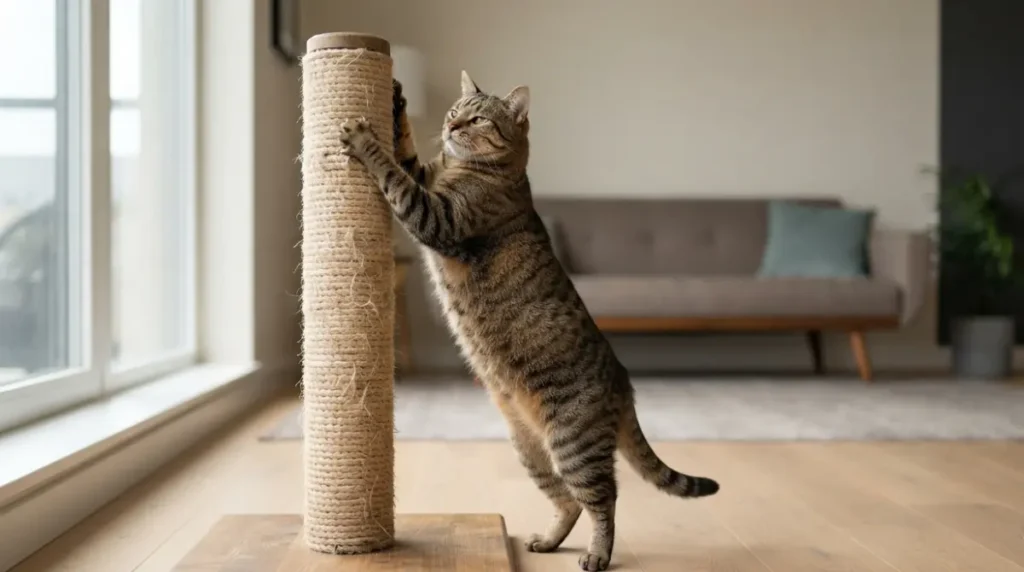
📊 Tested / Sourced: The Cornell Feline Health Center says any post should be sturdy enough not to topple during use and at least as tall as your cat standing on her hind legs with front legs outstretched.
🐾 Life-Stage Note: Measure your own cat at full stretch: a tall cat needs a taller post than a small one.
Surface and direction

Cornell suggests carpet-covered posts for carpet scratchers and sisal or another rope-like covering for cats who like nubby sofa fabric. Cats who climb drapes may like a tall wall- or door-mounted post, while horizontal scratchers may prefer flat cardboard or a log on its side.
How we tested these five scratching posts
We ran this test ourselves, and every number below comes from our own log.
What we measured
For each scratching post we recorded price paid, measured height and base, a push test for stability, daily use per cat, and wear at week four.
Which post fits your cat: kitten, senior, big or many
Kittens
Kittens may like large angled or horizontal cardboard scratchers, which offer less resistance, according to International Cat Care’s scratching guide. Swap short kitten posts for taller ones as they grow.
Seniors and stiff-moving cats
Senior cats who can’t scratch as easily may need regular claw trims; ask your vet about very thick claws. See senior cat behavior changes for more.
Big cats
Choose the tallest sturdy post that fits their full stretch.
Multi-cat homes and renters
Multi-cat homes need one post per cat plus one extra, in different spots, International Cat Care says, the same one-plus-one logic as how many litter boxes per cat you need.
Where to put it so your cat actually uses it
- Place the post beside the spot your cat already scratches.
- Reward use with treats, strokes, and praise; catnip on or around it can help.
- Add another near where your cat naps and by room entrances.
Put it beside the spot they already scratch
Once it’s in regular use, Ohio State’s Indoor Pet Initiative advises moving it no more than three inches a day.
Make it worth using
Never punish scratching: Cornell says cats don’t link punishment to the act and may simply learn to fear you.
Leave the worn post alone
A ragged post means it’s well used and doing its job, Cornell says. For deterrents and training beyond the post, read how to stop a cat scratching furniture.
If your cat still won’t touch it
Wobbly or too short?
Cornell says a post must stay upright and reach your cat’s full stretch. If yours wobbles or is too short, replace it.
Wrong surface or direction?
Match the surface and direction your cat already uses, then cover the sofa spot with double-sided tape or a blanket, which Cornell says may deter scratching.
When to ask your vet, and why not declaw
If your cat’s scratching habits suddenly change, tell your vet; see when cat behavior changes mean a vet call. The Feline Veterinary Medical Association (formerly the AAFP) strongly opposes elective declawing, and Cornell calls it a last resort.
Scratching post questions cat owners ask
1. What is the best scratching post for cats?
One sturdy enough not to tip, tall enough for a full stretch, and matched to the surface and direction your cat already scratches.
2. How tall should a scratching post be?
At least as tall as your cat standing on hind legs with front legs outstretched, so they can stretch fully while scratching.
3. What material do cats like best for scratching?
It depends on what your cat scratches now: sisal for nubby sofa fabric, carpet for carpet scratchers, cardboard for horizontal scratchers.
4. How do I get my cat to use a scratching post?
Place it beside the spot your cat already scratches, then reward use with treats, strokes, and praise. Catnip or treats on the post can help.
5. Where should I put a scratching post?
Beside the area your cat already scratches, and near where your cat sleeps, since cats often stretch and scratch after a nap.
6. How many scratching posts does a cat need?
At least one, placed where they scratch. In multi-cat homes, International Cat Care recommends one per cat plus one extra, in different spots.
7. Why does my cat ignore the scratching post?
Common reasons: it wobbles, it’s too short for a full stretch, the surface or direction doesn’t match, or it’s out of the way.
8. Should I throw out a worn scratching post?
Not just for looking ragged; Cornell says a worn post is well used. Replace it if it stops being sturdy.
9. Will one scratching post stop sofa scratching?
It redirects scratching rather than ending it. Place the post beside the sofa spot and reward your cat for using it.
10. Should I declaw my cat to stop scratching?
No. The Feline Veterinary Medical Association strongly opposes elective declawing, and Cornell calls it a last resort. Talk to your veterinarian about alternatives first.
Start with the spot your cat already scratches
Pick the post that matches how your cat scratches, set it beside the sofa spot, and reward every use. Scratching is instinct, so you’re redirecting it, not ending it, and a ragged post means it’s working. Start with one pick from the five above and adjust from there.