Maine Coon heart disease can hide, so know which signs can’t wait

Maine Coon heart disease can hide in a calm-looking cat. Use the quick triage card to sort emergency signs from quiet ones worth a call.
Table of Contents
Is your Maine Coon’s breathing normal right now?
Maine Coon heart disease often stays quiet, so the first sign can be an emergency.
If you’re seeing this right now
🚨 Go to a Vet Now If: your cat breathes with an open mouth or struggles to breathe, collapses, or suddenly drags the back legs and cries out. Go to a 24-hour emergency vet and call ahead.
If you’re just worried about the breed
Many Maine Coons with the thickened heart muscle called hypertrophic cardiomyopathy (HCM) look well for years. This guide covers quiet signs, a 30-second breath count and when to call.
ℹ️ Vet Note: This is general education, not a diagnosis. Heart disease often shows no signs, and only a vet exam and heart ultrasound can confirm it. If you’re worried, call your vet; if breathing is labored, go to an emergency vet.
Signs your Maine Coon needs an emergency vet now
Two heart-related problems can’t wait: labored breathing and a clot in the back legs.
Breathing trouble
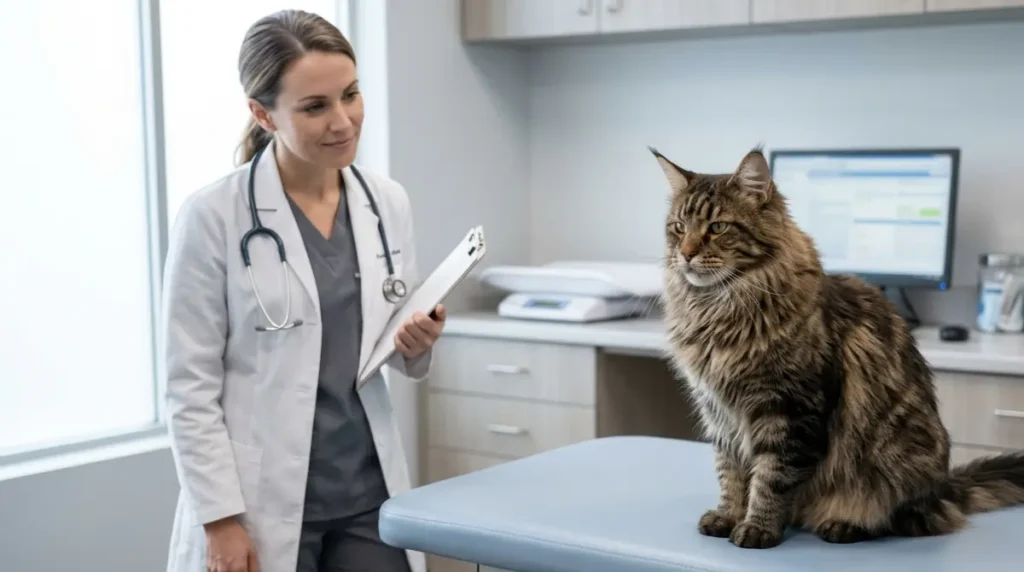
Cornell’s cardiomyopathy guide calls rapid or labored breathing a medical emergency, and cats with heart disease can die suddenly. Open-mouth breathing, visible effort or collapse means go now.
Sudden back-leg weakness or paralysis
In HCM, a clot can form in the heart and lodge in the arteries to the back legs (a saddle thrombus). That causes sudden lameness or paralysis, usually with severe pain, and the back paws may feel cold or look pale.
What to do on the way
✅ Do This: Call ahead. Say your cat is a Maine Coon, when it started and what you see. Give no medication unless the clinic says so.
Quiet signs of heart disease in Maine Coons
Many cats with heart disease show nothing at all, so the quiet changes matter.
Early changes that are easy to miss
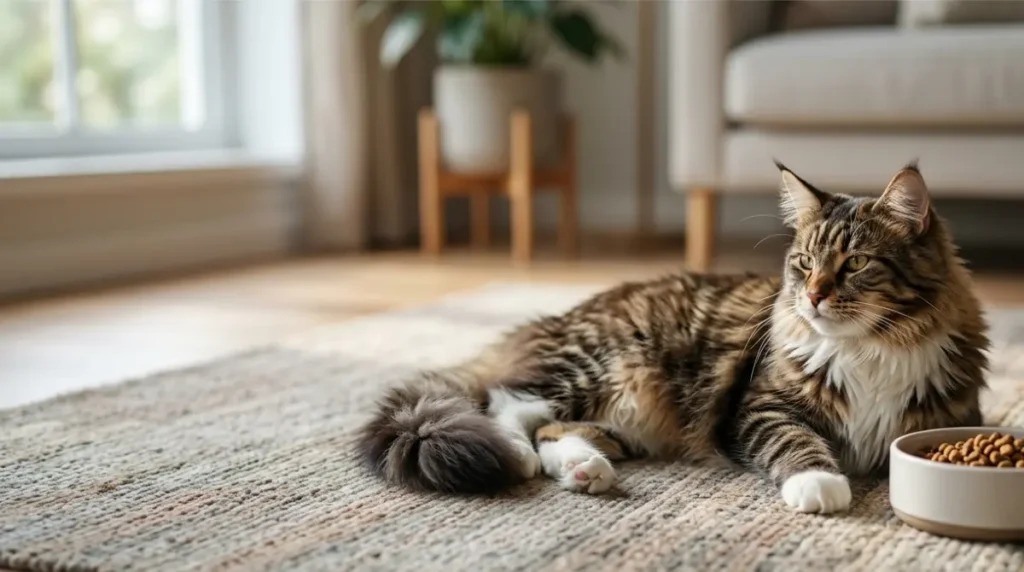
- Less play, or tiring out quickly
- Eating less
- Weakness
- Faster breathing while resting
These signs are vague and have many causes, so don’t guess which. The card below shows how fast to call.
| Tier | What you see | What to do |
|---|---|---|
| 1: Emergency | Open-mouth or labored breathing, collapse, sudden back-leg weakness | Emergency vet now |
| 2: Call today | Any quiet sign, or sleeping counts over 30 | Call your vet today |
| 3: Next visit | No signs | Ask for a heart check |
Why many cats show nothing at all
More than half of affected cats may show no signs, UC Davis reports.
Why coughing isn’t the clue
Cornell says cats very rarely cough from heart disease, so don’t wait for one.
How to count your Maine Coon’s breaths at home
A sleeping cat’s breathing rate is the easiest early warning you can measure at home.
The 30-second count
- Wait until your cat is asleep or resting calmly, not purring.
- Count each full rise and fall of the chest for 30 seconds.
- Double it for breaths per minute.
- Log the number on several days.
What your number means
Normal resting breathing is 15 to 30 per minute. Cornell says above 35 should prompt a call to your vet, and a 2024 study found repeated sleeping counts above 30 likely warrant further evaluation.
When a count isn’t reliable
Purring, dreaming or recent play raise the number, so recount when calm. A normal count doesn’t rule out heart disease. In a multi-cat home, log each cat separately.
Why Maine Coons get HCM, and what a gene test can’t tell you
Maine Coons are one of the breeds where HCM runs in families, so risk exists before any sign appears. Our Maine Coon size, cost and health guide gives the wider picture.
What the A31P gene test shows
A gene variant called A31P is linked to HCM in Maine Coons. UC Davis says two copies can cause moderate to severe disease, with sudden death possible by about age four; one copy carries a longer life expectancy but may still lead to HCM. Cornell adds that no gene test is perfectly predictive, so none replaces a heart ultrasound.
Young, middle-aged and senior cats
🐾 Life-Stage Note: Most affected cats are middle-aged, but cats with two gene copies can be affected younger. At every age, Cornell recommends at least yearly checkups where the vet listens closely to the heart.
What the vet will check if they suspect heart disease
Your vet starts with an exam, but a heart ultrasound gives the answer.
Why listening isn’t enough
At least one in three cats with HCM has no murmur, Merck Veterinary Manual reports, and Cornell notes about one in five cats with a murmur has no heart disease.
The heart ultrasound
An echocardiogram is the gold standard test. NT-pro BNP, a blood test, can flag cats needing one but can’t confirm HCM alone. Your vet also rules out high blood pressure and an overactive thyroid, which can thicken heart muscle.
What to bring to the visit
✅ Do This: Bring your breath-count log, a short phone video of your cat’s breathing, when signs started and a list of everything your cat eats or takes.
Caring for a Maine Coon with a heart diagnosis
Cornell says many cats with HCM live normal or near-normal lifespans, though the outlook changes if heart failure or a clot develops.
Keep the breath log going
Cats without signs may not need treatment but may need routine rechecks, UC Davis says. Ask your vet which number should make you call.
Make the home easier on a tired cat
A weak cat shouldn’t have to climb stairs to reach a box, so put one on each floor she uses. For breed-wide numbers, see our Maine Coon lifespan data.
Frequently asked questions
1. First signs of heart disease in a Maine Coon?
Many show none. Tiredness, eating less, weakness or faster resting breathing all deserve a call to your vet.
2. Can a Maine Coon have heart disease and look healthy?
Yes. More than half of affected cats may show no signs, so ask your vet about heart checks.
3. How many breaths per minute is too many for a sleeping cat?
Normal is 15 to 30. Call your vet about repeated counts over 30, or any resting count above 35.
4. Is open-mouth breathing in a Maine Coon an emergency?
Yes. Open-mouth or labored breathing is a medical emergency, so go to an emergency vet now.
5. Does a negative gene test rule out heart disease?
No. Gene tests aren’t perfectly predictive; only a heart ultrasound shows a thickened heart. Ask your vet when to scan.
6. Would a vet always hear a murmur?
No. At least one in three cats with HCM has no murmur, so a normal exam doesn’t rule it out.
7. At what age do Maine Coons show heart disease?
Most are middle-aged, but two gene copies can mean earlier disease. Call your vet about any breathing change.
8. What causes sudden back-leg paralysis in a cat with heart disease?
Often a clot lodged in the arteries to the back legs. It’s an emergency, so go to a vet now.
Your next step
Trouble breathing or sudden back-leg weakness needs an emergency vet now, and quiet signs deserve a call. Ask your vet for a heart check at routine visits. For budgeting, see our Maine Coon first-year costs.