A Gentle Fact Check of the Maine Coon Personality

Maine Coon personality, graded: the CFA backs the water-loving and chirpy side, but fetch and lap-sitting are murkier. See what holds up.
Table of Contents
Are Maine Coons really dog-like? The honest answer
The short answer
Partly. The Maine Coon personality is sociable, loyal and easygoing, according to the Cat Fanciers’ Association, but fetch and leash walking are owner stories, not registry findings. Below, we sort what is sourced from what is lore.
Where to start, by situation
- Thinking of getting one: read the scorecard below.
- Just brought one home: jump to “Kitten, adult, senior.”
- Wondering if your cat is normal: read the last two sections before the FAQ.
For growth, price and health screening, see our Maine Coon size, cost and health guide.
What the CFA says about Maine Coon temperament

The Cat Fanciers’ Association Maine Coon profile is the registry’s own description of the temperament.
Sociable, loyal and quick to learn
It calls the breed sociable, loyal and intelligent. Maine Coons tend to move from lap to lap rather than pick a favorite, and can find a hidden toy. They are fairly independent, needing moderate attention, which they insist on when you are free.
Water, chirps and trills
Maine Coons are not very vocal: their daily chatter is chirps, trills and purrs plus the occasional meow, and the CFA does not call them talkative. Many also love water, watching a dripping faucet or even joining a shower.
Notice what is missing: the CFA never says “dog-like.” Next, we test that label.
Dog-like or just friendly? What the evidence supports
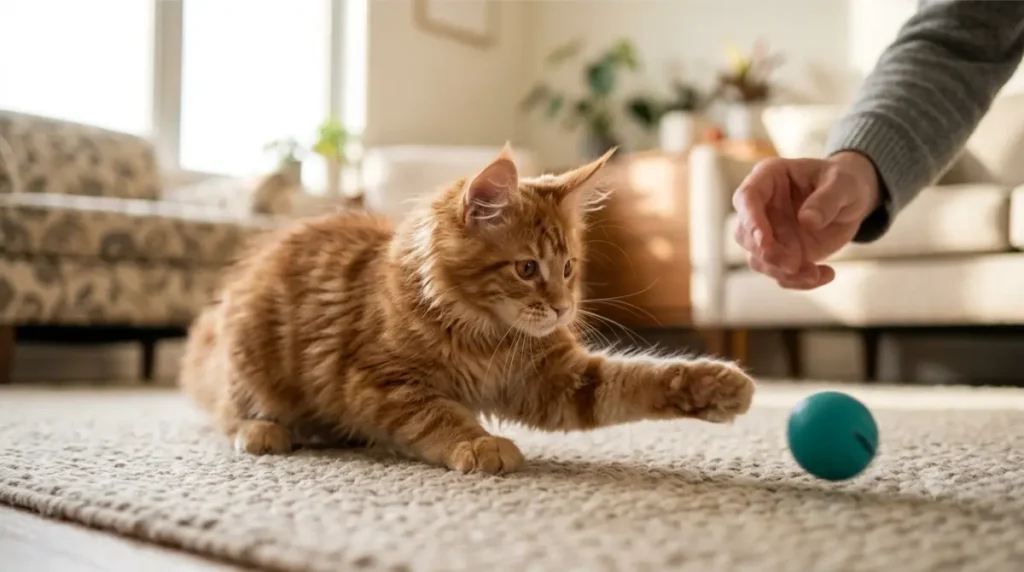
Partly. This is our reading of the sources, not a test.
The dog-like scorecard
| Claim | Evidence | Key Detail |
|---|---|---|
| Follows and seeks out people | Registry and survey support | CFA; owner survey, see below |
| Chirps and trills | Registry support | CFA |
| Likes water | Registry support | CFA |
| Plays fetch or walks on a leash | Owner report only | CFA notes toy-finding; no fetch or leash study found |
| Is a lap cat | Sources disagree | CFA: lap to lap; other guides: prefer to sit nearby |
What the research can and can’t say
A 2019 study of 5,726 cats, built on Finnish owners’ questionnaires, found breed differences and moderate heritability in three breeds, including Maine Coons.
Kitten, adult, senior: what to expect at each age
Age changes what any source can promise.
Kitten to full size
Maine Coons mature slowly, taking up to three years to reach full growth, per the CFA. That is body size, and we found no source saying personality settles then.
🐾 Life-Stage Note: A 2021 study of over 4,300 cats says breed comparisons should account for age, so a kitten is not a finished preview of the adult.
Adults and alone time
Maine Coons need a moderate amount of attention, per the CFA, and insist on it when you are free. Working from home? You may need to shut a door.
Senior Maine Coons
A change in an older cat’s behavior isn’t just age. Read the section on changes below and call your vet.
Living with dogs, other cats and kids
Often, yes: the CFA says Maine Coons get along well with children and other animals, though size can intimidate both at first.
Other cats
Owners in a 2019 survey placed them among the breeds least aggressive toward other cats. Sociable cats in a multi-cat home still need their own boxes: see how many litter boxes per cat.
Dogs
Dogs vary in how they react to cats, so start slowly with introducing a cat to a dog week by week.
Children and small pets
For children, see the CFA point above. We found no source on Maine Coons and small pets such as birds or rodents, so don’t assume they’re safe together.
When a quirk is really a change in your cat
A sudden change from your own cat’s normal is worth a call to your vet.
Know your Maine Coon’s normal
The CFA’s guide on spotting illness or pain lists hiding, sudden aggression and changes in vocalizing among possible signs of illness, and says an owner’s sense that a cat isn’t itself is worth trusting.
When to call your vet
Note when it began and whether eating, drinking or litter habits changed, then call. Our guide to behavior changes that need a vet sorts them by urgency.
🚨 Go to a Vet Now If: your Maine Coon has trouble breathing, collapses or suddenly can’t use its back legs. Call an emergency clinic on the way; see our Maine Coon emergency signs.
What it’s really like to live with one
Your Maine Coon may not follow the script, and that is normal.
Tendencies are not promises
The 2019 study found substantial genetic variation within breeds, so cats of one breed can differ. Breed shifts the odds; it does not set your cat’s personality.
If your cat isn’t dog-like
A Maine Coon that skips fetch or avoids laps isn’t unusual. The CFA calls the breed fairly independent, and the scorecard above shows fetch as an owner report and lap-sitting as a disagreement. Learn your cat’s own habits and use them as its baseline.
Maine Coon personality questions owners ask most
1. Is the Maine Coon personality really dog-like?
Partly. Sociability and loyalty are breed tendencies, but fetch and leash walking are owner reports, and individual cats vary.
2. Are Maine Coons lap cats?
Sources disagree. The CFA says they tend to go from lap to lap, while other guides say they prefer sitting nearby.
3. Do Maine Coons play fetch?
Some owners say so. The CFA notes they can find a hidden toy, but we found no study of fetch.
4. Are Maine Coons vocal?
Not very. They chirp, trill and purr with the occasional meow, and the CFA does not consider them talkative.
5. Do Maine Coons like water?
Many do. The CFA describes cats that watch a dripping faucet or even try to join a shower.
6. Are Maine Coons good with dogs and other cats?
Often. The CFA says they get along well with other animals, though size can intimidate at first, so introduce them slowly.
7. Are Maine Coons good with kids?
The CFA says they get along well with children, though the cat’s large size may intimidate both at first.
8. Do Maine Coons need a lot of attention?
A moderate amount. They are fairly independent, but the CFA says they insist on interaction when you are available.
9. Does a Maine Coon’s personality change as it grows?
Growth takes up to three years, and researchers say age matters in breed comparisons, so an adult’s personality can’t be promised from a kitten.
10. Is a sudden change in my Maine Coon’s personality normal?
A sudden change from your cat’s normal is worth a call to your vet. Trouble breathing or collapse needs an emergency clinic now.
Your next step with your Maine Coon
“Dog-like” is a label for tendencies, not a promise. This week, use the scorecard as a checklist for your own cat and note anything that changes, so you can tell a quirk from a signal. Meet the individual cat, not just the breed, and call your vet if you notice a sudden change.