Choosing the Best Puzzle Feeder for Cats, Dry Food or Wet

Do puzzle feeders really work? Research on them is limited, so we tested picks with four cats for six weeks.
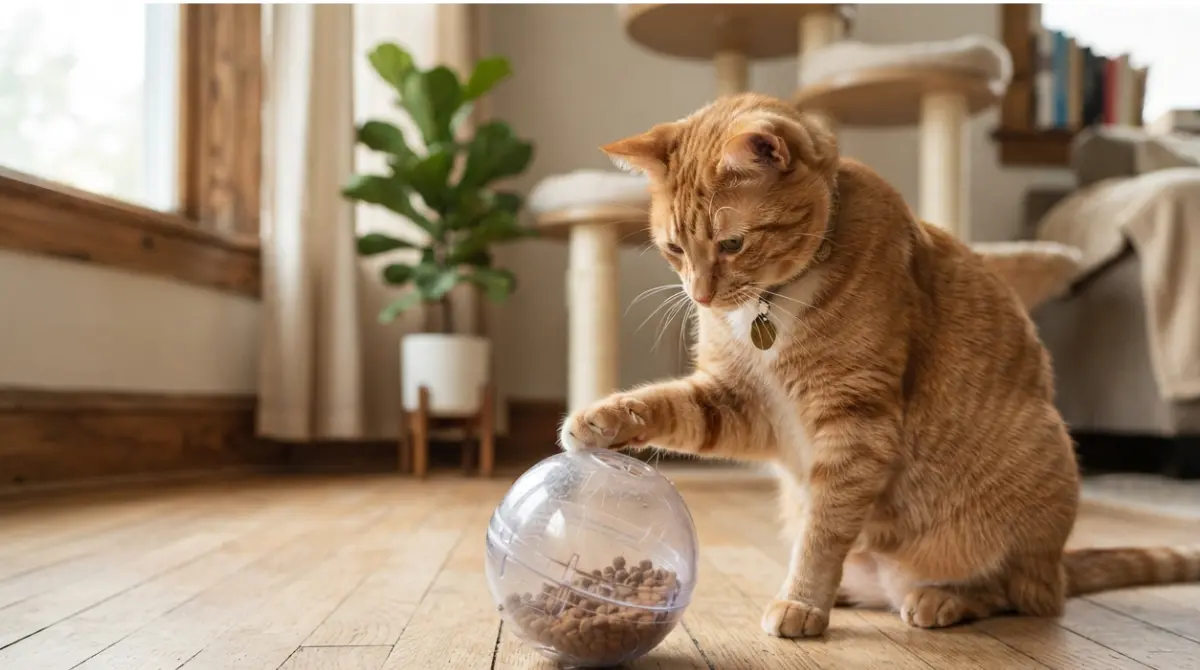
Table of Contents
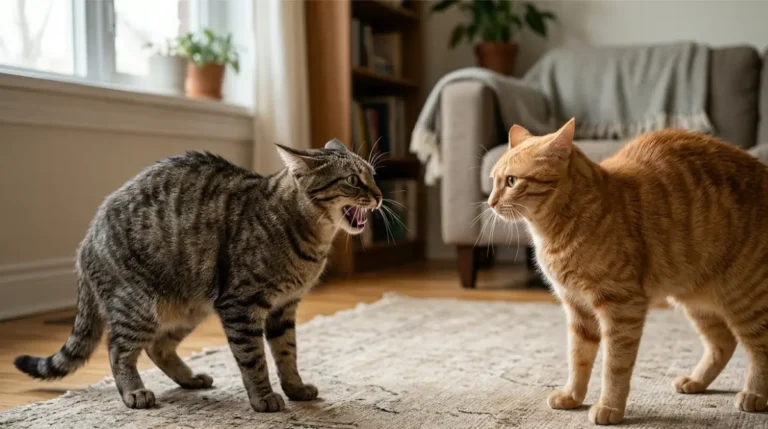
Will your cat actually use a puzzle feeder?
🚨 Go to a Vet Now If: your cat has eaten nothing for about 24 hours. Cornell’s Feline Health Center says sustained appetite loss can seriously harm a mature cat’s health by then. Call your veterinarian, and call sooner for a kitten or a cat who is already unwell.
We used puzzle feeders with four cats for six weeks.
One safety rule before you start
Never let a feeder cost your cat a meal. If the puzzle isn’t working, serve the food in a regular bowl.
ℹ️ Vet Note: This article is general education, not a diagnosis or feeding plan. If your cat eats a medical diet, has a health condition, has mobility problems, or is recovering from surgery, ask your veterinarian before changing how it eats. If feeder pieces go missing, or your cat vomits, seems lethargic, or stops eating, call your veterinarian.
What puzzle feeders do for a cat (and what they don’t)
A puzzle feeder is a food container your cat has to paw, roll, or lick to empty. International Cat Care says feeders like this add mental and physical stimulation, let cats express natural hunting behavior, and make meals last longer.
Why hunting-style feeding matters
The AAFP and ISFM environmental needs guidelines recommend puzzle or timed feeders to encourage small, frequent meals.
What the evidence does and doesn’t show
Researchers note that few studies have tested food puzzles in companion animals. They recommend them as one part of a wider enrichment plan, not a stand-alone fix. Not sure boredom is the problem? Our guide to signs of indoor cat boredom can help.
How we ran a six-week test with four cats
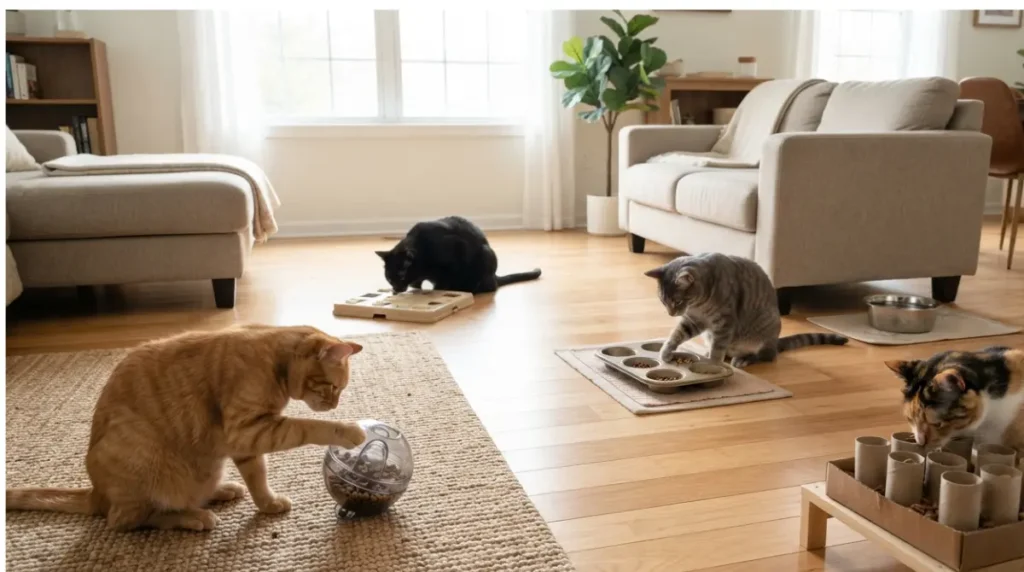
Four cats over six weeks is what we can vouch for, and it isn’t a study.
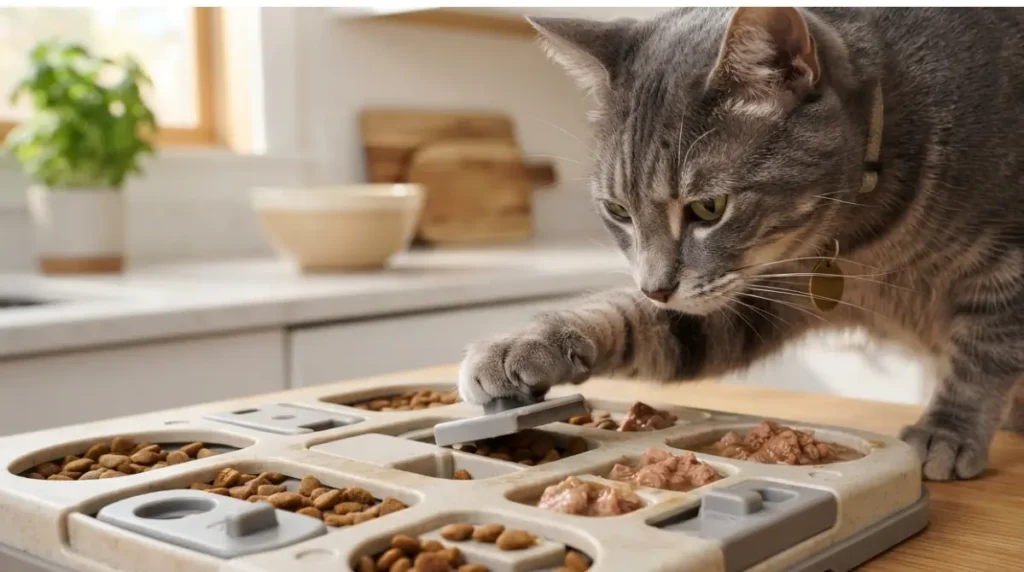
Best for wet food
International Cat Care says wet food doesn’t dispense well from ball-style feeders, but works in egg cartons, cardboard tubes, and activity boards.
Which puzzle feeder for which cat?
The right puzzle feeder depends on your cat’s age, household, and health.
Kittens and seniors
🐾 Life-Stage Note: Seniors can use a puzzle feeder if it’s easy to see into and needs little effort. Start kittens simple too. A senior who suddenly loses interest in food needs a veterinarian, not another feeder.
Multi-cat homes
🐾 Life-Stage Note: AAFP and ISFM guidelines call for separate spots for food, water, litter, and rest, so give each cat its own feeder. Our guide on how many litter boxes per cat covers the litter side.
Overweight cats and wet-food-only cats
A puzzle feeder may add activity and slow eating as part of a vet-guided weight plan. Never start a weight-loss diet on your own.
How to introduce a puzzle feeder without a standoff
Introduce a puzzle feeder gradually so your cat wins early.
- Choose an open or see-through feeder so your cat can see and smell the food.
- Sprinkle some food around it.
- Keep it easy; your cat should do very little work at first.
- Raise the difficulty slowly, for example by shrinking a ball feeder’s holes.
- Then hide it in new spots.
Start easy: let your cat win
International Cat Care’s puzzle feeder guide has more tips.
Build the difficulty slowly
Portioning it right
✅ Do This: Take the feeder’s food from your cat’s measured daily portion, not on top of it. Ask your veterinarian first if your cat eats a medical diet.
When your cat ignores it, gives up, or guards it
Here’s how to fix the most common stalls.
Ignores it
Make it easier and more visible, and sprinkle food around it.
Frustrated or gives up
Drop back to an easier feeder, because researchers stress staging difficulty. If a cat guards a feeder in a multi-cat home, give each cat its own spot.
Chews the plastic or eats too fast
If pieces go missing, or your cat vomits, seems lethargic, or stops eating, call your veterinarian and bring the feeder. Mention persistent bolting too.
For wider behavior changes, see what counts as normal cat behavior. For dawn food demands, try our early wake-up reset.
Puzzle feeder questions cat owners ask
1. What is the best puzzle feeder for cats?
The best puzzle feeder depends on your cat.
2. Are puzzle feeders good for cats?
Yes, they add stimulation and natural hunting behavior, but research is limited, so treat a puzzle feeder as one part of enrichment.
3. Can you use wet food in a puzzle feeder?
Yes, in activity boards, egg cartons, or cardboard tubes. Wet food doesn’t dispense well from ball-style puzzle feeders.
4. How do I get my cat to use a puzzle feeder?
Start with an easy, see-through puzzle feeder, sprinkle food around it, and let your cat succeed early before raising the difficulty.
5. Should a puzzle feeder replace my cat’s food bowl?
Only your veterinarian should decide that for a cat on a medical diet. Otherwise, the puzzle feeder’s food should come from the daily portion, not on top of it.
6. What if my cat won’t eat from a puzzle feeder?
Serve the meal in a regular bowl and make the puzzle easier. If your cat eats nothing for about 24 hours, call your veterinarian.
7. Are puzzle feeders good for senior cats?
They can be, with an easy-to-see, low-effort design. A senior cat that suddenly loses interest in food should see a veterinarian.
8. Can puzzle feeders help an overweight cat?
They may add activity and slow eating as part of a plan from your veterinarian. Don’t start a weight-loss diet without one.