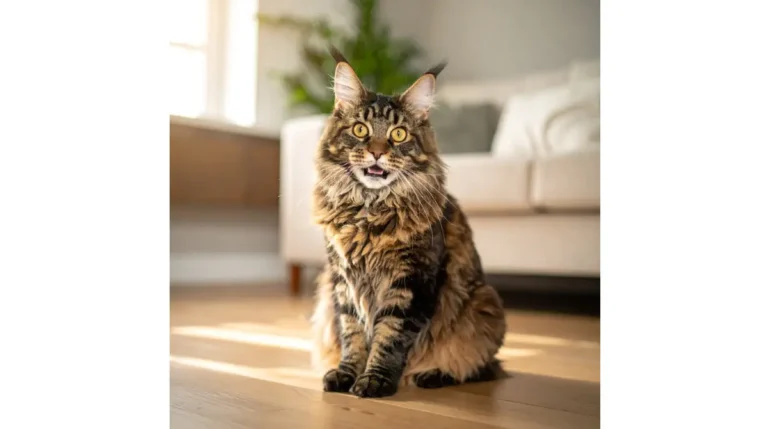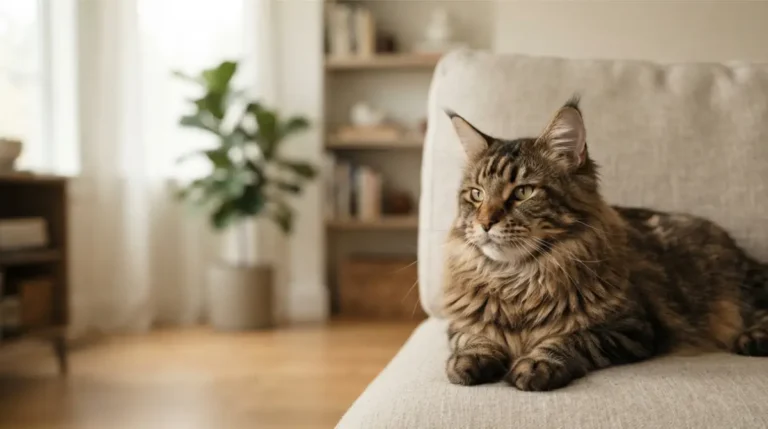
Choosing the Best Brush for a Maine Coon and the Right Comb

The best Maine Coon brush is really two tools: a steel comb that reaches the undercoat and a slicker for the shorter shoulder coat. Here’s where each goes.

Table of Contents
The short answer
No single brush handles a Maine Coon coat well on its own. Start with:
- A stainless steel comb with wide and medium teeth, for daily combing of the belly, britches, and chest ruff.
- A slicker brush with protected pin tips, for the back and shoulders and for fluffing after you comb.
Add a deshedding tool or a mat splitter only if your cat’s coat calls for one.
Jump to your situation
- Buying tools now: start with the comparison table below.
- New kitten: see the kitten section.
- Older or heavier cat: see the senior notes.
- Already found a mat: go straight to the mat section.
Why a Maine Coon coat needs more than one brush
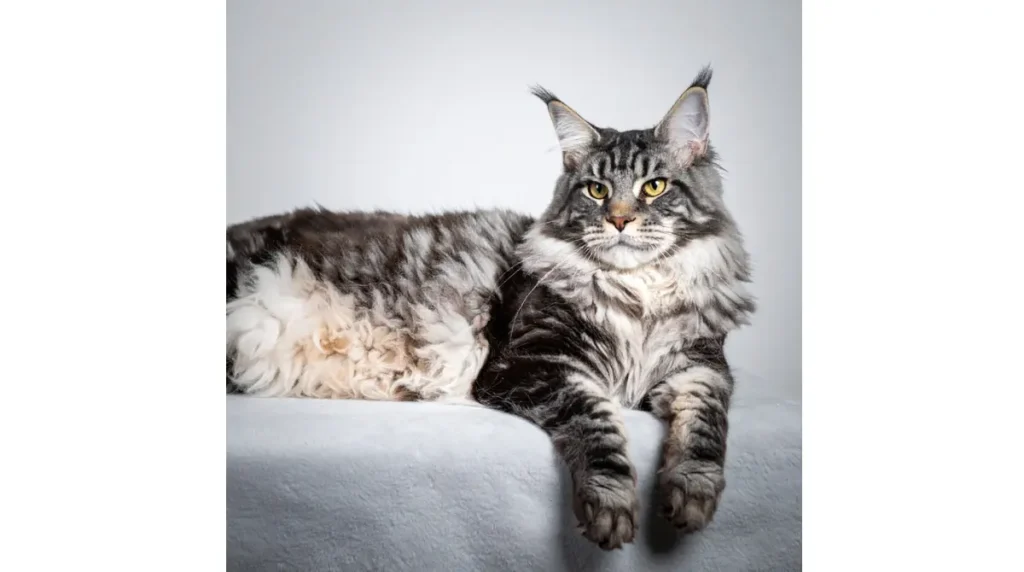
A Maine Coon’s coat isn’t the same length all over, and that’s why one tool falls short.
Short shoulders, long britches
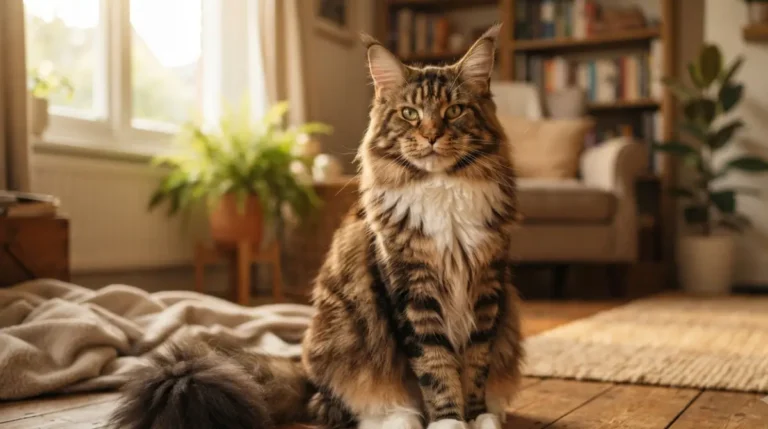
The CFA Maine Coon breed standard describes a heavy, shaggy, silky coat. It is shorter on the shoulders and longer on the stomach and britches, the long fur on the back of the hind legs.
Why combs reach what brushes skim
Professional cat groomers note that brushes tend to glide over the top of the coat. A comb works down to the skin, where loose undercoat collects.
How often to brush
Cornell’s feline hairball guidance recommends daily brushing and combing. The ASPCA notes that indoor long-haired cats shed year-round and need grooming at least every few days.
🔍 Why Cats Do This: Backward-facing barbs on a cat’s tongue carry loose hair down the throat during self-grooming. Cornell notes long-haired breeds like Maine Coons are at significantly greater risk of hairballs, especially in shedding seasons.
Grooming is one piece of the bigger picture of Maine Coon size, cost and health.
The best brushes and combs for Maine Coons, compared
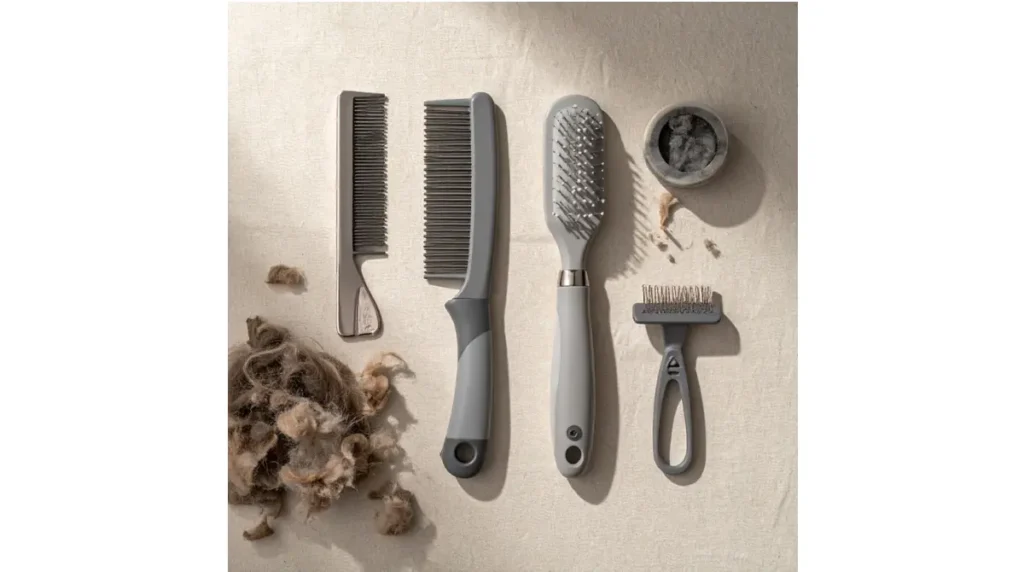
Each tool has one job. Match the job to the part of the coat.
| Tool | Main Job | Best For | Key Detail |
|---|---|---|---|
| Steel comb (wide + medium teeth) | Detangling to the skin | Daily: belly, britches, ruff | Rigid teeth, rounded tips |
| Slicker brush | Lifting loose hair | Back, shoulders, tail | Light pressure only |
| Deshedding tool | Removing loose undercoat | Heavy shedding | Never on mats or broken skin |
| Mat splitter | Splitting small knots | Small, loose mats | Not for mats tight to skin |
Key details from manufacturer guidance and the ASPCA. Not hands-on tested by our team.
Steel greyhound comb (the essential)
A straight greyhound-style comb does most of the work. Choose stainless steel teeth that don’t flex under pressure.
Slicker brush with protected tips
A slicker brush with coated or bent pin tips suits the shorter shoulder coat. Dog-labeled slickers can work too, because tip protection and head size matter more than the label.
Undercoat rake and deshedding tools: use with care
FURminator’s own directions say not to use its deshedding tools on matted or tangled fur, or on skin with sores or cuts. The maker sizes cat tools by weight, with medium/large for cats over 10 pounds. That size fits most adult Maine Coons; see how big Maine Coons get.
Mat splitter (for small mats only)
A mat splitter cuts through small, loose knots. If a mat sits tight against the skin, skip it and read the mat section below.
Which brush goes where on a Maine Coon
This coat-zone map matches each tool to each part of the coat.
| Zone | Coat There | Tools, in Order | Key Detail |
|---|---|---|---|
| Shoulders and back | Shorter | Slicker, then comb | Light strokes |
| Ruff and chest | Long, dense | Wide comb, then medium | Comb upward toward the chin |
| Armpits | Short, high-friction | Medium comb, small sections | Tangles hide here |
| Belly | Long | Wide comb, then medium | Comb upward toward the head |
| Britches | Longest | Wide comb, then medium | Check under the tail for soiled fur |
| Tail | Long plume | Part down the middle, comb each side | Never yank |
| Face and feet | Short, fine | Fine comb | Go slowly |
Coat lengths from the CFA standard; technique from the ASPCA.
The routine, in order
- Run a hand over the coat to check for knots, lumps, or wounds.
- Slicker the shoulders and back.
- Comb the ruff, armpits, belly, and britches, using the wide teeth before the medium teeth.
- Finish with the tail and face.
Tail and belly technique
The ASPCA’s long-haired grooming steps recommend combing the belly and legs upward toward the head. They also recommend parting the tail down the middle and working each side.
Grooming a Maine Coon kitten vs. an adult or senior
The tools stay the same across life stages. What changes is session length and how much help your cat needs.
Kittens: short, positive sessions
International Cat Care’s advice by life stage supports introducing grooming early. Let a kitten sniff the comb first, keep sessions short, and offer treats between strokes. If grooming becomes a struggle, stop and try later.
Seniors and heavier cats: more help, softer tools
The ASPCA notes that regular grooming matters more once an older cat can’t groom as thoroughly. Overweight cats may not reach their rear end, and cats with arthritis may skip areas that hurt to reach.
🐾 Life-Stage Note: A senior Maine Coon that suddenly stops grooming may be uncomfortable. Tell your veterinarian, along with any other behavior changes in senior cats you’ve noticed.
Found a mat? What a comb can fix, and what it can’t
Small, loose mats are a home job. Tight or painful ones aren’t.
Small and loose: work it out gently
The ASPCA suggests teasing small knots apart with your fingers, then trying a mat splitter if they don’t loosen. Our guide to where Maine Coons mat most covers the hot spots.
Tight, large, or painful: hand it off
An ASPCA veterinarian’s guidance on matted coats explains that even mild mats can irritate skin and progress to infected sores. Mats around the hind end can trap feces. A mat that won’t brush out easily needs a groomer or veterinarian, and severe matting may need sedation.
Why scissors are the worst tool
⚠️ Watch Out: Never cut a mat out with scissors. Cats move suddenly, and the ASPCA warns this can cause a severe cut or puncture.
✅ Do This: Call a cat-experienced groomer or your veterinarian if a mat won’t brush out easily or your cat flinches when you touch it. See your vet promptly if the skin underneath looks red, raw, or smells bad. Note where the mats are and how long they’ve been there.
Soiled britches mat faster, so keep the hind end combed and the litter setup roomy. Our guide to how many litter boxes per cat covers the setup.
How we chose these brushes and combs
We didn’t hands-on test these tools on a Maine Coon for this article, so we won’t claim we did.
Our criteria
- Rigid stainless steel comb teeth with rounded tips
- Slicker pins with protected tips
- Deshedding tools sized for cats over 10 pounds, with clear maker directions against use on mats
What we tested, and what we didn’t
No hands-on testing was done for this article. Picks are based on the criteria above, manufacturer guidance, and veterinary and welfare sources.
Maine Coon brush FAQ
1. What is the best brush for a Maine Coon?
No single brush works alone. Start with a stainless steel comb for belly, britches, and ruff, plus a slicker brush with protected tips.
2. How often should I brush my Maine Coon?
Cornell recommends daily brushing and combing. The ASPCA says indoor long-haired cats like Maine Coons need grooming at least every few days.
3. Is a FURminator OK for a Maine Coon?
It removes loose undercoat, but its maker warns against use on mats, tangles, or broken skin. Choose the size for cats over 10 pounds.
4. Can I use a dog brush on my Maine Coon?
Often, yes. For a Maine Coon brush, protected pin tips, rigid teeth, and head size matter more than the pet on the label.
5. Where do Maine Coons get mats most often?
Maine Coon mats tend to form where fur is longest or rubs most: the belly, britches, armpits, and chest ruff.
6. Should I cut out a Maine Coon mat with scissors?
No. The ASPCA warns a sudden movement can cause a severe cut. A groomer or veterinarian can clip Maine Coon mats safely.
7. When should a Maine Coon kitten start grooming?
Start early with short, positive sessions and treats so your Maine Coon kitten accepts the comb. Stop if it becomes a struggle.
8. Does brushing a Maine Coon reduce hairballs?
It can help. Cornell notes long-haired breeds like Maine Coons face higher hairball risk and recommends daily brushing and combing.
9. Should I shave my matted Maine Coon at home?
No. A matted Maine Coon needs a groomer or veterinarian, who can clip safely and use sedation for severe matting if needed.
10. Why is my senior Maine Coon suddenly getting mats?
Older, overweight, or arthritic cats may groom less thoroughly. If your senior Maine Coon suddenly mats or stops grooming, contact your veterinarian.
Your Maine Coon grooming kit, simplified
Start with a stainless steel comb and a slicker brush. Comb the belly and britches first, and add other tools only when the coat calls for them. Small, loose knots are a home job, while tight mats belong with a groomer or vet, never scissors. Keep the coat-zone map with your tools, and grooming becomes a short habit instead of a battle.