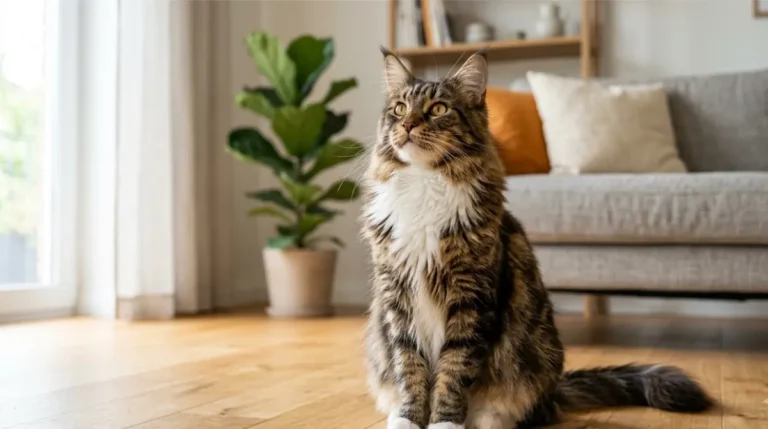
A Gentle Guide to Maine Coon Weight as Your Cat Grows

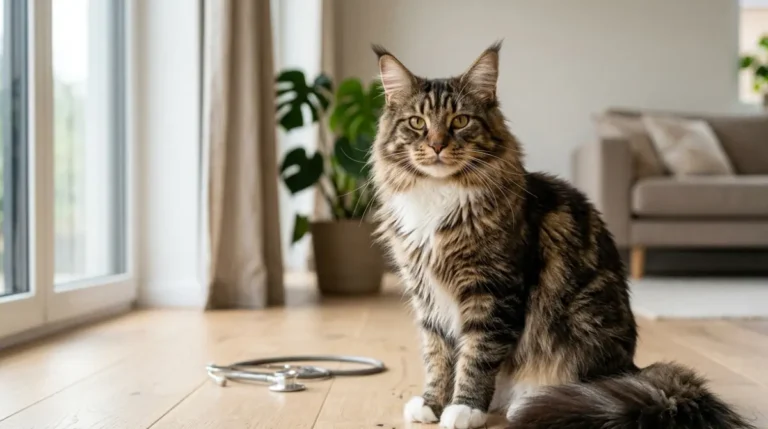
Maine Coon weight at one year can mislead: the breed standard says to allow for slow maturation, so a young cat can look unfinished.
Table of Contents
How much a Maine Coon weighs, and why it takes years
A Maine Coon is a slow-maturing breed. The Cat Fanciers’ Association says it can take up to three years to reach full growth, and a mature male reaching or exceeding 20 pounds (about 9 kg) isn’t unusual. Females are usually smaller.
🚨 Go to a Vet Now If: your Maine Coon breathes with its mouth open or with visible effort, or suddenly can’t use its back legs. If it has stopped eating, call your vet today.
The short answer
Treat every number here as a range, not a target; body shape tells you more than the scale.
Which part of this guide you need
- Kitten or young cat? See weight by age.
- Too thin or too heavy? See the body check.
- Limping or breathing changes? See heart and hip.
ℹ️ Vet Note: This article explains Maine Coon growth and weight. It isn’t a diagnosis and names no diets, calorie targets, or medications. Maine Coons are predisposed to heart and hip disease, so changes in breathing, mobility, or weight belong with your veterinarian.
Maine Coon weight by age: what to expect each year
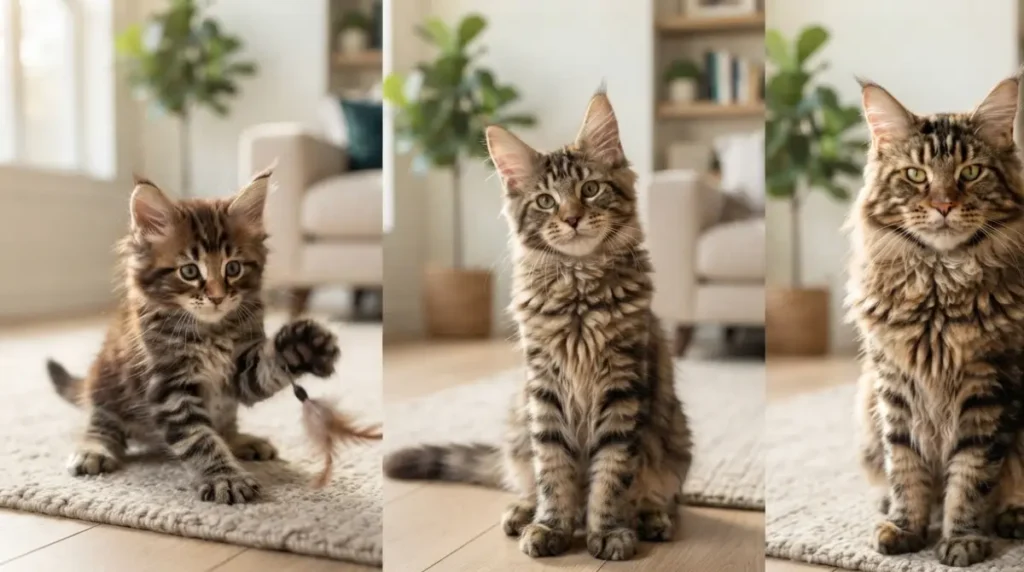
We found no registry or veterinary-body table of Maine Coon weight by age, so weights appear only where a named source gives one.
| Age and stage | Typical weight |
|---|---|
| Kitten (birth to 1 year) | |
| Young adult (1 to 6 years), still growing | |
| About 3 years on | CFA: full growth up to three years; males reaching or passing 20 lb (9 kg) aren’t unusual; females usually smaller |
Kittens: the first year
The kitten stage runs to age 1; our guide to kitten behavior stages from 8 to 16 weeks covers what’s normal early on.
1 to 3 years: still filling out
Vets call 1 to 6 years the young adult stage, but CFA’s window means a one-year-old may still be growing.
From 3 years: the plateau
By about three years, CFA’s growth window has closed, so later weight changes deserve a vet’s attention.
When Maine Coons stop growing, and why charts disagree
Per CFA, a Maine Coon can take up to three years to reach full growth; other sources name different ages.
Frame first, bulk later
CFA’s breed standard says allowance should be made for slow maturation, so a young Maine Coon can look unfinished.
What the registries actually say
| Source | What it says | Status |
|---|---|---|
| CFA | Up to three years to full growth | Verified October 8, 2026 |
| TICA | ||
| Many online charts | Maturity from about one to five years, weights differing by several pounds | Source rarely named |
Re-check gear as they grow
The AAHA/AAFP guidelines advise checking that litter box size keeps pace with a growing young adult; see how to size and place litter boxes.
Why two healthy Maine Coons can weigh very different amounts
Sex and body frame both move the number on the scale.
Sex and bloodline
CFA says females are usually smaller than males.
Frame, muscle and coat versus fat
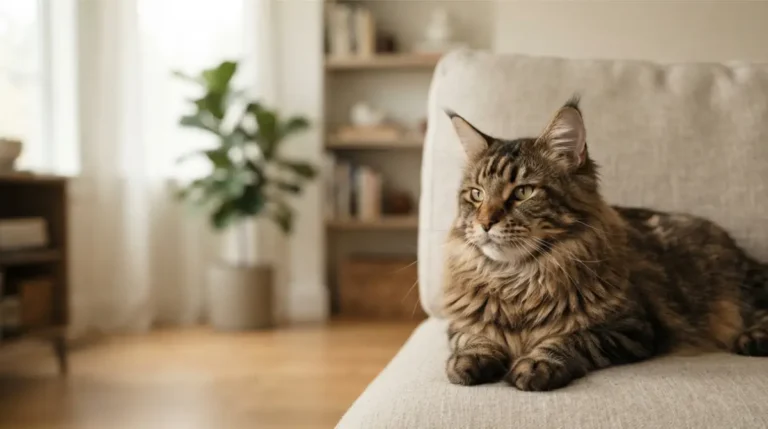
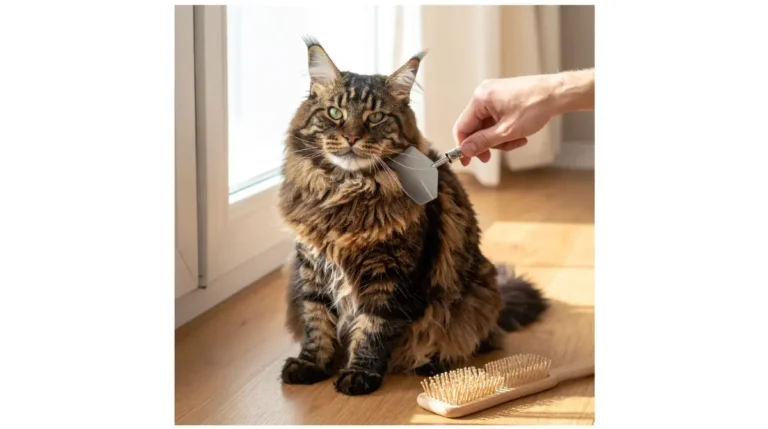
A broad chest, substantial legs, and a heavy coat are normal for the breed, per CFA’s standard. Vets record body condition and muscle condition alongside weight.
What to ask your breeder or shelter
A breeder can share the parents’ sizes and health-test results; a shelter may not know them. CFA’s standard also says quality should never be sacrificed for size.
Is your Maine Coon too thin, too heavy, or just big?
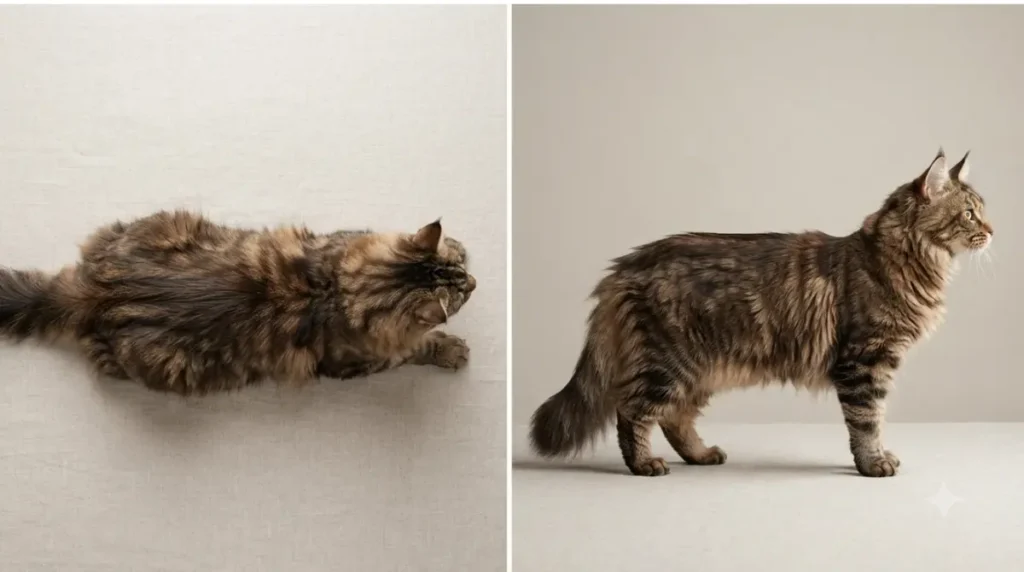
Vets score body condition on a 9-point scale, and WSAVA’s chart puts 4 and 5 in the ideal range.
- Feel the ribs: minimal to slight fat covering at an ideal score.
- Look from above: a waist behind the ribs.
- Look from the side: a slight tuck; no tuck points to 6 or higher.
Why a thick coat hides the answer
A long coat hides shape, so trust your hands. Photos from above and the side, which AAHA recommends for tracking body condition, show slow change.
Gaining or losing without trying
🐾 Life-Stage Note: Weight that moves without a diet change needs your vet. AAHA/AAFP have vets watch gain in young adults and loss or gain in seniors.
✅ Do This: Ask your vet which score your cat is and what target weight they want.
Heart and hip problems Maine Coon owners should know
Two conditions are well documented in Maine Coons: hip dysplasia and hypertrophic cardiomyopathy (HCM).
Hip dysplasia: limping, avoiding activity, and weight
Cornell says it is rare in cats compared with dogs but more prevalent in Maine Coons. Signs include limping, avoiding activity, and pain when the hip is touched; obesity may add wear to the joint.
HCM: when breathing or back legs change
HCM thickens the heart’s walls, and many affected cats look well, which is why vet exams matter.
🚨 Go to a Vet Now If: your Maine Coon breathes with its mouth open or with effort, or suddenly can’t use its back legs. Cornell ties both to HCM complications. Call the clinic on the way.
What breeders screen for
CFA says breeders screen hips by x-ray and hearts by saliva tests and echocardiograms; Cornell notes a mutation doesn’t guarantee HCM.
Our Maine Coon size, cost and health guide covers the wider picture.
Tracking your Maine Coon’s weight, and when to call the vet
A monthly record turns “something seems off” into facts your vet can use.
A monthly weigh-in that works
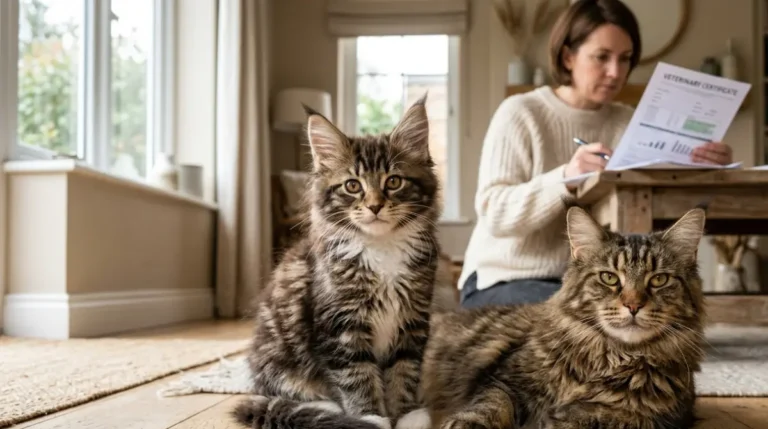
Our suggestion: weigh at the same time of day on the same scale, and photograph your cat from above and the side.
What your vet records at every visit
AAHA/AAFP guidelines have vets record body weight, body condition, and muscle condition, with exams at least yearly and every six months for seniors.
When a number or a behavior needs a call
Call your vet today if your cat stops eating; our urgency-tier guide sorts changes into go now, call today, and book this week. For older cats, see senior cat behavior changes.
Maine Coon weight questions owners ask most
1. How much should a Maine Coon weigh?
Healthy Maine Coon weight varies: CFA says mature males reaching or passing 20 pounds (9 kg) aren’t unusual and females are usually smaller.
2. When do Maine Coons stop growing?
CFA says up to three years to reach full growth. Other sources differ, so ask your vet to track your own cat’s trend.
3. Is my 1-year-old Maine Coon too small?
Not necessarily; CFA says growth can continue up to three years. Call your vet if weight stalls, drops, or your cat stops eating.
4. Do male Maine Coons weigh more than females?
Usually, yes. CFA says females are usually smaller than males, but body condition, not size alone, shows whether a cat’s weight is healthy.
5. How can I tell if my Maine Coon is overweight?
Feel the ribs and look for a waist from above. WSAVA puts body condition scores of 4 and 5 out of 9 in the ideal range; your vet can set a target.
6. Is a 20-pound Maine Coon overweight?
Not automatically; CFA says males reaching 20 pounds aren’t unusual. Check the ribs and waist, then ask your vet to score body condition.
7. Can extra weight hurt a Maine Coon’s hips?
Cornell says obesity may add wear to the hip joint and advises keeping cats from being overweight. Limping or avoiding activity means a vet visit.
8. What are the signs of heart disease in a Maine Coon?
Many cats with HCM look well. Labored or open-mouth breathing, or sudden hind-leg pain or paralysis, means an emergency clinic now; otherwise ask your vet about screening.
What to do next for your Maine Coon
Weigh your Maine Coon monthly, check the ribs and waist, and take your log and photos to every vet visit. Growth can take years, so one number on a chart isn’t a verdict. Start the log this week, while nothing is wrong, so any change stands out. If breathing, mobility, or appetite changes, call your vet.