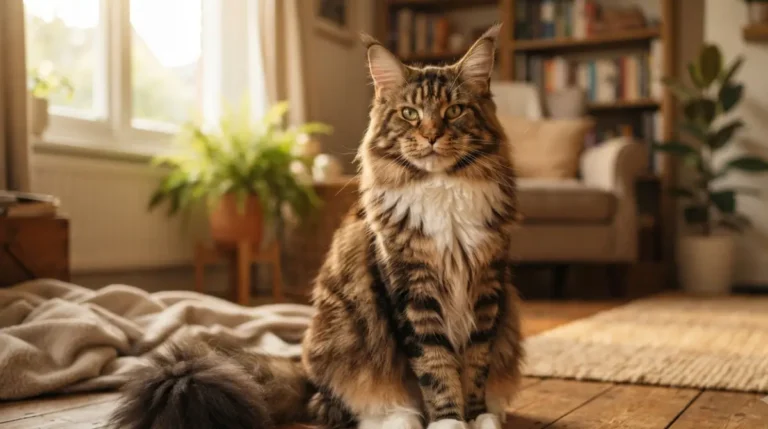
A Simple Guide to Polydactyl Maine Coon Paw Care

A polydactyl Maine Coon has more than the standard five front and four back toes. See what the extras change for paw care and vet visits.
Table of Contents
Polydactyl Maine Coon: what those extra toes mean
A polydactyl Maine Coon has more than the usual 18 toes. For most cats the extras cause no trouble; the catch is nails that curl into the paw pad and hide during trims.
The short answer
Extra toes aren’t a disease. Care means weekly paw checks and safe trims. For size, cost and breed-wide health, see our Maine Coon size, cost and health guide.
Call the vet today if…
🚨 Go to a Vet Now If: your cat limps, a nail is stuck in a pad, or a toe is swollen, bleeding or oozing. Call your veterinarian today, or an emergency clinic.
ℹ️ Vet Note: This article is general education, not a diagnosis. Nail, swelling or limping problems need a veterinarian, and removing an extra toe is their decision.
Why Maine Coons have extra toes
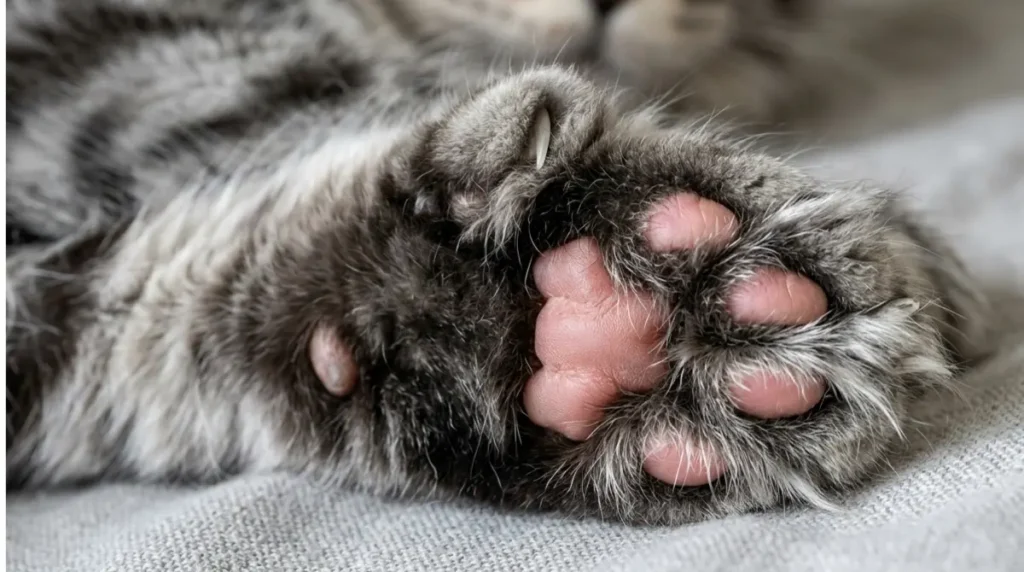
A polydactyl Maine Coon is born with more than the usual five toes on each front paw and four on each back paw, through an inherited dominant trait.
How the trait is inherited
International Cat Care describes polydactyly as a dominant inherited trait seen in pedigree and non-pedigree cats. One carrying parent can pass it on.
Which paws, and how many toes
Extras appear most often on the front paws. They range from small soft-tissue bumps to full toes, and some aren’t properly joined to other bones, so they injure more easily.
Are extra toes a health problem?
Usually not: polydactyl cats aren’t known for more health problems, and the toes themselves aren’t painful.
The one real catch: the nails
Inner “thumb” toes often don’t touch the ground, so their nails don’t wear down on a scratching post and can curl into the pad. Extra toes also snag more easily, risking a torn nail.
🔍 Why Cats Do This: A claw that never meets the floor has nothing to file it down, so it keeps curving and can puncture the pad, letting bacteria in.
Are extra toes painful?
No. Pain comes from a curled or embedded nail, an injury or an infection.
How to check and trim extra toes safely
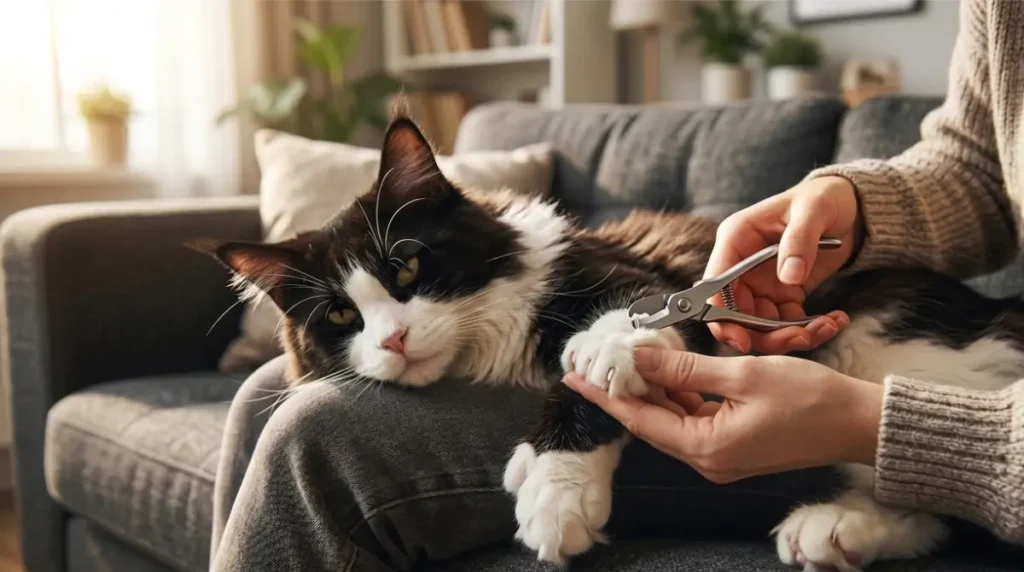
A weekly look at every paw catches most nail problems early.
The paw check, step by step
- Settle your cat and gently press one toe to extend the claws.
- Find every nail, including inner “thumb” toes and any dewclaw.
- Look for a nail curling toward the pad, redness or swelling.
- Trim only the clear tip, well away from the pink quick.
⚠️ Watch Out: Don’t force a nail that is stuck in the pad. Stop and call your veterinarian.
How often, and if your cat objects
Most cats need trims every few weeks; seniors and indoor cats often need them sooner, so ask your vet for a schedule. A clinic trim is quick if your cat objects. Cornell’s video on trimming cat claws shows the technique.
Extra-toe care for kittens, adults and seniors
What you watch for changes with age.
Kittens: start paw handling early
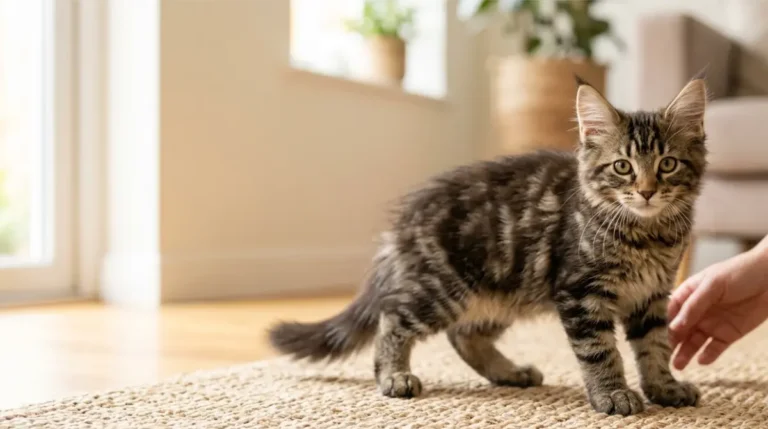
Handle paws daily so trims feel normal later.
Adults, seniors and indoor cats
Seniors scratch less and their nails thicken and curl, and indoor cats may not wear nails down, so both need more frequent checks. A scratching surface helps but may not reach inner thumb toes, so keep trimming. See scratching posts by cat type.
🐾 Life-Stage Note: Kittens: build the habit. Adults: check weekly. Seniors: ask your vet whether to trim more often.
Signs an extra toe needs a vet
Most extra-toe paws are fine, but some signs need a vet.
The paw-check triage card
| Level | What you see | What to do |
|---|---|---|
| Routine | Short nails, normal walking | Weekly checks |
| Act soon | Nail curling or touching the pad, extra licking | Trim, or book a clinic trim |
| Call today | Nail stuck in pad; redness, swelling, discharge, bleeding; limping; several nails ingrown | Call your vet today; no home treatment |
What your vet will check
Your vet will judge how deep the nail sits and whether infection is present. Several ingrown nails can signal an underlying condition, so ask. If trouble keeps recurring, your vet may discuss options for the toe.
Do they need extra vet visits?
Not known to. Ask your vet to check the paws at routine exams.
✅ Do This: Before calling, note the paw, the nail, when you noticed it and whether your cat is eating; take a photo. Cats hide pain well: see the signs your cat is in pain.
Shows, registries and what to ask a breeder
Extra toes affect show eligibility and raise breeder questions.
Can they be shown?
CFA’s standard calls for five toes in front and four behind and disqualifies an incorrect toe count, so polydactyl Maine Coons can’t compete there (CFA’s Maine Coon breed page). TICA accepts them in championship.
Cost and what to ask a breeder
Prices vary; some breeders charge extra for the trait. International Cat Care discourages deliberately breeding it, so ask a breeder why and what health screening they run. See breeder red flags and breeder versus rescue prices.
FAQ
1. What is a polydactyl Maine Coon?
A polydactyl Maine Coon has more than the usual 18 toes, from an inherited dominant trait one parent can pass on.
2. Are polydactyl Maine Coons healthy?
Usually; extra toes alone aren’t known to cause more health problems. Check nails regularly; limping or an embedded nail needs a vet today.
3. How many toes does a polydactyl Maine Coon have?
More than the usual 18, with extras most often on the front paws; the count varies from cat to cat.
4. How often should I trim a polydactyl Maine Coon’s nails?
Usually every few weeks; seniors and indoor cats often need it sooner. Ask your vet for a schedule.
5. Are extra toes painful for a polydactyl Maine Coon?
The toes aren’t painful. A curled or embedded nail, injury or infection is; call your vet if your cat limps.
6. Can a polydactyl Maine Coon compete in cat shows?
Not at CFA shows, where an incorrect toe count disqualifies. Check each registry’s current rules before entering.
7. Do polydactyl Maine Coons cost more?
Prices vary by breeder; some charge extra for the trait. Compare written quotes from several breeders.
8. Can any cat be polydactyl, or only Maine Coons?
Any cat can. The dominant trait appears in pedigree and non-pedigree cats alike.
Your next step this week
Check every paw this week: count the toes and find each nail, including the inner “thumb” toes. Keep a trim schedule your vet agrees with, and treat limping, swelling, discharge or an embedded nail as call-today signs.