An Easy Maine Coon Grooming Routine From Kitten to Senior

Maine Coon grooming takes five to ten minutes a session, yet mats keep forming in the same five places. Here’s where to check and when to stop.
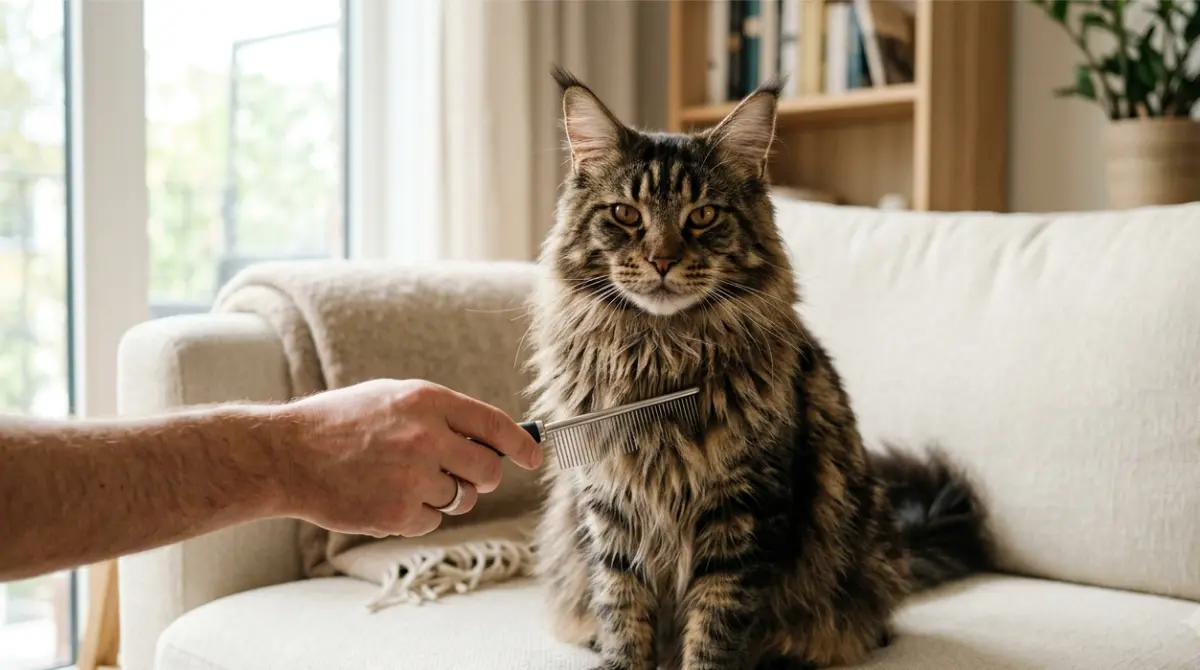
Table of Contents
Maine Coon grooming: how often, and where to look
Breeders cited by the Cat Fanciers’ Association (CFA) recommend combing a Maine Coon two or three times a week, for five to ten minutes each time. Heavy shedders and senior cats may need more.
- New kitten? See the life-stage schedule.
- Cat fights the comb? Start with the step-by-step routine.
- Older cat suddenly scruffy? Go to the health signs section.
Found a mat right now? Start here
Don’t cut it. Read the mat section below first.
What this guide covers and how it was made
This page goes deeper than our Maine Coon size, cost and health guide on schedule, mat spots and safe removal. How we made it is noted at the end.
Why a Maine Coon coat tangles in some spots, not others
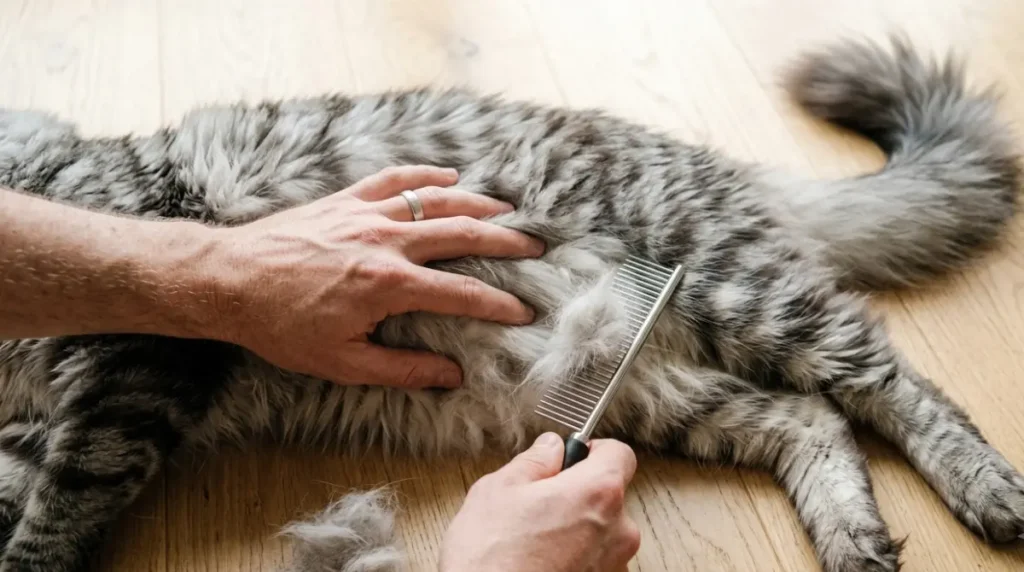
The CFA breed standard calls for a heavy, shaggy coat, shorter on the shoulders and longer on the stomach and britches, the fluffy “trousers” on the back legs.
Undercoat, top coat and the shaggy design
🔍 Why Cats Do This: A soft undercoat sits beneath a heavier top coat. Shed undercoat can snag in the longer hair instead of falling free, and where the coat is longest, snags tighten into mats.
Why it mats less than a Persian but still mats
VCA Hospitals says this coat mats less easily than a Persian’s. Less isn’t never, so the long zones still need checking.
Where Maine Coons get mats: a spot-by-spot check
Work your fingers or comb down to the skin in these mat-prone zones.
The five zones to check every session
| Zone | Key detail |
|---|---|
| Belly | Long coat; comb in short, gentle strokes |
| Britches | Longest coat; check for clinging litter |
| Armpits | Hidden under the front legs; easy to miss |
| Ruff (mane) | Comb upward toward the chin |
| Tail | Part it down the middle; comb each side |
Sourced: CFA breed standard; ASPCA grooming guidance.

The back end: when mats meet the litter box
ASPCA vets warn that hind-end mats can trap feces. If litter keeps clinging, check your litter box setup and ask a groomer or vet for a sanitary trim.
Between the toes
Feel the long toe tufts for knots or trapped litter.
How often to brush a Maine Coon, from kitten to senior
Sources disagree on brushing frequency because they’re solving different problems.
What the sources actually say
| Source | Advice | Key detail |
|---|---|---|
| CFA | 2–3 times a week | Shedding, hairballs, mats |
| GCCF (UK) | Weekly | Breed profile |
| VCA Hospitals | Metal comb weekly | Mats less than a Persian |
| ASPCA | Every few days | Indoor longhairs shed year-round |
| Cornell | Daily | Hairball prevention |
Sourced: each organization’s guidance, checked October 2026.
The baseline in the CFA’s Maine Coon breed profile suits most adults. Go daily if mats or hairballs keep appearing.
Kittens: short and often
🐾 Life-Stage Note: University of Sydney vets say brushing can start from about 6 weeks. Begin the week your kitten comes home, with a few strokes and a treat.
Shedding season and senior cats: step it up
Cornell says hairballs rise in shedding seasons, and ASPCA says brushing matters more as senior cats groom less. Add sessions for both.
How to brush a Maine Coon without a fight
Short, calm sessions beat rare long ones.
The tools that matter
Use a metal comb, the tool VCA names, plus a wide-tooth comb for the longest zones. We haven’t tested brands, so we don’t recommend any.
A 10-minute session, step by step
- Start with the cheeks, chin and head.
- Comb in the direction the coat grows.
- Comb the belly and legs upward, then the neck toward the chin.
- Part the tail and comb each side.
- Feel for bumps, wounds and hidden tangles.
- Stop while it’s going well, then give a treat.
These steps follow International Cat Care and ASPCA’s cat grooming tips.
If your Maine Coon hates being brushed
International Cat Care says short sessions are tolerated far better than long ones, so pair strokes with treats and stop when your cat does. If either of you could get hurt, ASPCA recommends a groomer or vet.
Do Maine Coons need baths?
Most don’t need regular baths, the CFA says.
Found a mat? What’s safe at home and what isn’t
Loose tangles are a home job; tight mats aren’t.
⚠️ Watch Out: Never cut a mat out with scissors. ASPCA vets warn that one sudden movement can cause a severe cut.
Small, loose tangles: work them out gently
ASPCA says early, mild mats can be brushed out. Hold the fur at its base so you don’t pull, then gently tease the knot apart with your fingers.
Why you should never cut a mat with scissors
🔍 Why Cats Do This: Cat skin is elastic and lifts with the mat, so it’s hard to see where hair ends and skin begins.
Ignored mats can irritate the skin and become infected sores, according to ASPCA’s warning about matted coats.
When a mat needs a groomer or vet
Severe matting may need sedation and a full-body clip, and that’s your vet’s decision.
✅ Do This: Book a groomer or vet for any mat that won’t brush out. Note where it is, how long it’s been there and whether the skin looks red or sore.
When new mats mean your Maine Coon needs a vet visit
Sudden mats can be a message, not a brushing lapse.
Mats over the hips and back end
VCA vets explain that when grooming the lower back and hips hurts, cats skip those areas and they mat. That’s worth a vet check, especially alongside signs of hip dysplasia or other ways cats show pain.
Hairballs that don’t stop
A hairball every week or two isn’t unusual, but Cornell’s hairball guide warns never to give a laxative without your vet’s approval.
🚨 Go to a Vet Now If: Your cat is lethargic, won’t eat for more than a day or two, or keeps retching or vomiting. Cornell advises an exam without delay.
What your vet may check
Expect a look at joints, movement, skin under the mats and body condition. Bring notes on when the mats started and any changes in jumping, litter box use or appetite.
Maine Coon grooming questions owners ask most
1. How often should you brush a Maine Coon?
The CFA recommends two or three times a week, adding sessions during heavy sheds and for senior cats.
2. How long should Maine Coon grooming take?
Five to ten minutes per session is enough, according to the CFA’s Maine Coon breed profile.
3. Where do Maine Coons get mats?
Maine Coon mats usually form on the belly, britches, armpits, ruff and tail, where fur is longest or hidden.
4. Can I cut Maine Coon mats with scissors?
No. ASPCA warns scissors can cause severe cuts, so take tight Maine Coon mats to a groomer or vet.
5. Why is my senior Maine Coon matted at the back?
Grooming those areas may hurt, so they get skipped. Book a vet visit to check your Maine Coon for joint pain.
6. When should Maine Coon kitten brushing start?
Start the week your Maine Coon kitten comes home, with a few gentle strokes followed by a treat.
7. Does brushing a Maine Coon reduce hairballs?
Yes. Cornell recommends daily brushing to reduce hairballs, and notes long-haired breeds like Maine Coons may be at greater risk.
8. What tool is best for Maine Coon grooming?
A sturdy metal comb suits the Maine Coon coat, with a wide-tooth comb for the longest areas.
9. Do Maine Coons need regular baths?
Most Maine Coons don’t need regular baths, the CFA says, because routine combing keeps the coat in shape.
10. Should I shave a badly matted Maine Coon?
Not at home. Severely matted Maine Coons may need sedation and a full-body clip, which your vet decides.
Your Maine Coon grooming routine, starting this week
Schedule two or three short combing sessions a week and check the five mat zones each time. Send tight mats to a groomer or vet. If an older cat suddenly looks scruffy, treat it as a reason for a vet check, not a brushing failure.