Normal cat behavior and the warning signs your vet should see

Which cat behavior changes are normal and which need a vet, from kitten play to a mature cat off food for 24 hours, plus five things to count at home.
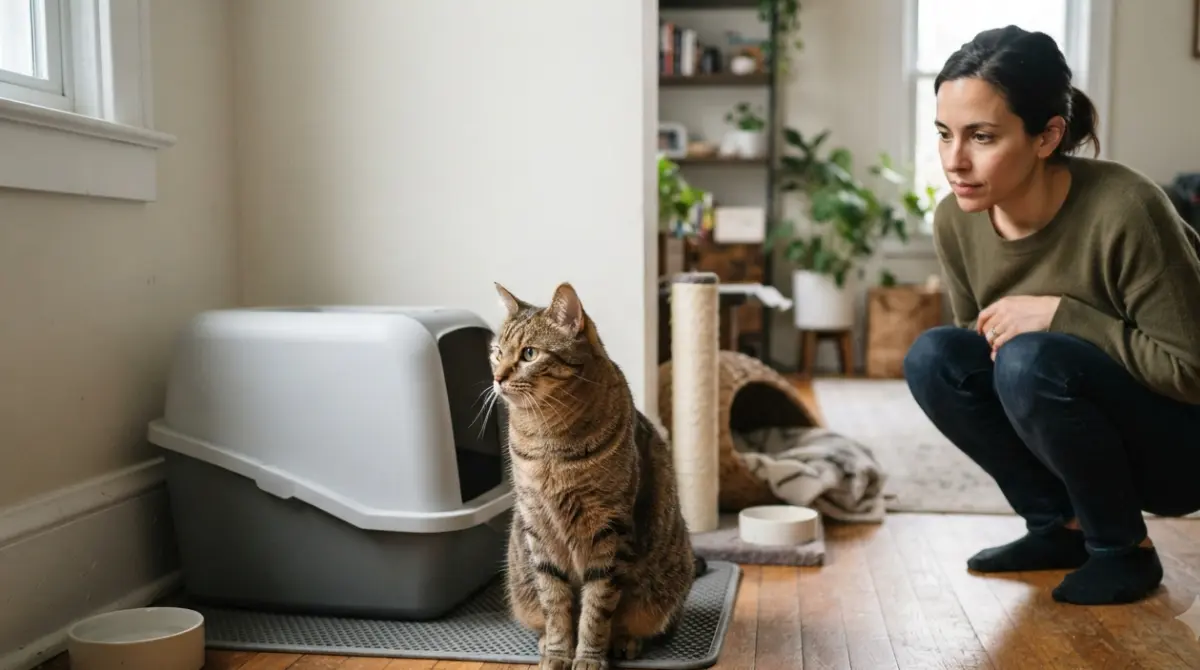
Table of Contents
Normal cat behavior is the pattern your cat keeps in an ordinary week, and a change from that pattern is what your vet needs to hear about. Three changes mean the nearest emergency vet now: straining in the litter box with little or no urine, fast and labored breathing while resting, and any chance she swallowed something toxic, which also calls for ASPCA Animal Poison Control.
For everything short of that, two steps help. Count a few things at home while she is well, then use the sign-by-sign table to see how fast to act when one of them shifts.
Signs that can’t wait until morning
A complete urinary blockage can kill a cat in less than 24 to 48 hours (Cornell Feline Health Center). He crouches in the box again and again, little or nothing comes out, and over the hours he grows more upset, often crying. The risk is higher in males, neutered or not, because the male urethra is longer and narrower than a female’s. If you can’t tell whether anything is coming out, treat it as a blockage and go.
These four send a cat to an emergency hospital tonight:
- Straining with almost no urine, most of all in a male.
- Fast breathing at rest with visible effort.
- Collapse or sudden back-leg weakness, especially with fast breathing.
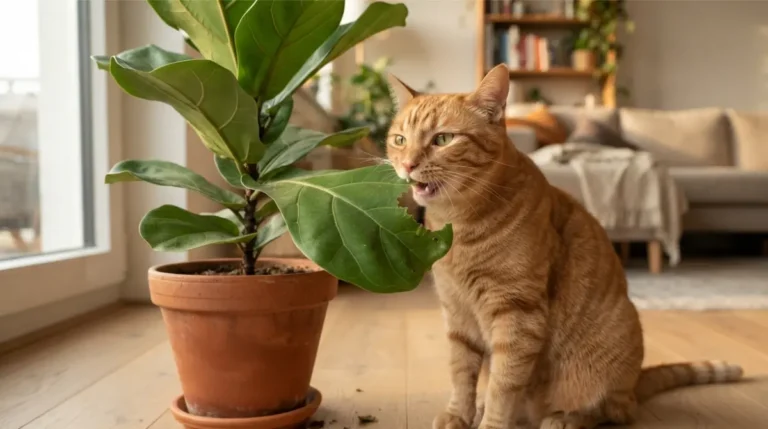
- Any change after she may have eaten a plant or a medicine.
A fast resting breath rate seen together with labored breathing or collapse can mean heart failure, and after hours it may need an emergency center (Texas A&M cardiology handout). The full emergency-room list, including trouble standing and blue or white gums, sits in emergency vet or urgent care for a cat behavior change, along with which clinic to drive to.
Go to a vet now if: your cat strains to pee with almost nothing coming out, or breathes fast and hard while resting. Drive to the nearest emergency hospital and phone ahead. For a possible poisoning, ASPCA Animal Poison Control answers at (888) 426-4435, 24 hours a day, and a consultation fee may apply. Bring the packaging or a photo of what she ate.
How much odd cat behavior is normal?
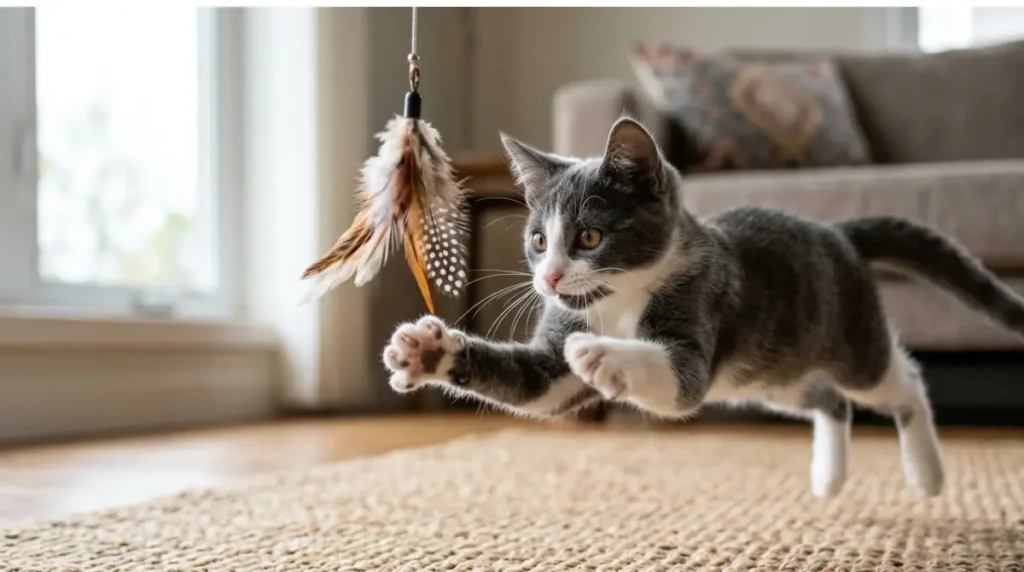
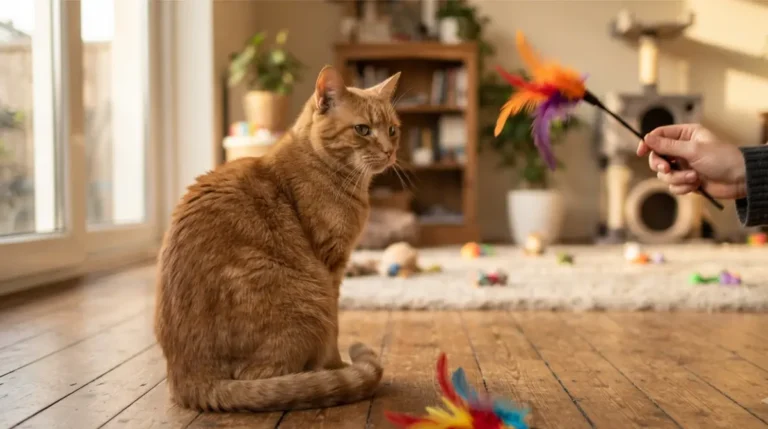
Most of what alarms new owners is hunting with no prey. Chasing, pouncing, biting and clawing a toy are normal play that mimics the hunt, in kittens and adults alike (FelineVMA, formerly the AAFP). The same guide treats several worrying habits as ordinary:
- Pouncing on a moving cord or your feet: hunting play, strongest in most kittens and may be more subdued in seniors.
- Scratching the sofa: it keeps claws healthy and leaves scent plus a visual mark for other cats.
- Meowing at you and rubbing your legs: bids for attention, which a response can reward without meaning to.
- Two young cats wrestling: social play can look like fighting and usually fades around 1 to 2 years of age.
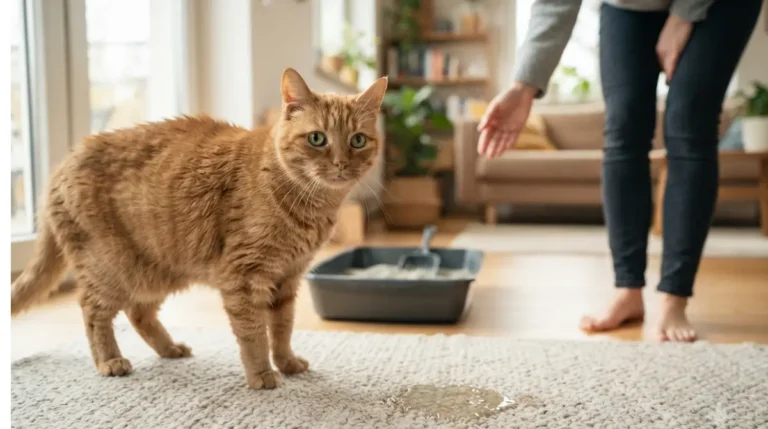
Urine marking belongs on that list as cat signaling, yet the causes of soiling outside the box include medical problems, so new soiling goes to the vet first.
Scratching meets a need, so the answer is a better place for it. Cats differ in what they like to rake their claws on, with carpet, wood, rope and cardboard all common picks, and the angle they prefer varies too. That is the starting point for moving the scratching habit off your sofa.
Purring fits the normal column less neatly than people expect. A cat in discomfort may purr as well, which why cats purr when they aren’t happy covers.
Count your cat’s normal this week
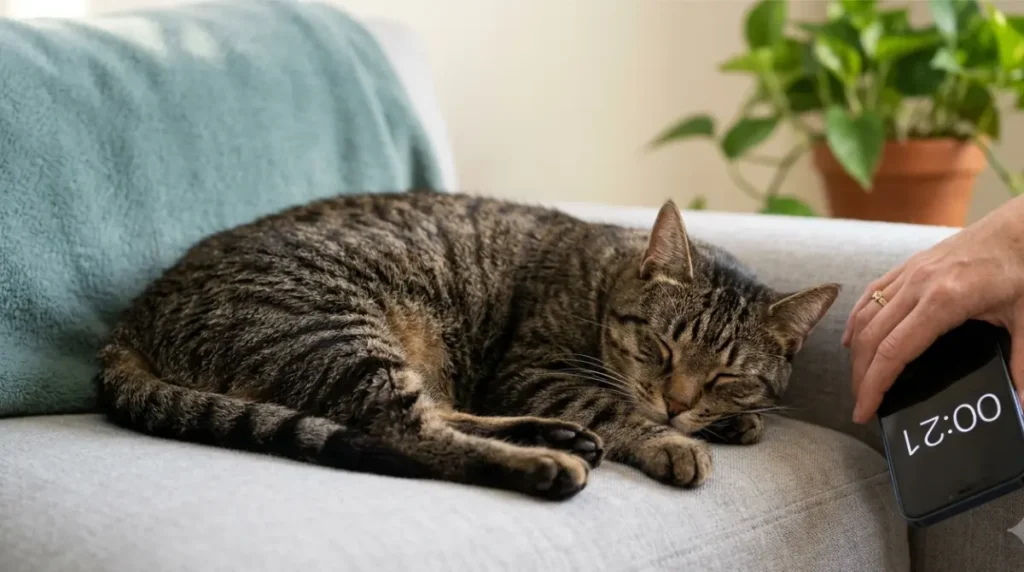
Pick a time when your cat is sound asleep and not purring, and start with her breathing. Watch the chest: one rise and fall is one breath. Count for 30 seconds and double it.
The same cardiology handout puts normal at 15 to 30 breaths a minute for sleeping or resting dogs and cats, with lower rates fine in a healthy animal and rates consistently above about 30 counted as abnormal. The handout gives that one range for all ages, with no separate kitten figure. A single high count means counting again a few times over the next couple of hours. If it stays high, contact your vet.
A second veterinary source draws the line higher:
| Source | Normal while asleep (breaths a minute) | When to call |
|---|---|---|
| Texas A&M handout (dogs and cats) | 15 to 30 | Consistently over about 30 |
| FelineVMA sleeping-rate form (cats watched for heart disease) | Fewer than 30 to 40 | 40 or more; at 50 or more, call even when the clinic is closed |
Your own vet may set a lower line for your cat (same handout), so ask which number to use.
Breathing is one count of five. Write down the rest over the same week:
| What to count | How | A change to flag |
|---|---|---|
| Sleeping breaths | 30 seconds, doubled, once a day for a week | Steadily above her usual count |
| Weight | Step on a bathroom scale alone, then holding her, and subtract | Any loss or gain you can’t explain |
| Urine clumps | Count them at every scoop for 7 days | More, fewer, or much smaller clumps |
| Food left in the bowl | Look before the next meal | A meal left uneaten |
| Sleeping spots and greetings | Note where she naps and whether she meets you at the door | A new hiding place, or no greeting |
If you weigh 154.8 lb (70.2 kg) alone and 165.4 lb (75.0 kg) holding her, she weighs 10.6 lb (4.8 kg). Use the same scale each time so the numbers compare. These are her numbers, and her numbers are what the vet will hold today’s against.
In a multi-cat home: clumps can’t be matched to one cat, so count per box and watch who uses which. The usual count is one more box than there are cats (Cornell), and how many litter boxes per cat covers placement.
Sign by sign: normal, worth a call, or go now
Find the behavior, then read across. Where two rows fit, act on the faster one.
| Sign | Usually normal when | Act when | How soon | More detail |
|---|---|---|---|---|
| Straining in the box | Never | Passes almost no urine, or cries out | Go now | |
| Breathing while asleep | Under about 30 a minute; faster only when hot, stressed or active | Steadily over 30 | Call your vet; go now with effort or collapse | |
| Eating, mature cat | Eats her usual amount | Eats nothing, or far less | Call as soon as you notice; 24 hours without food can severely affect a mature cat | |
| Eating, kitten under 6 weeks | Eats at every feeding | Stops eating | Go now; 12 hours without food can be lethal | |
| Peeing outside the box | Rarely; medical causes come first | Any new soiling, or frequent small trips | Phone the vet today; go now if a male passes almost nothing | why cats pee outside the litter box |
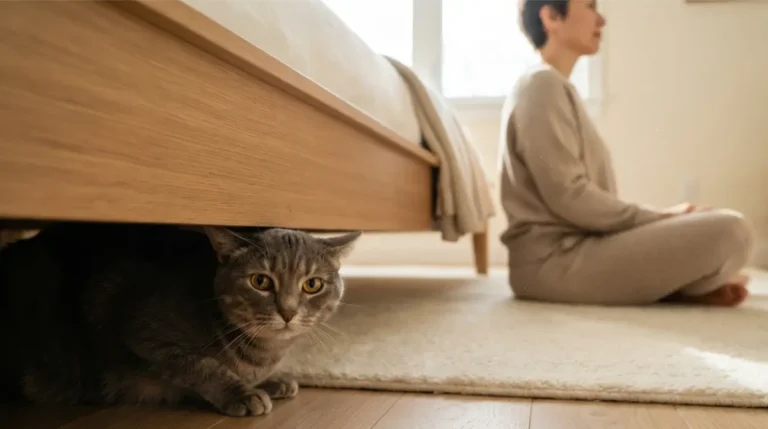
| Hiding | Naps out of sight, comes out for meals | New hiding plus a skipped meal | Same-day call to your vet | when hiding means a vet visit |
| Jumping and climbing | Reaches her usual high spots | Stops using high places | Book a visit this week | pain signs in a cat’s face and body |
| Housemates | Young cats wrestle; play fades by 1 to 2 years | Sudden hissing, chasing or injuries | Vet check first, then reintroduce | reintroducing cats after sudden fighting |
| Meowing | Asks for food or attention | New yowling in a cat over 10 | Book an appointment | |
| Play | Seniors play less | Play drops off with nothing else changed | Raise it at the next checkup |
Built from Cornell’s pages on loss of appetite and urinary disease, the breathing handout and the FelineVMA guide. Causes and what the vet checks for each sign are in the linked guides.
Kittens and cats over 10 run on a shorter clock
A kitten younger than six weeks can be in lethal danger after just 12 hours off food (Cornell). Age changes the timing at both ends of life.
Kittens under six weeks
At that age a missed feeding is urgent, so phone whichever clinic is open now. Rough, all-out play is expected once she grows, and kitten behavior stages from 8 to 16 weeks shows what changes week by week.
When a senior’s habits shift
A senior who once scratched upright posts may move to flat ones as joint disease develops (FelineVMA), a shift that can pass for a change in taste. Stiffness and night yowling are sorted into aging or illness in senior cat behavior changes after 10.
What will your vet want to compare?
The numbers you wrote down this week are the comparison an exam room can’t make. Bring them, with a short phone video of the behavior at home, and say when the change started and whether it came on suddenly or slowly.
A cat that stops eating deserves a full workup: a thorough physical exam first, then any lab work or imaging the exam points to, including a close look at teeth and gums (Cornell). For changes at the box, the usual first steps are an exam and a urine test (Cornell).
Start with tonight’s breath count
Tonight, once she is asleep and not purring, count her breaths for 30 seconds and double the number. Repeat it once a day for a week while you learn her rate. Save the numbers in your phone beside your vet’s number and (888) 426-4435 for poison control. If one of the emergency signs shows up instead, skip the counting and go.