Cat meowing at night: what it means and when to see a vet

Night meowing plus straining in the litter box with little or no urine is an emergency. For other cats, the sound and the setting point to the cause.
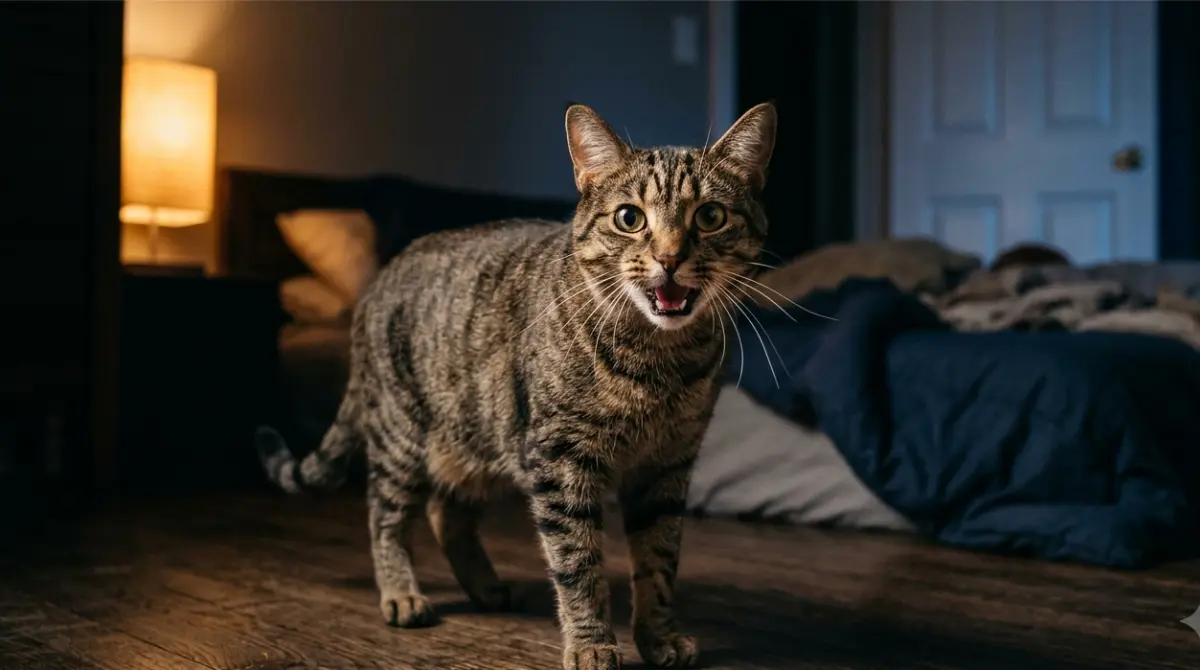
Table of Contents
A healthy cat that meows through the night is asking for something meowing has won it before, such as food or attention. A cat crying while straining in the litter box needs an emergency vet now, and an older cat who has only recently started yowling needs a vet visit this week.
Crying in the litter box is an emergency
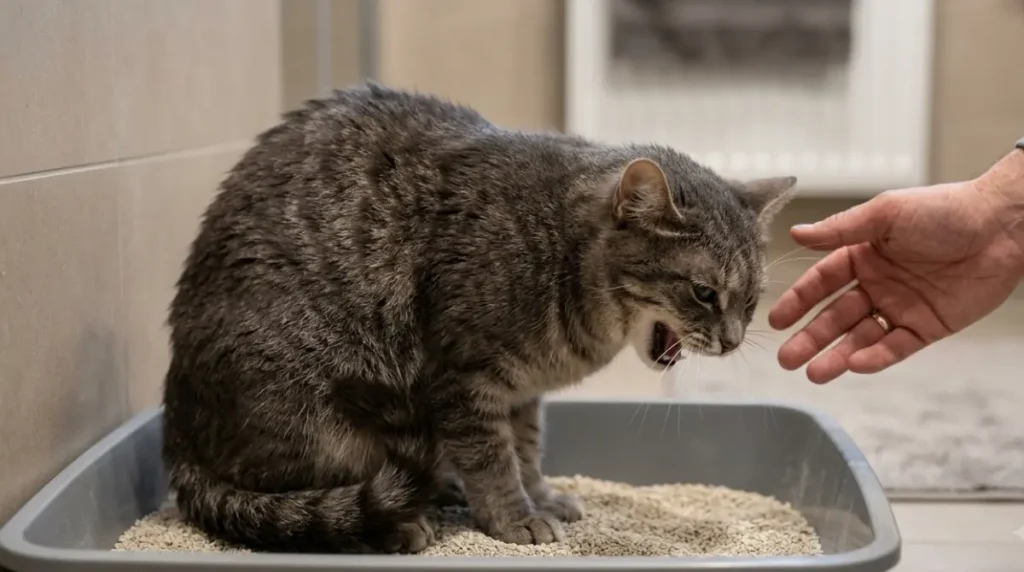
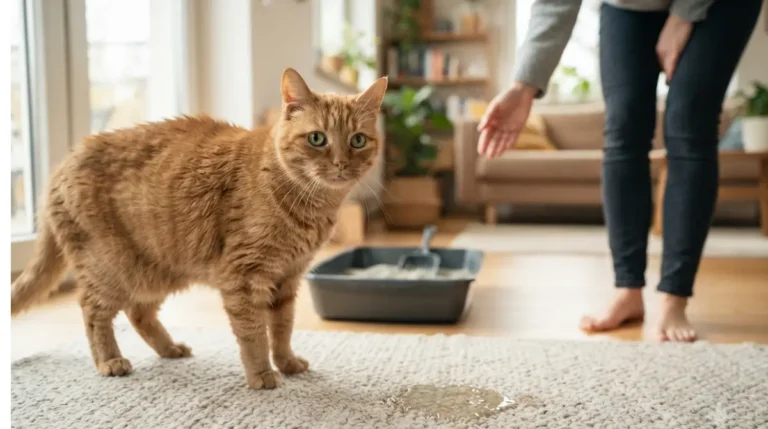
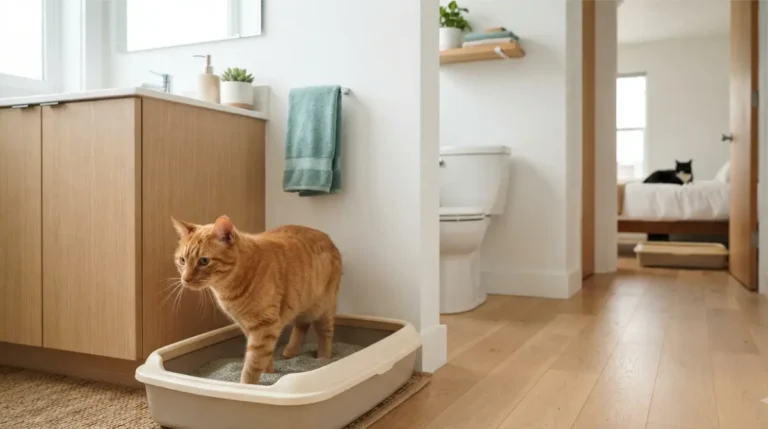
A cat who cries out while straining in the box and passes little or no urine may have a blocked urethra. That is an absolute emergency, and males are at higher risk because of the anatomy of their urinary tract.
In the middle of the night, that means the nearest emergency clinic. Unsure which kind of clinic? See whether an emergency clinic or urgent care fits.
Go to a vet now if: your cat strains in the box and passes little or no urine, or seems more distressed with each trip. When you call, say when your cat last passed urine normally.
An older cat who has started yowling
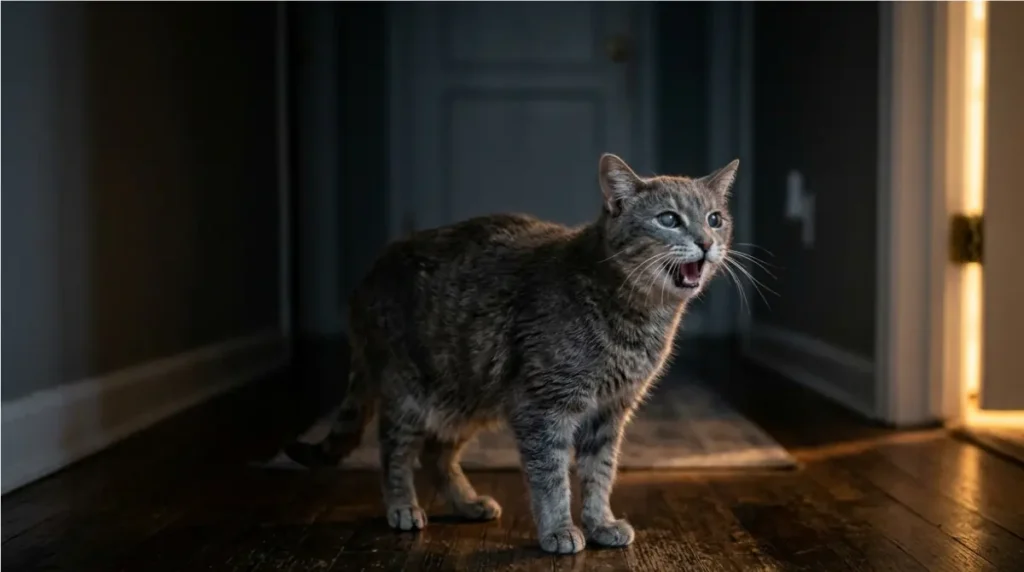
Past age 10, new night yowling calls for a vet before any change in routine. Signs of cognitive dysfunction tend to become noticeable from that age, and nighttime vocalizing is relatively common in cats with an overactive thyroid or high blood pressure (Cornell Feline Health Center). High blood pressure can detach the retina and leave a cat blind, and a cat who has lost its sight may cry from anxiety and confusion.
Hearing loss and pain can also make an older cat louder, and so can disorientation. Anxious vocalizing in these cats is usually a plaintive meow. Cognitive decline itself is considered only after a vet has looked for medical causes.
Book the visit for this week, or call today if your cat has suddenly started bumping into furniture or misjudging jumps. Before you go, note:
- when the night crying started, and what time it usually begins
- a bigger appetite or more drinking than usual
- accidents outside the litter box
- bumping into things or staring into space
A short phone video of the crying helps too, and the same appointment can cover other changes to watch in a senior cat.
Why do cats get loud after dark?
Adult cats don’t meow at each other. They keep the meow for people, probably because it gets people to act, so a cat who was fed or let out after one 3 a.m. meow has learned what works. A cat left alone for long stretches each day is also more likely to meow for attention.
Daytime sleep adds to it. A cat that sleeps more by day can become more restless at night. In a healthy cat, both fall within what counts as normal cat behavior.
What the sound and the setting tell you
Two details narrow it down: the sound itself, and where your cat is when it starts.
| What you hear | Where and when | Usual cat | Likely reason | Next step |
|---|---|---|---|---|
| Crying out | In the litter box, while straining | Any cat; males at higher risk | Possible urinary blockage | Emergency vet now |
| Plaintive, urgent-sounding meows | Wandering at night | Cat over 10 | Anxiety or disorientation | Vet visit this week |
| Long, drawn-out yowl | Comes and goes over days or weeks | Unspayed female or intact male | Heat, or a female in heat nearby | Ask your vet about spay or neuter |
| Repeated meows | Outside a closed bedroom door | Healthy adult | Attention | The evening routine below |
| Insistent meowing | Kitchen or feeding spot before dawn | Cat used to being fed on request | Breakfast | Set meal times |
| Meowing at doors and windows | Evenings and night | Cat recently kept indoors | Wants to go out | Patience; this can take weeks or months |
| Crying | First nights in a new home | Kitten | Cold or hungry, the reasons kittens call their mother | Check warmth and food |
Sources: ASPCA on meowing and yowling, ASPCA on older cats, Cornell on lower urinary tract disease.
If the crying is mostly about breakfast in the hours before dawn, use the steps to shift breakfast so dawn crying stops working.
An unspayed female’s heat lasts four to ten days and returns every 18 to 24 days through the breeding season, roughly February through September in the Northern Hemisphere. Indoor cats may cycle all year. An intact male who senses a female in heat may pace and meow until her heat ends, and spaying or neutering is the most effective way to stop it.
Make the evening busy and the night boring
Ignore a meow only once its needs are ruled out. At bedtime, check that the litter box is reachable, the water bowl is full and no door has shut your cat in or out; the ASPCA advises assuming something is wrong unless you are sure the meowing is a demand.
- Play actively in the evening and again before bed.
- Feed at set times, never in answer to crying. A timed automatic feeder moves the waiting from you to the feeder.
- After lights-out, give meowing no response, neither food nor a scolding. Getting up to feed a cat that howls at night, or even yelling at it, keeps the behavior going.
- Give attention when your cat is quiet, and agree the same rules with everyone in the house. A cat unsure whether the reward has truly gone keeps trying longer.
If the meowing gets louder first
In Merck’s words, a behavior you are trying to extinguish “often gets worse before it gets better.” Giving in during that stretch teaches your cat that louder works, and even occasional feeding keeps the pattern alive.
If a squirt bottle or a raised voice has been part of the nights so far, drop both. Punishment is more likely to lead to fear and avoidance than to quiet.
Adjustments for a confused senior
Once your vet has found no other cause, keep the food bowl and litter box where they have always been and the daily schedule steady. A very distressed cat may do better at night confined to one floor or one room with everything it needs close by. Your vet may also suggest pheromone products or anti-anxiety medication.
When a behavior professional can help
If the routine has held and the nights are no quieter, a vet exam comes first if your cat has not had one since the crying began. After that, a Certified Applied Animal Behaviorist or a veterinary behaviorist (Dip ACVB) can assess the problem; see what a behavior consult costs before you book. Improvement is usually slow and gradual even with that help.
Can I give my cat something to help it sleep at night?
Not from your own medicine cabinet. Many drugs vets use for feline behavior problems were designed for people, with limited safety information in cats, so the choice belongs to your vet.
Note the time of tonight’s first meow
Tonight, write down when the meowing starts, where your cat is and what you did in response. A few nights of notes make patterns easier to spot, such as crying that follows the clock or a closed door. If your cat is over 10 or the crying is new, take the notes to the appointment.