Spotting Indoor Cat Boredom and the Easy Fixes That Help

Indoor cat boredom starts with a hunting drive that stays strong even in well-fed cats. Spot the 7 signs and give that instinct a daily outlet.
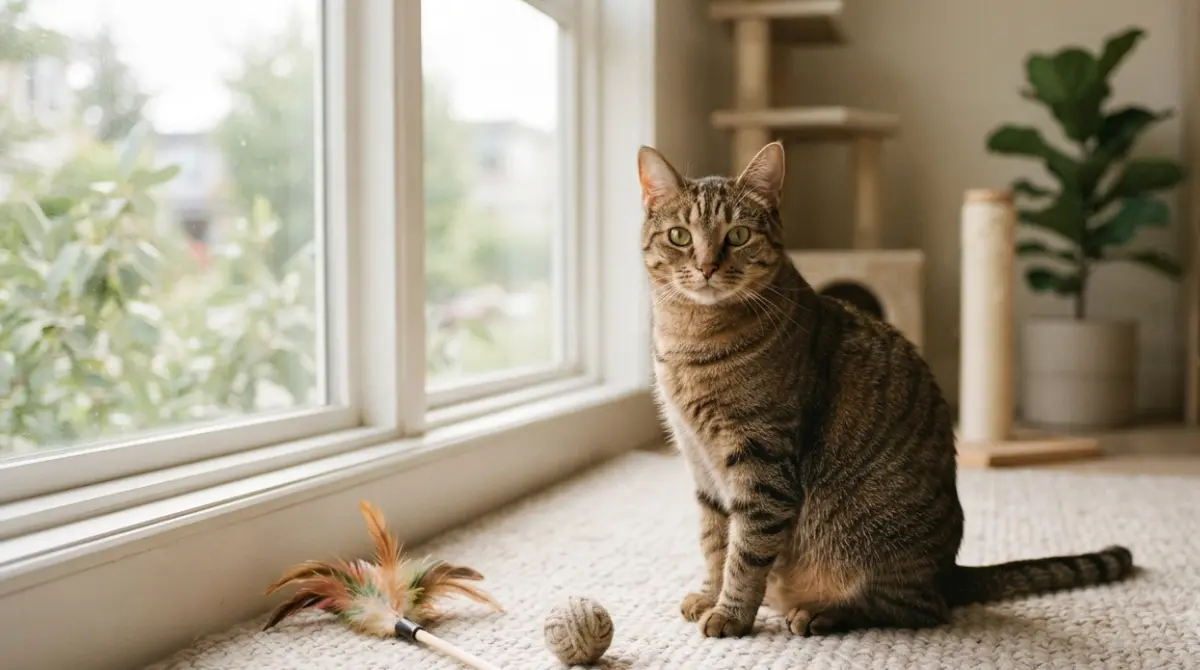
Table of Contents
Is your indoor cat bored, or is something else going on?
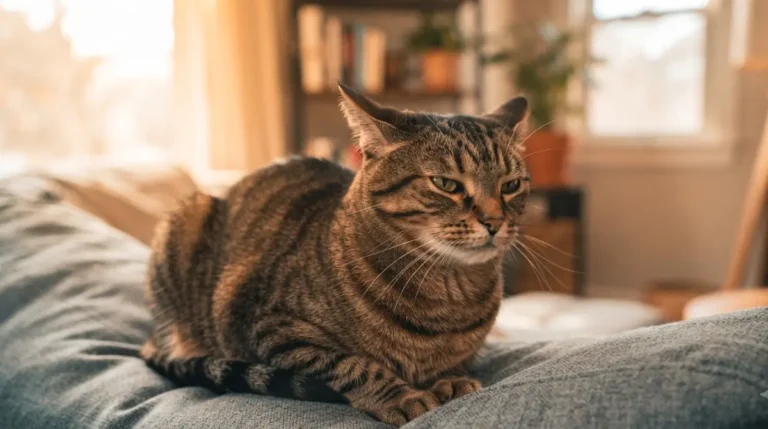
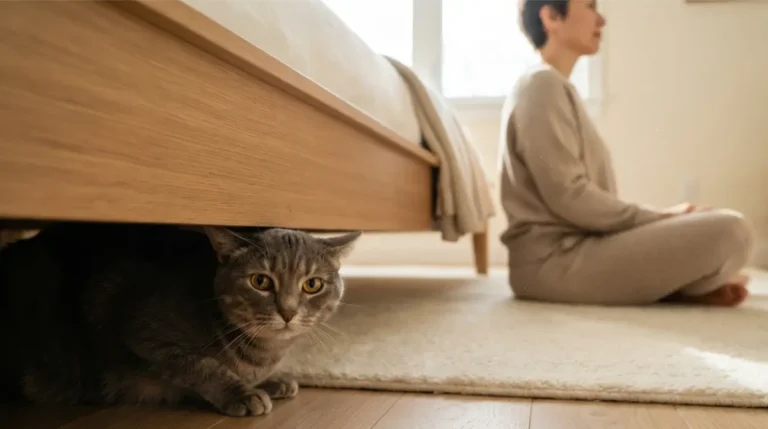
Indoor cat boredom is real. A cat with no outlet for hunting, climbing, and exploring often turns that energy on your furniture, your sleep, or her own fur.
Feline veterinary guidelines treat these environmental needs as essential, not optional. The fix is usually cheap and daily, but several boredom signs can also point to illness. Start in the right place:
- Seeing destructive, noisy, or clingy behavior? Check the seven signs below.
- Sudden change, weight change, or litter box problems? Go to the illness check first.
- Not sure what’s normal for cats at all? Our guide to which cat behaviors are normal and which need a vet covers the bigger picture.
7 signs your indoor cat is bored
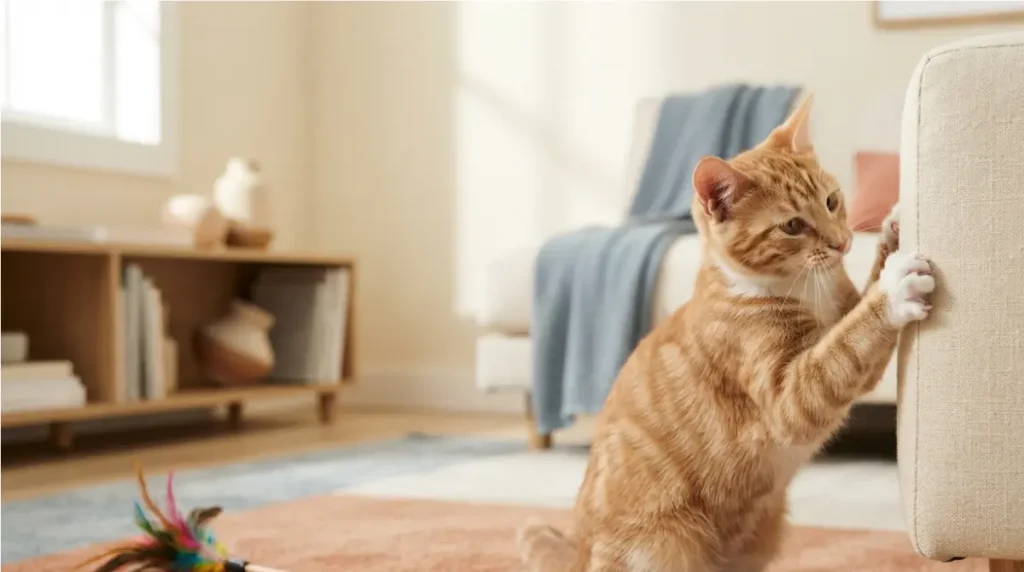
A bored cat is one whose instincts to hunt, explore, and play have nowhere to go. These are the most common signs:
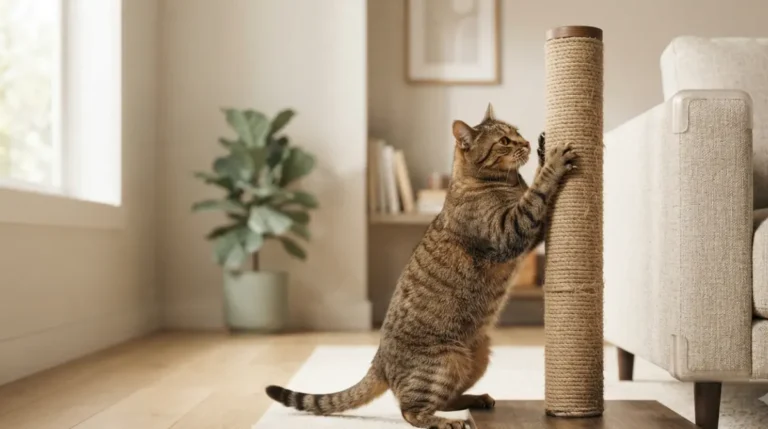
- Destructive scratching, or knocking things off shelves.
- Constant meowing, or following you room to room.
- Begging soon after meals, or slow weight gain.
- Sleeping more and ignoring the toys or windows that used to interest her.
- Overgrooming, with thin or broken fur.
- Ambushing ankles, racing around at night, or playing too rough.
- Peeing or pooping outside the litter box.
The Cornell Feline Health Center links a lack of play to obesity, destructive scratching, and house-soiling. Feline practice guidelines add overgrooming and misdirected aggression. Signs 3, 4, 5, and 7 can also be medical, so check the table below before assuming boredom.
Bored or unwell? How to tell the difference
Boredom and illness can look alike, so any sudden change deserves a vet check before you change anything at home.
The boredom-or-illness sorting table

| Sign | Fits boredom when… | Call your vet if… |
|---|---|---|
| Begging or overeating | Weight is steady and begging drops after play | She eats more but loses weight, or drinks and pees more |
| Night yowling or restlessness | A young, healthy cat who settles after evening play | It’s new in a cat around 10 or older |
| Overgrooming | Only after your vet rules out skin or pain problems | You see bald patches, broken hair, or sore skin, especially on the belly or inner thighs |
| Sleeping more | She perks up with play | It comes with appetite loss, hiding, or weakness |
| Peeing outside the box | Your vet has found nothing medical | She strains, passes tiny amounts, or passes nothing (see below) |
Sourced from the Cornell Feline Health Center and International Cat Care.
Eating more while losing weight is a classic sign of hyperthyroidism in cats, an overactive thyroid that mostly affects middle-aged and older cats. Most overgrooming starts with a skin or pain problem, so read our guide to overgrooming and bald patches before blaming boredom.
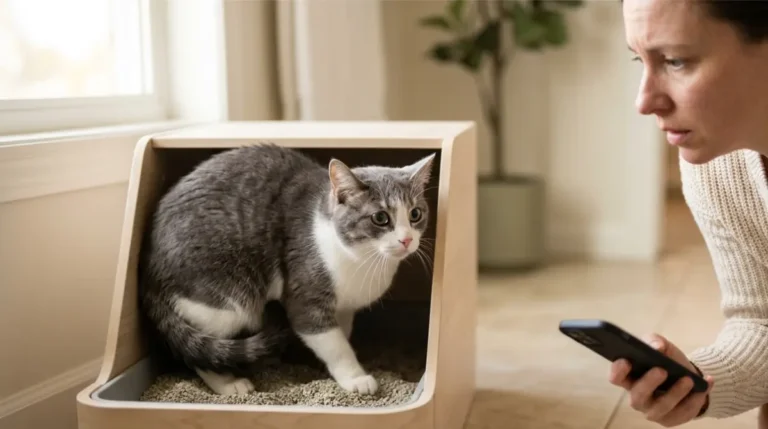
🚨 Go to a Vet Now If: your cat, especially a male, strains in the litter box and passes little or no urine. Cornell calls urinary blockage in cats an absolute emergency. Call your vet or the nearest emergency clinic right away.
✅ Do This: Before a non-emergency vet visit, note when the change started, whether your cat’s appetite, thirst, or weight has shifted, and what the litter box looks like.
Why indoor cats get bored in the first place
Cats are built to hunt, and feline guidelines note that predatory behavior happens even in well-fed cats. Indoors, that drive often has no outlet.
🔍 Why Cats Do This: A hunt runs in order: locate, stalk, chase, pounce, catch, eat. A toy lying still on the floor offers none of that. A toy that moves like prey, followed by a meal, offers all of it.
The 2025 position statement on indoor cats’ environmental needs lists five needs every cat has:
- A safe place to retreat
- Multiple, separated key resources (food, water, litter, scratching, resting)
- Opportunities for play and predatory behavior
- Positive, predictable interaction with people
- An environment that respects her sense of smell
How boredom looks different for kittens, seniors, and multi-cat homes
The right fix depends on your cat’s age and household.
Kittens and young adults
High-energy young cats usually do best with short, frequent play sessions. Cats generally prefer frequent, low-intensity interaction to one long session.
Senior cats
🐾 Life-Stage Note: Older cats still need enrichment, just lower and gentler. That means floor-level play, ramps to favorite perches, and sniffing games. A senior who suddenly turns loud, restless, or hungry needs a vet check before more toys; see our guide to behavior changes in senior cats.
Multi-cat homes and small apartments
More cats means more competition. Give each cat her own hiding spot and feeding station, and make sure you have enough litter boxes for the number of cats you have. A second cat isn’t an automatic boredom cure and can add stress. In small spaces, shelves and cat trees add territory without taking floor space.
What actually fixes indoor cat boredom
Start with the free fixes and a daily routine. Buy only what your cat actually uses.
Play like a hunt, then feed
Move a wand toy like prey: hide it, dart it away, let it pause. Let your cat catch it at the end, then offer a meal or treat to complete the hunt sequence.
Make meals a puzzle
A 2016 review in the Journal of Feline Medicine and Surgery found that food puzzles support cats’ physical and emotional wellbeing by letting them work for their food. Start with an easy one so your cat succeeds quickly. A homemade version works too.
Add height, views, and rotation
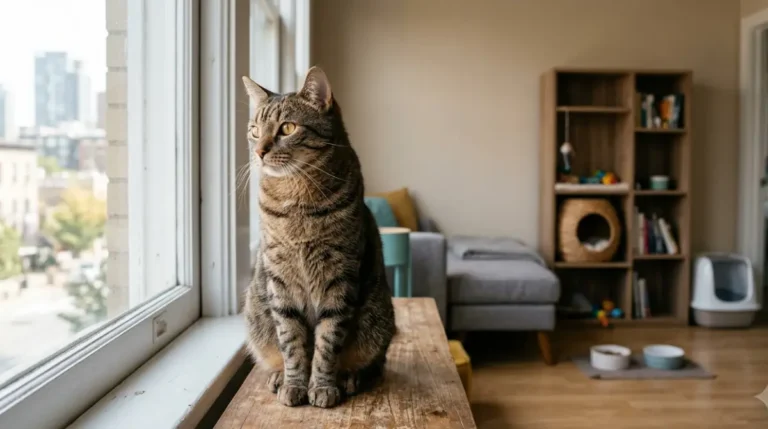
A cat tree, wall shelves, or a window perch gives her places to climb and watch. Rotate toys so they stay new. Cornell notes that simple toys like boxes, paper bags, and ping pong balls can entertain cats just as well.
⚠️ Watch Out: Put string and ribbon toys away after play, and keep chewable electrical cords out of reach.
Tried toys and nothing changed? Try this
Most “she won’t play” problems come down to how the toy moves or when you play.
My cat ignores toys
Try slower, hiding movements and a different time of day. Our guide for cats who won’t play with toys walks through it step by step.
The puzzle feeder frustrates her
Make it easier: fewer barriers and visible food. Then raise the difficulty gradually.
She still wakes me at 4am
Schedule a play session and a meal just before your bedtime.
When to get professional help
If aggression or house-soiling continues after your vet rules out illness, a certified cat behavior consultant or a veterinary behaviorist can build a plan.
Indoor cat boredom FAQ
1. Do indoor cats get bored?
Yes. Indoor cats with no outlet for hunting, climbing, and exploring can develop boredom, which often shows up as destructive or attention-seeking behavior.
2. How do I know if my cat is bored or sick?
Boredom improves with play and enrichment. Weight loss, appetite or thirst changes, litter box problems, or sudden changes in an older cat need a vet check first.
3. Can boredom make a cat aggressive?
Yes. Under-stimulated cats may turn hunting play onto ankles or other pets. Daily hunt-style play gives that energy a better target.
4. How much should I play with my indoor cat?
Short, frequent sessions work well. Move the toy like prey, let your cat catch it, then offer a meal or treat.
5. Do cats get bored of their toys?
Often. Rotating toys and moving them like prey keeps them interesting. A toy lying still on the floor rarely holds attention.
6. Would a second cat fix indoor cat boredom?
Not automatically. Another cat adds competition for food, litter, and hiding spots, and can add stress rather than relieve boredom.
7. Why is my bored cat so active at night?
A play session and meal before bed can help settle her. New night yowling in a cat around 10 or older needs a vet check.
8. Can boredom cause overeating in cats?
It can, because bored cats may beg soon after meals. If your cat eats more but loses weight, see your vet.
9. Are food puzzles good for bored cats?
Yes. A 2016 veterinary review found that food puzzles support cats’ physical and emotional wellbeing. Start with an easy puzzle so your cat succeeds.
10. Do senior cats get bored?
Yes, but they need gentler enrichment. Sudden restlessness, loud meowing, or a bigger appetite in a senior cat should be checked by your vet first.
Your next step
If anything changed suddenly, rule out illness first. Then build a simple daily routine: hunt-style play, a puzzle meal, and somewhere high to watch the world. Watch which of the seven signs fade over the next few weeks.