A Calm Approach to Shy Cat Socialization

Shy cat socialization starts with a quiet room, hiding spots and patience. Use this 90-day plan and fill-in log to follow her pace.
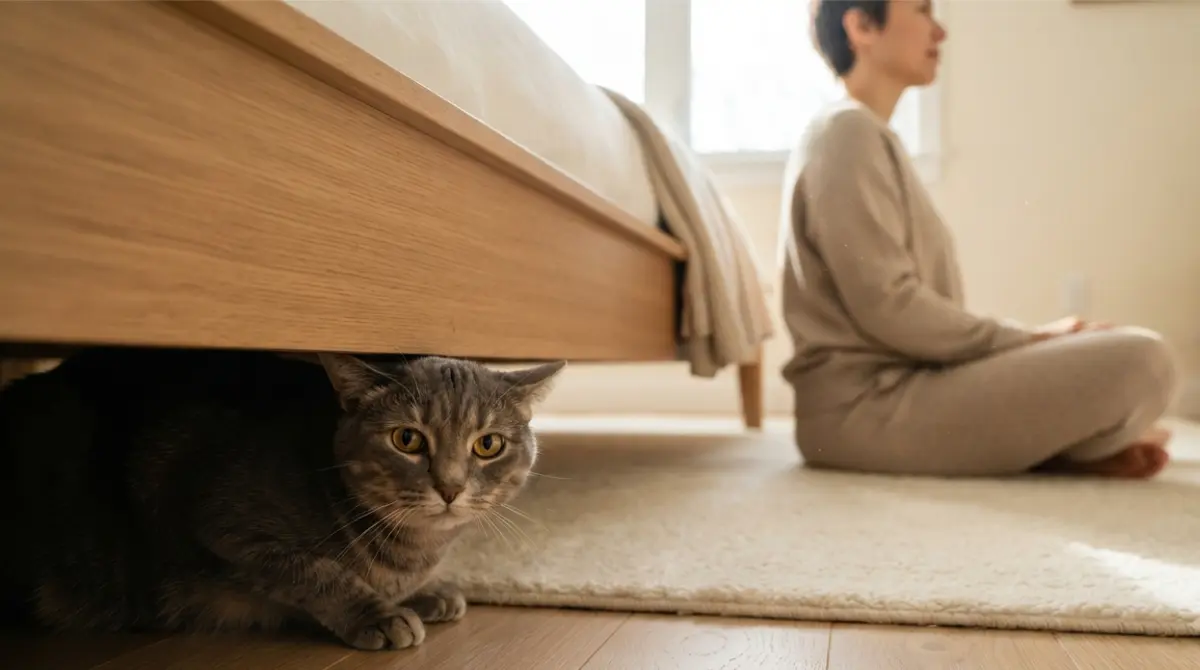
Table of Contents
Can a shy cat really become a lap cat?
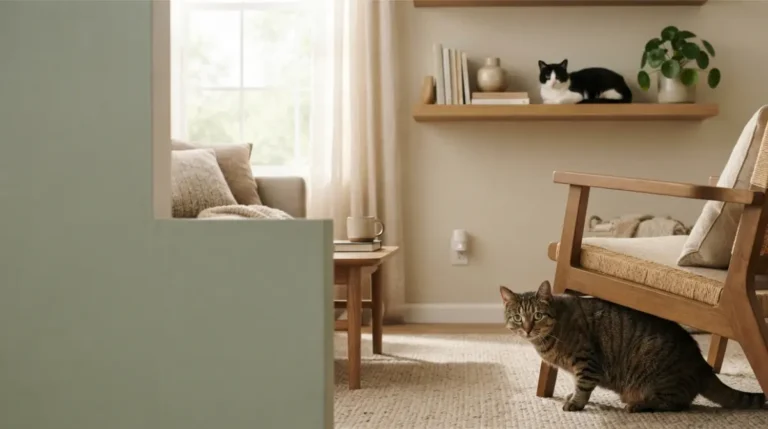
Your cat is under the bed again, watching you.
Many shy cats grow far more affectionate once they feel safe. Shy cat socialization means building that safety slowly. The ASPCA’s guide to fear in cats says fearful cats take weeks, not days, to settle.
🚨 Go to a Vet Now If: a normally social cat suddenly hides, or hiding comes with not eating, litter-box changes or breathing trouble. Straining with little or no urine means an emergency clinic now.
Use the 90 days below as a rough map, not a schedule.
Just came home?
Go to Days 1-14.
Suddenly hiding?
Read the vet check below, then see which behavior changes need a vet.
ℹ️ Vet Note: This article isn’t a diagnosis and names no medicines or doses. If hiding is new, or comes with not eating, litter-box changes or breathing trouble, call your veterinarian first.
Shy, or sick? Rule out health first
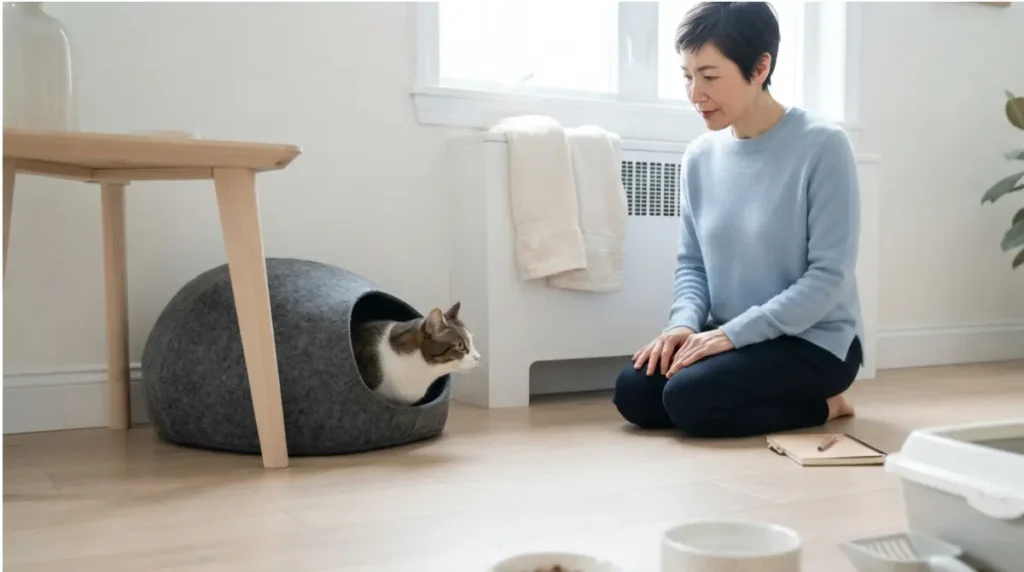
A shy cat avoids you, but a sick cat can look the same, so compare her with her own normal behavior first.
The ASPCA says fear looks like cowering, fleeing or hissing, while appetite loss, litter-box trouble or lethargy may be medical, not temperament.
Call the vet the same day if
| Sign | What to do |
|---|---|
| Not eating, or eating less | Call your vet right away |
| Litter-box changes | Call your vet right away |
| Lethargy, or a sudden change in a social cat | Call your vet right away |
| Straining with little or no urine | Emergency clinic now |
| Open-mouth panting or any trouble breathing | Emergency clinic now |
AVMA’s guidance on urinary blockage in cats says a blocked male cat can look constipated and needs immediate veterinary treatment.
The Cornell Feline Health Center says to get a cat with any breathing question to a veterinarian right away.
✅ Do This: Tell your veterinarian when the hiding started, how much she is eating, and how often she uses the box.
Days 1-14: Give your shy cat a small, safe world
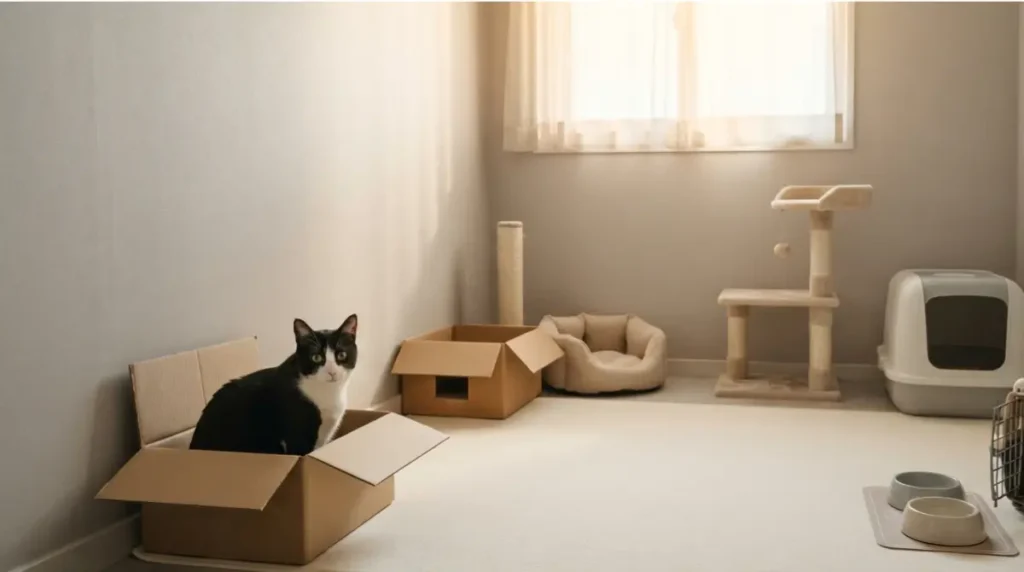
Plan on two weeks or more of quiet and no pressure.
Set up the safe room
The ASPCA suggests a quiet, low-traffic safe room, like a bathroom, with small gaps blocked and bedding, food, water, a scratcher and a litter box inside.
Hiding spots are part of the plan
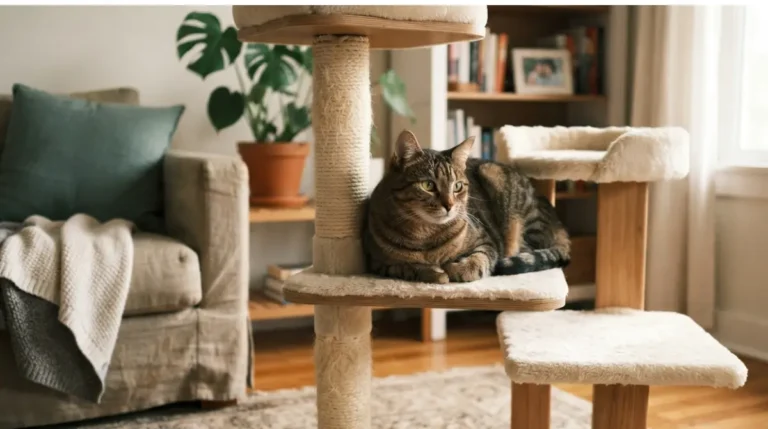
Offer several hiding spots: boxes, an open carrier, or a cat tree.
Where the litter box goes
Keep one box in her room, away from food and water. How many litter boxes and where to put them covers the rest.
Days 15-45: Let your cat decide how close you get
Sit, look away, offer a treat
The ASPCA’s considerate approach has four steps:
- Sit or kneel one to two feet away, facing sideways.
- Look at her for a second or two, give a slow blink, then look away.
- Roll treats toward her, or wave a wand toy low to the ground.
- Keep your voice low, your movements slow and your hand below her eye level.
Should you ignore a shy cat?
Ignore the pressure, not the cat. Skip staring, reaching and grabbing.
Advance or back off
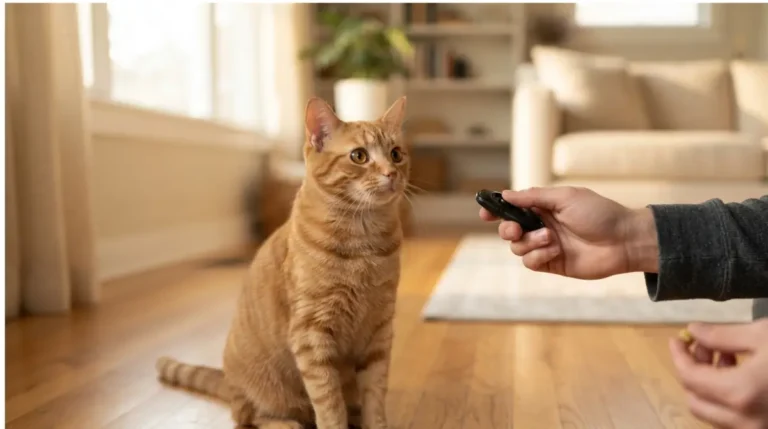
Stop and back off if she cowers, flees, hisses or swats. Once she takes treats while you sit nearby, try clicker training for cats.
Days 46-90: From sitting near you to sitting on you
First touch: let her come to your hand
Let her choose, and avoid picking her up, leaning over or reaching for her. Back off at flat ears, a twitching tail or crouching, the distress signs in AAHA’s feline life stage guidance on behavior. Learn the signals cats give before a petting bite first.
Kittens, adults and seniors
🐾 Life-Stage Note: Little exposure to new things as a kitten is one cause of fearfulness, yet adult cats can still blossom given time. In a senior cat, rule out health first.
When progress stalls or slides backward
Visitors and noise
Visitors can frighten a fearful cat. The ASPCA says to ask guests to ignore her and to toss treats only if she comes out.
Setbacks: step back, don’t push
Return to the last step she was comfortable with, and don’t push through her signals: AAHA says ignored signals make fear grow.
When to bring in a professional
If progress stalls, or she lunges, hisses or bites, see your veterinarian first. Ask about calming options, and never give medication on your own. Then consider a certified consultant: IAABC’s directory of certified consultants can be filtered for cats.
Keep your own 90-day log
Write one row on each day below, and add more when she does something new.
| Day | Watch for | What I did next |
|---|---|---|
| 1 | Where she hides; eating and litter-box use | |
| 14 | Leaves cover while you are in the room? | |
| 30 | Takes treats while you sit nearby? | |
| 45 | Moves closer on her own? | |
| 60 | Sniffs or touches your hand? | |
| 90 | Where she sits when you are home |
Review it every two weeks
If she eats less, hides more or uses the box differently, call your vet first.
Shy cat questions owners ask most
1. Can a shy cat become a lap cat?
Many grow much more affectionate in a stable home. A lap is a bonus.
2. How long does shy cat socialization take?
The ASPCA says weeks, not days, and the pace is hers.
3. Should I force a hiding cat to come out?
No. Hiding is how a frightened cat copes. Offer hiding spots and let her come out herself.
4. Is my cat shy or sick?
Compare her with her own normal. Not eating, litter-box changes, lethargy or a sudden change means call your vet right away.
5. Should I ignore a shy cat?
Ignore the pressure, not the cat: skip staring, reaching and grabbing, and let her approach you.
6. Can adult cats be socialized?
Yes. Adult cats can still blossom given time, though each sets her own pace.
7. Why does my shy cat hide when guests come?
Visitors can frighten a fearful cat. Give her a retreat and ask guests to ignore her.
8. When should I call a cat behaviorist?
If progress stalls or she lunges, hisses or bites, see your vet first, then a certified consultant.
Your next step: start the log
If anything about your cat’s behavior changed suddenly, call your veterinarian first. Otherwise, set up a quiet room today and start your log. Expect weeks, not days, and treat a lap as a bonus.